
Lifecycle Maintenance Costs and Infrastructure Challenges Defining the Headstone Photo Printer Tomb Photos Printer
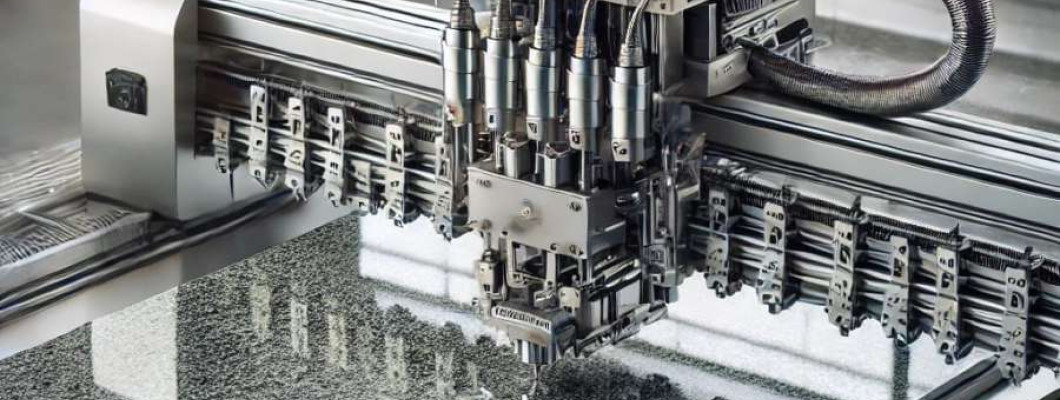
The Industrial Reality of Integrating High-Precision Headstone Photo Printing
Within the niche segment of memorial customization, the deployment of specialized printing hardware such as the Headstone Photo Printer Tomb Photos Printer confronts distinct lifecycle maintenance costs and infrastructure integration issues. Operators face the challenge of sustaining ultra-fine photo reproductions on hard surfaces that require not only exacting mechanical precision but environmental controls to prevent accelerated wear. The technical environment typically includes variable ambient conditions, abrasive substrates, and often intermittent usage patterns, all factors that amplify maintenance demands.
Industrial users must ensure uninterrupted operation despite prolonged idleness, with print heads prone to clogging due to specialized pigment inks engineered for longevity on stone materials. Additionally, the printer's integration into existing production lines requires calibration with upstream substrate handling and downstream curing or sealing processes. This necessitates detailed workflow analysis and infrastructure adaptions to maintain asset longevity and optimal throughput.
Technical Deep-Dive on Lifecycle and Integration Elements
Printhead Wear and Ink Chemistry Interaction
The printheads used in the Headstone Photo Printer operate with micro-droplet ejection measured in picoliters (pl), typically between 8-12 pl for optimal image resolution. However, pigmented inks formulated to bind with ceramic or stone surfaces present unique challenges—these inks possess higher particulate suspension densities, increasing nozzle abrasion. Assuming nozzle diameter of 30 microns and an average firing frequency of 10 kHz during continuous operation, cumulative mechanical erosion over 500 operational hours can reduce nozzle precision by up to 5%, necessitating recalibration or replacement.
Environmental and Thermal Management Requirements
Environmental humidity and temperature directly affect ink viscosity and drying times. Optimal ambient temperatures for this printer should be maintained between 20-25°C with relative humidity at 40-60%. Deviations increase drying inconsistencies and may accelerate mechanical parts corrosion. Thermal management inside the printer chassis is critical; dissipating approximately 350 watts of heat generated by high-frequency piezoelectric actuators requires dedicated air circulation pathways without introducing particulate contaminants.
Substrate Handling and Throughput Impact
Stone substrates vary in thickness and texture, necessitating adaptive mechanical feed systems. The printer supports substrate dimensions up to 400 mm width with thickness tolerances from 3 mm to 50 mm. Variance in surface flatness directly impacts focus distance and droplet placement accuracy. A linear actuator adjusts printhead positioning dynamically over a range of ±0.2 mm with micron-level repeatability to compensate for micro-topography deviations.
Integration with Automation and Workflow Systems
Effective integration requires compatibility with industrial control protocols such as Modbus TCP/IP and programmable logic controllers (PLCs). Real-time data capture on printhead status, ink levels, and error states enable predictive maintenance. The addition of vision systems for print verification introduces network bandwidth requirements averaging 250 Mbps and necessitates robust cybersecurity measures for data integrity.
Comparative Asset Depreciation and Maintenance Models
| Aspect | Headstone Photo Printer Tomb Photos Printer | Standard UV Flatbed Printer |
|---|---|---|
| Printhead Replacement Cycle | Approx. 1200 hours due to abrasive inks | Approx. 2000 hours |
| Maintenance Downtime per 1000 prints | 5-7 hours (clog clearing, recalibration) | 3-4 hours |
| Thermal Power Consumption | 350 Watts nominal | 300 Watts nominal |
| Substrate Handling Precision | ±0.02 mm repeatability | ±0.1 mm |
| Network Integration Protocols | Modbus TCP/IP, PLC Compatible | Standard Ethernet only |
Scenario Analysis Showing Business Impact for Diverse Use-Cases
Small Family Monument Workshop
For a workshop serving local memorials, the printer’s moderate throughput suffices, but operational expenses accumulate due to frequent printhead servicing from intermittent use and pigment sedimentation. An optimized maintenance schedule balancing drying agent usage and automated nozzle cleaning extends operational periods and minimizes downtime.
High-Volume Cemetery Supply Chain
A larger memorial supplier integrating the printer into a 24/7 production line benefits from real-time workflow data enabling automated alerting for ink replenishment and printhead wear. Despite higher upfront capital expenditure, reduced breakage rates and improved image consistency justify depreciation over a three-year cycle.
Memorial Artisan Studio Focusing on Custom Requests
Studios prioritizing micron-level image precision on premium stone benefit from the printer’s adaptive actuator system. However, throughput constraints require careful job scheduling to prevent bottlenecks. Environmental control investments to maintain humidity and temperature stability reduce print failure rates.
Expert FAQ Addressing Complex Technical Concerns
Q1: How does ink pigment particle size affect nozzle clogging?
A1: Larger pigment particles increase nozzle abrasion and clog risk; maintaining particle sizes below 100 nm and utilizing surfactants in ink formulation mitigate these effects.
Q2: What are key indicators for predictive printhead failure?
A2: Increased firing voltage requirements and inconsistent droplet volume measured via inline optical sensors signal impending failure.
Q3: How does substrate thermal expansion influence print alignment?
A3: Variations of more than 0.05 mm due to temperature changes can misalign multi-pass prints, requiring dynamic compensation algorithms.
Q4: What are advantages of Modbus TCP/IP over Ethernet-only protocols in this context?
A4: Modbus enables seamless integration with industrial PLCs, allowing coordinated machine-to-machine communication essential for automation.
Q5: How can daily uptime be maximized despite abrasive ink use?
A5: Implementing scheduled micro-purging cycles and operating within recommended environmental ranges significantly prolongs uninterrupted operation.
Strategic Verdict and Recommendation for Industrial Adoption
Analysis of lifecycle maintenance costs and infrastructure integration confirms the Headstone Photo Printer Tomb Photos Printer as a definitive solution for industrial-grade memorial photo reproduction. Although its abrasive pigment inks necessitate more frequent printhead replacements compared to standard UV flatbed printers, its micron-level precision, adaptive substrate handling, and advanced workflow integration capabilities compensate by enabling superior output quality and reliable operation.
Enterprises scaling operations will find value in its compatibility with automation standards and real-time diagnostics, reducing unplanned downtime. Smaller artisans should weigh maintenance overhead against image fidelity demands but benefit from precise print repeatability and substrate versatility. Consequently, we recommend the Headstone Photo Printer Tomb Photos Printer as the industrially viable choice for high-precision, durable headstone photo printing requiring stringent lifecycle maintenance and integration discipline.