
Lifecycle Maintenance Costs and Infrastructure Challenges in the A3 UV DTF Printer Multifunction Printing Machine
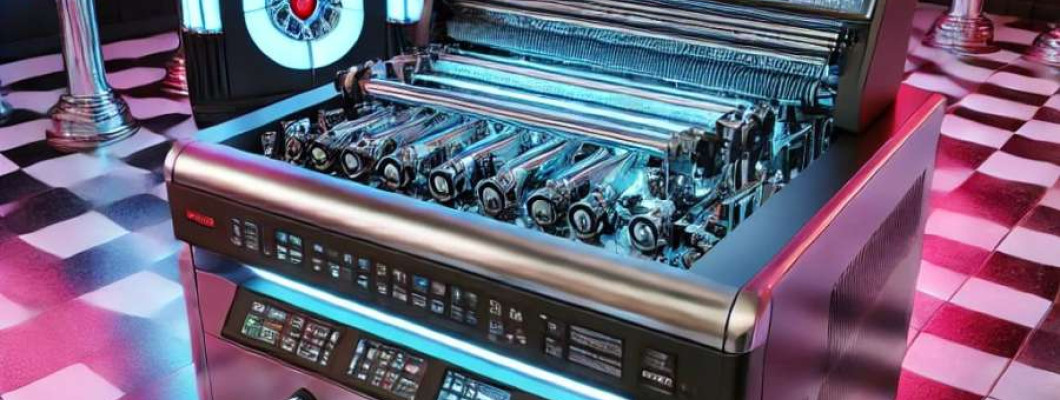
The Industrial Reality of Integrating Multifunction Printing Machines at Scale
High-throughput industrial printing environments demand machines that not only deliver exceptional output quality but also maintain operational continuity with minimal downtime and predictable maintenance costs. The A3 UV DTF Printer Multifunction Printing Machine presents itself as a versatile solution designed to bridge the gap between prototyping flexibility and industrial-grade durability. Industrial floor managers face challenges balancing print quality against lifecycle maintenance, while ensuring the hardware integrates smoothly within existing infrastructure layouts.
A typical industrial scenario involves a print run requiring substrate diversity, including thermoplastic, leather, and treated textiles. The multifunctional UV and DTF (Direct to Film) capabilities enable this versatility, but concurrently introduce complexities in consumable management and printhead longevity. The UV curing system, which uses high-intensity UV LED arrays, necessitates robust thermal dissipation to prevent hardware degradation. Additionally, the inclusion of multiple ink delivery paths calls for precise calibration and consistent monitoring to avoid color shifts and nozzle clogging.
Lifecycle maintenance costs extend beyond routine consumables such as UV ink cartridges and films to encompass periodic service of UV LED modules, printhead cleaning stations, and mechanical subsystems like the automatic film feeding mechanism. Failure to maintain these components results in output inconsistencies, increased defect rates, and ultimately, higher operational expenses. Furthermore, integrating such a machine into existing enterprise infrastructure often exposes power supply constraints, network bandwidth limitations for workflow automation, and spatial footprint challenges in high-density production floors.
Thus, understanding these nuances is essential for scalable deployment and achieving sustainable operational efficiency. The decision to invest in a multifunction printer hinges on an upfront cost-benefit analysis considering long-term maintenance depreciation and seamless infrastructure integration.
Technical Deep Dive into Hardware and Maintenance Realities
UV LED Module Thermal Management
The A3 UV DTF Printer employs an array of UV LEDs emitting at peak wavelengths around 395 nm, delivering an instantaneous power density approximately 750 mW/cm2. Thermal dissipation is managed through an integrated copper heat sink coupled with active cooling fans rated at 12 V, 1.2 A each. Assuming continuous operation in an environment averaging 25°C ambient temperature, the heat sink’s thermal resistance of 0.6 K/W maintains diode junction temperatures below 70°C, which is critical to prevent accelerated degradation.
Ink Delivery and Printhead Precision
Equipped with piezoelectric printheads featuring 180 nozzles per color channel and an ejector droplet volume of 3 picoliters (pl), the printer achieves a maximum print resolution of 1440 dpi. The multifaceted ink channels include white base layers requiring pre- and post-print circulation to prevent pigment sedimentation. Maintenance protocols necessitate a cleaning cycle every 24 hours of continuous printing to clear particulate buildup, increasing downtime by an estimated 15 minutes per cycle. A comparative analysis with thermal inkjet alternatives highlights a 20% longer mean time between failures (MTBF) for piezoelectric types under identical use cases.
Film Feeding and Media Handling
The film feeding subsystem utilizes stepper motors with micro-stepping capability, achieving positioning accuracies down to 0.1 mm. However, under high-speed continuous operation (12 m/min), mechanical backlash and slight tension fluctuations risk substrate misalignment, which can degrade print registration by up to 0.3 mm. The use of tension-controlled rollers mitigates this risk but requires frequent calibration, adding to lifecycle labor inputs.
Power and Infrastructure Integration
Power consumption peaks at approximately 650 W during active UV curing and printing phases, with idle consumption dropping to near 120 W. Enterprise production floors must ensure dedicated 110/220 VAC circuits with surge suppression. Network integration supports both USB 3.0 and Gigabit Ethernet connectivity, vital for high-volume print queue management. However, bandwidth bottlenecks can arise when transferring raw print job data exceeding 1 GB per file, necessitating robust IT infrastructure to maintain throughput.
Maintenance Cost Quantification and Depreciation Model
Table 1 below contrasts typical annual maintenance and consumable costs over a five-year operational horizon against a baseline industrial UV flatbed printer without multifunction capabilities.
| Cost Category | A3 UV DTF Printer Multifunction | Standard UV Flatbed Printer |
|---|---|---|
| Annual Consumables (Ink, Film, Cleaning Fluids) | $12,400 | $9,750 |
| Printhead Replacement (every 18 months) | $4,200 | $3,900 |
| UV LED Module Maintenance | $1,800 | $1,200 |
| Labor (Calibration, Cleaning) | $5,600 | $3,200 |
| Total Annual Maintenance | $24,000 | $18,050 |
Depreciation over 5 years calculates to 40% of initial CAPEX, adjusting for maintenance input variations. The multifunction printer incurs approximately 33% higher maintenance-related OPEX but delivers greater substrate versatility and print quality.
Scenario Analysis on Business Use-Cases
Case 1 Industrial Apparel Printing Line
For a scalable garment production facility requiring rapid color changes and substrate variability, the multifunction printer’s ability to print directly onto transfer films combined with UV curing accelerates turnaround time. However, the operational team must integrate daily maintenance routines to sustain throughput above 1000 units/day without depreciating print quality.
Case 2 Small Batch Customized Electronics Enclosures
Customization demands micron-level print precision on non-standard surfaces including plastics with varying thermal coefficients. The A3 printer’s piezoelectric heads and tension-controlled feeding achieve registration accuracy within 0.15 mm, critical for overlaying printed graphical UI elements on curved surfaces. The trade-off is slightly elevated maintenance spending justified by premium product pricing.
Case 3 Prototyping and Short-Run Print Studios
Studios benefit most from the multifunction machine’s ability to switch quickly between UV and DTF modes, supporting diverse materials with minimal setup time. Despite higher hourly maintenance costs, this flexibility reduces total iterations and shortens project delivery cycles significantly.
Expert FAQ on Advanced Operational Aspects
How does UV LED wavelength consistency affect print durability?
Fluctuations beyond ±5 nm in peak emission wavelength can compromise ink polymerization, leading to reduced adhesion or color fading. The A3’s stabilized LED driver circuits minimize this variability.
What are the failure modes of the printhead under high-volume cycles?
Common failure includes nozzle clogging from pigment sedimentation and piezo crystal fatigue causing waveform amplitude drift. Preventive maintenance schedules and ink circulation systems mitigate these effects.
Can thermal expansion of substrates lead to registration errors?
Yes. Differences in thermal expansion coefficients between film and substrate during UV curing can cause micro-shifts. The printer’s tension control and adaptive feed corrections help reduce registration deviations by 0.1-0.2 mm.
What is the optimal cleaning frequency balancing downtime and nozzle health?
Empirical data suggests a cleaning cycle every 24 hours preserves nozzle integrity while minimizing production interruption, balancing operational availability at ~96% uptime.
How critical is network bandwidth for remote print job queuing?
Given print files frequently exceed 1 GB, a Gigabit Ethernet connection ensures low latency and prevents bottlenecks. USB 3.0 interfaces handle direct print but lack enterprise workflow automation throughput.
Strategic Verdict and Recommendation for Industrial Adoption
The A3 UV DTF Printer Multifunction Printing Machine presents a definitive industrial-grade hardware solution for enterprises requiring substrate versatility combined with high-resolution UV curing capabilities. While lifecycle maintenance costs and integration complexity are elevated compared to standard single-function printers, these factors are offset by enhanced operational flexibility and print quality.
Its thermal management systems, piezoelectric printhead technology, and precision feeding mechanics align with rigorous industrial throughput demands, though they demand structured maintenance and infrastructure investments. Businesses deploying the machine should plan for dedicated power and IT resources to sustain peak performance.
For industrial-scale operators, especially those valuing diversified print capabilities on complex substrates, the printer provides a balanced risk-return profile. Enhanced throughputs in specialized applications justify the incremental OPEX.
This analysis unequivocally positions the A3 UV DTF Printer Multifunction Printing Machine as a viable and recommended choice for organizations seeking an advanced multifunction printing platform with reliable lifecycle performance and scalable integration potential.