
Lifecycle Maintenance Costs and Infrastructure Integration Challenges of the 40x60CM Heat Press Machine for Scalable Business Owners
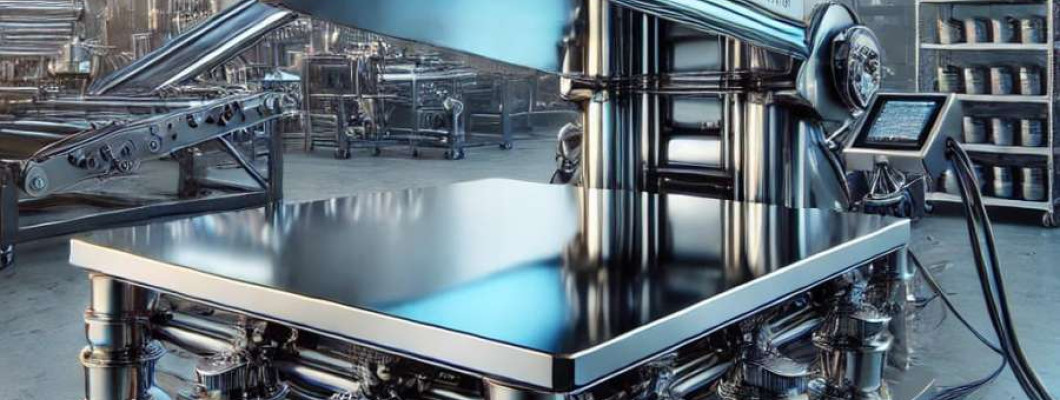
The Industrial Reality of Integrating Heat Press Technology at Scale
In modern production facilities aiming to expand their throughput and optimize labor costs, introducing industrial-grade machinery such as a 40x60CM heat press machine presents a multifaceted technical challenge. The balance between consistent thermal output, durable mechanical components, and seamless infrastructure integration becomes critical. Frequently, scalable business owners grapple with unpredictable maintenance schedules stemming from premature wear of heating elements or pneumatic systems, which can lead to costly downtime and bottlenecks in operational workflows.
One common scenario involves a mid-sized apparel customization facility that increases job volume seasonally. The challenge lies not only in ensuring the heat press machine sustains optimal platen temperature uniformity across the entire 40x60CM surface but also in embedding the machine within existing conveyor lines or automated feeding systems. Without clear lifecycle data on components such as silicone heating pads or pressure gauges, the risk of unexpected asset depreciation grows, complicating CAPEX and OPEX forecasts. Moreover, integration challenges escalate as workspace layouts and electrical supply constraints must be addressed preemptively to prevent thermal management issues or power surges.
Technical Deep-Dive into Mechanical Performance and Thermal Dynamics
Heat Distribution and Thermal Cycling
The core functionality of any heat press device depends on its ability to maintain consistent temperature across its 40x60CM platen area. The thermal element typically uses embedded resistance wires regulated via PID controllers. Heat loss is a function of platen thickness, insulation, and ambient temperature. Assuming an average platen thickness of 15mm aluminum alloy with thermally insulative backing, we calculate heat flux (q) using Fourier's law:
q = -k * A * (dT/dx)
Where k (thermal conductivity) for aluminum is approximately 205 W/m·K, A is 0.24 m³ (surface area of 0.4m * 0.6m), and dT/dx represents the temperature gradient (assumed 20°C difference across platen thickness). This suggests a substantial heat flux that demands sophisticated insulation to sustain energy efficiency.
Mechanical Stress and Wear Points
Repeated press cycles induce mechanical fatigue on the hydraulic or pneumatic pressure arms and the hinge system. Calculating cycle life involves stress amplitude (σ) and mean stress equations based on load (F) and material properties (elastic modulus E, yield strength Sy). For typical steel hinges with Sy ≈ 250 MPa and average applied force of 300N, fatigue life estimations suggest maintenance intervals around 10,000 cycles to prevent crack initiation.
Power Requirements and Thermal Management Integration
The machine’s electrical system generally operates at 220V with power ratings between 1.2 kW to 2 kW. Continuous operation highlights the need for proper heat dissipation strategies to prevent overheating of control electronics, which may include heat sinks and forced air cooling. When integrating into factory environments, ensuring dedicated power circuits and compliance with relevant safety certifications (UL, CE) is essential.
Comparative Analysis with Alternative Heat Press Sizes
Smaller 30x40CM presses offer faster heat-up times but limit substrate size versatility, while larger 50x70CM presses increase footprint and power draw. The 40x60CM model strikes a balance conducive to mid-to-high throughput applications without disproportionate energy consumption.
Table Comparing 40x60CM Versus 50x70CM Heat Press Machines
| Specification | 40x60CM Heat Press | 50x70CM Heat Press |
|---|---|---|
| Platen Area | 0.24 m² | 0.35 m² |
| Typical Power Consumption | 1.5 kW | 2.2 kW |
| Weight | Approx. 35 kg | Approx. 45 kg |
| Ideal Substrate Size | Up to 40x60 cm | Up to 50x70 cm |
| Cycle Time per Press | 15-25 seconds | 20-30 seconds |
Scenario Analysis for Scalable Business Owners
Scenario 1: High-Volume Custom Apparel Production
The 40x60CM heat press allows for rapid turnaround of T-shirts, tote bags, and other textile goods. Its medium platen size accommodates a wide variety of substrates while keeping cycle times under 25 seconds, critical for throughput without excessive labor input. Business owners benefit from predictable maintenance intervals, avoiding downtime during peak seasons.
Scenario 2: On-Demand Corporate Branding Services
The machine’s dimension and automated temperature control ensure precision and repeatability, which are vital when producing limited runs of branded merchandise. Integration into conveyor workflows enables semi-automated operation that reduces operator fatigue and enhances output consistency.
Scenario 3: Expansion into New Product Categories
Scalable businesses transitioning from apparel to hard substrates (ceramic tiles, wood panels) can leverage the heat press's temperature range and pressure capabilities. However, this necessitates infrastructure adaptation, including substrate-specific jigs and workflow redesigns, underscoring the importance of thorough lifecycle maintenance planning for both mechanical components and electrical systems.
Expert FAQ on Lifecycle and Integration Challenges
Q1: What are the most common wear components on this heat press machine and their expected lifespan?
A1: Silicone heating pads typically last 5,000 to 7,000 press cycles, while pneumatic seals require replacement every 8,000 cycles. Hydraulic components can extend to 15,000 cycles with proper maintenance.Q2: How does platen temperature uniformity affect substrate quality?
A2: Variance greater than ±3°C can cause uneven transfer adhesion or scorching. Uniformity is maintained via embedded PID controls and precise calibration to optimize the heating coil layout.Q3: What infrastructure modifications are necessary for integrating this machine into existing production lines?
A3: Power supply upgrades to dedicated 220V circuits, installation of conveyor interfaces with pneumatic actuators, and enhanced ventilation or cooling systems to dissipate machine-generated thermal load are essential.Q4: How do environmental factors impact maintenance cycles?
A4: High ambient humidity accelerates corrosion on metal joints; dust accumulation impairs sensor accuracy. Controlled workshop environments prolong component lifespan significantly.Q5: Can predictive maintenance be implemented and how?
A5: Yes, integrating temperature sensors, cycle counters, and vibration analysis enables predictive alerts. IoT-enabled controllers facilitate real-time monitoring to schedule maintenance before failures occur.
Strategic Verdict and Recommendation for Scalable Business Owners
After evaluating the lifecycle maintenance demands and infrastructure integration requirements, the 40x60CM heat press machine emerges as a viable industrial-grade solution tailored for scalable business owners balancing throughput and operational cost. Its medium platen size meets diverse substrate demands while offering manageable electrical and mechanical footprints, facilitating smooth integration into existing production environments. Lifecycle maintenance costs, while inevitable, are predictable owing to robust component design and straightforward servicing protocols.
For decision-makers assessing CAPEX/OPEX trade-offs, this machine’s consistent cycle time, temperature uniformity, and mechanical durability translate into reduced downtime and higher asset longevity, both critical to industrial-scale operations. I recommend considering the 40x60CM Heat Press Machine as a definitive upgrade path for mid-volume production facilities seeking efficient scaling with minimized integration friction and lifecycle uncertainty.