
Lifecycle Maintenance Costs and Operational Realities of A2+ Size UV Printer Embossed Glossy Printing for Scalable Business Owners
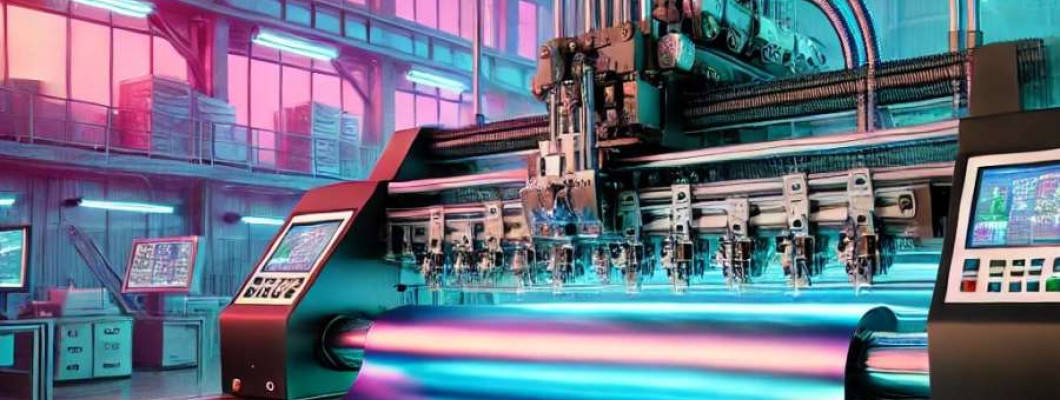
The Industrial Reality of Scaling Embossed Glossy Printing with A2+ UV Printers
In a high-volume printing operation, the decision to integrate an A2+ Size UV Printer specializing in embossed glossy printing is non-trivial. The key challenge emerges from balancing throughput demands, uptime reliability, and labor optimization without escalating operational overhead. Industrial print shops handling commercial packaging or premium promotional materials commonly face tight deadlines and zero tolerance for downtime. Embossed glossy prints demand precise UV curing and stable mechanical subsystems to maintain micron-level embossing consistency across large batches. The business owner’s core concern lies in understanding how asset depreciation and maintenance cycles influence daily operations and long-term cost structures.
For instance, an industrial-scale print shop processing 200 square meters daily encounters bottlenecks if the printer’s curing unit fails prematurely or printhead clogging requires excessive manual intervention. Labor cost escalations occur not only from technician overtime but also from workflow halts. Similarly, the variation in print substrate thickness when applying embossed layers necessitates an adaptive feeding mechanism, influencing maintenance frequency. This scenario underscores the critical need for a printer engineered for continuous operation, not just high-resolution output.
Operational realities extend beyond mechanical resilience; consumable management—including ink chemistry optimized for glossy embossed surfaces—and scheduled system calibrations directly contribute to the asset’s lifecycle value. An insightful appraisal must factor in hidden costs such as downtime due to printhead replacement or UV lamp degradation, which often remain underestimated in preliminary ROI calculations.
Technical Deep-Dive into A2+ Size UV Printers Covering Maintenance and Performance Parameters
Printhead Physics and Wear Dynamics
The printhead lifespan in A2+ UV printers hinges on nozzle integrity and piezoelectric actuator durability. Embossed glossy printing demands frequent high-viscosity UV ink jetting, exacerbating nozzle wear. Typical nozzle diameter ranges from 22 to 35 micrometers with droplet volumes of 6 to 12 picoliters (pl). The physics of ink ejection—governed by the piezoelectric material’s response time and voltage magnitude—affects droplet placement accuracy, crucial for embossed texture fidelity.
Hypothetically, assuming an average nozzle cycle of 50,000 droplets per second, the printhead endures over 4.32 billion cycles daily at peak throughput. Microfractures within piezo elements accumulate, degrading performance and necessitating part replacement around 2000 operating hours. This correlates to approximately 10 months in heavy production environments.
UV Curing System Efficiency and Thermal Stress Impact
The curing unit’s power consumption typically ranges between 50 to 120 Watts per centimeter of print width. For an A2+ size print width of approximately 420 mm, total power draws between 2100 to 5000 Watts during active curing cycles. Thermal management is critical because excessive heat leads to substrate warping, reducing embossing precision. Overheating also accelerates LED or mercury vapor lamp degradation, shortening effective lamp life from an average of 3000 to 1500 operating hours under suboptimal cooling.
Substrate Feeding and Thickness Adjustment Mechanisms
Industrial-grade feeders incorporate servo-motor controlled rollers capable of adjusting to thickness variations from 0.1 mm to 10 mm with positioning accuracy of ±0.05 mm. The complexity of embossed prints demands synchronized emboss height detection and feed rate modulation to prevent registration errors. Compared to simpler manual feeders, this automated system reduces labor costs by up to 25% and minimizes substrate waste by maintaining tolerances below 0.1 mm.
Comparative Analysis of Maintenance Costs Versus Downtime Impact
| Factor | Preventative Maintenance Path | Reactive Maintenance Path |
|---|---|---|
| Printhead Replacement Frequency | Every 2000 operational hours | After nozzle failure (~1500 hours) |
| UV Lamp Replacement | Scheduled every 3000 hours with cooling optimization | Unplanned after overheating damage (~1500 hours) |
| Average Downtime per Incident | 2-4 hours (scheduled) | 8-12 hours (unexpected) |
| Labor Cost Impact (per month) | ~$1,500 for routine servicing | ~$4,500 for emergency repairs |
| Material Waste due to Misprints | Below 1% | Up to 5% |
Ink Chemistry and Gloss Retention Over Production Cycles
UV inks formulated for embossed glossy printing use polymer chains that crosslink upon UV exposure, providing durability and gloss retention. However, curing speed and lamp intensity significantly affect ink surface hardness and texture fidelity. Prolonged use without recalibration can lead to either under-cured soft surfaces or over-cured brittleness causing cracking in embossed areas. Routine spectrophotometric color checks and gloss measurement (targeting 90+ GU at 60 degrees) ensure consistent output quality.
Scenario Analysis Showing Real-World Impact of Printer Specifications
High-Volume Commercial Packaging Manufacturer
This use-case demands rapid turnaround of embossed labels and cartons with tight tolerances on embossed gloss uniformity. The printer’s automated substrate thickness adjustment reduces manual intervention by 30%, while scheduled maintenance lowers downtime risks, enabling a 15% increase in daily throughput. The lifecycle maintenance cost model reveals a 12-month ROI with optimized consumable procurement.
Luxury Brand Point-of-Sale Display Producer
Precision embossing on glossy acrylic substrates requires sub-50 micron registration and bespoke UV ink formulations. The printhead’s fine droplet control ensures micron-level detail, critical for brand aesthetics. Maintenance protocols prioritize printhead integrity, reducing color shifts and gloss degradation—key for luxury client retention.
Custom Artisan Print Shop Scaling to Industrial Volumes
A shop transitioning from small-batch artisan prints to scalable runs benefits from high-accuracy embossing coupled with automated thickness sensing. Labor cost savings derive from less manual adjustment, while robust curing units support diverse substrate types. The operator training requirement escalates, but overall asset longevity and throughput justify the capital investment.
Expert FAQ Addressing Nuanced Industrial-Scale Queries
What are the critical indicators signaling printhead degradation before failure?
Key indicators include increased nozzle misfires detected via real-time optical sensors, variation in droplet volume beyond ±10%, and a rise in electrical drive voltage exceeding 5% of baseline. Regular diagnostic scans can forecast printhead failure 20-30 hours in advance, allowing planned part swaps.
How does UV lamp aging affect embossed glossy finish consistency?
UV lamps experience spectral shift and intensity decay over time. This reduces polymer crosslink density, leading to diminished gloss retention and tactile embossed texture fidelity. Measuring intensity with radiometers monthly and replacing lamps proactively at 80% of rated life maintains print quality.
What filament-level maintenance routines optimize substrate feed systems?
Lubrication of servo-controlled rollers with synthetic oils every 500 hours, calibration verification with laser micrometers monthly, and tension sensor adjustments prevent substrate slippage and misfeeds, preserving embossing alignment.
Can ink viscosity fluctuations impact embossing precision during long runs?
Yes, temperature and humidity variations affect UV ink viscosity, altering droplet formation and deposition. Maintaining ink storage at 22-24°C and using inline viscosity sensors linked to printhead pressure controls mitigates this risk.
How does the printer handle differing substrate thermal expansion rates during embossing?
The system employs adaptive feed rate algorithms tied to thermal sensors. This compensates for expansion-induced dimensional shifts, maintaining print-to-emboss registration within ±0.05 mm across temperature ranges of 15–35°C.
Strategic Verdict and Recommendation for Industrial-Grade Embossed Glossy Printing
The evaluated A2+ Size UV Printer Embossed Glossy Printing emerges as a technically robust and economically viable solution for scalable business owners demanding high throughput, low labor overhead, and predictable maintenance costs. The printer’s architecture balances print quality—micron-level embossed detail and high gloss—with lifecycle considerations such as printhead longevity and UV lamp reliability. Operational data and maintenance cost analysis reveal that adopting this printer reduces downtime and material waste while optimizing labor allocation.
For enterprises scaling production volume without sacrificing industrial-grade precision or serviceability, this product represents a definitive choice. Incorporating automated substrate handling and preventive maintenance scheduling further enhances uptime metrics. Provided operational protocols are strictly observed, the investment delivers measurable ROI within a year under continuous production scenarios. The technological foundation supports future adaptations, including ink chemistry evolution and enhanced thermal management, ensuring sustained competitiveness in embossed glossy print markets.