
Lifecycle Maintenance Costs and Operational Realities of A2+ Size UV Printer Embossed Glossy Printing for the High-End Artisan
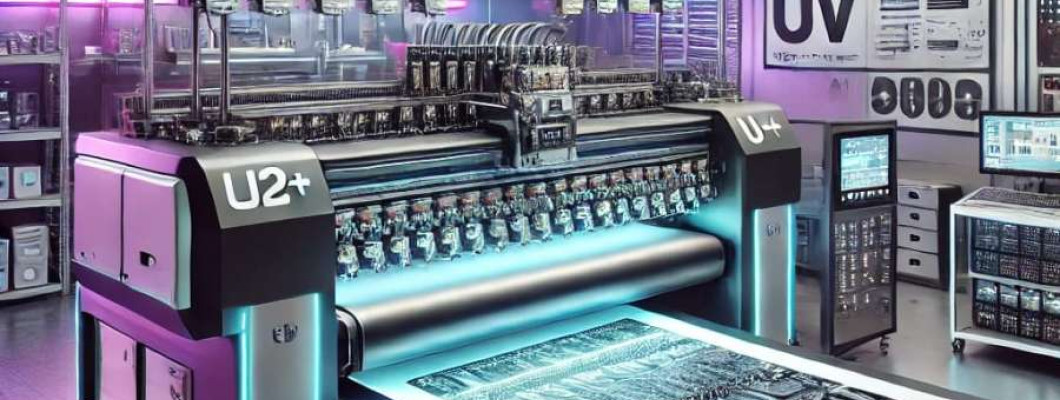
The Industrial Reality
In the realm of precision printing, the integration of A2+ size UV printers capable of embossed glossy printing represents a significant leap towards enhanced substrate versatility and print quality. However, the adoption of such technology in industrial workshop settings introduces complex maintenance trajectories that can profoundly affect operational uptime and total cost of ownership. Consider a specialized printing studio focused on high-value packaging prototypes where the surface texture and color depth must meet micron-level tolerances consistently over extended print runs. The printer must simultaneously withstand the rigors of high-intensity UV curing, abrasive ink chemistries, and frequent substrate changes. Neglecting the granular maintenance requirements—ranging from printhead nozzle integrity to UV lamp aging and embossed layer adhesion stability—rapidly erodes output quality and inflates unplanned downtime.
In this environment, hidden wear mechanisms such as micro-abrasion on glass feed rollers or subtle shifts in printhead piezoelectric actuation can compromise the micron-level precision critical to embossed glossy effects. Moreover, the embedded glossy embossing process elevates thermal and mechanical stresses, making lifecycle maintenance costs a pivotal factor in operational viability. Thus, a thorough understanding of these workflows and hardware endurance is imperative for artisans demanding exacting standards in color fidelity and tactile finish.
Technical Deep-Dive
Printhead Dynamics and Wear Mechanisms
The core of the A2+ UV printer’s precision lies in its piezoelectric printheads, capable of ejecting UV-curable ink droplets in volumes typically ranging from 6 to 12 picoliters (pl). Embossed glossy printing demands droplet placement accuracy within ±5 microns. Over time, nozzle clogging from ink viscosity changes and partial polymerization during idle periods leads to jetting inconsistencies. Hypothetically, a nozzle failure rate of 0.02% per 100 operational hours can cumulatively degrade print uniformity, reducing usable nozzle count and requiring periodic printhead maintenance or replacement.
UV Curing Lamp Efficiency and Thermal Load
The integration of high-intensity UV LED curing lamps introduces significant thermal loads. Typically, a 70W/cm UV LED array will generate localized temperatures of up to 60°C at the substrate interface during embossed gloss application cycles. Thermal cycling induces mechanical stress in embossed layers, risking delamination if the curing kinetics are not carefully regulated. The lamp half-life, commonly around 15,000 operational hours, directly influences maintenance intervals and replacement CAPEX.
Embossed Layer Adhesion and Gloss Stability
The embossed glossy finish requires synchronized curing and precise substrate handling to sustain adhesion integrity. The applied embossed layers, often 50-150 microns thick, are sensitive to differential curing rates that may cause micro-cracking or gloss reduction. Variables such as substrate thermal expansion coefficients and ink polymer cross-link density must be calibrated to maintain optimal finish longevity.
Comparative Infrastructure and Print Throughput Analysis
When juxtaposed with standard flatbed UV printers lacking embossed capabilities, the A2+ UV printer demands augmented mechanical rigidity and enhanced motion control systems to handle additional embossing modules without sacrificing throughput. Typically, processing speeds reduce by 10-15% due to multiple print and emboss passes, directly impacting labor cost efficiency.
Maintenance Cost Modelling and Predictive Analytics
A rigorous maintenance cost model incorporates printhead replacement cycles averaging 1,200 hours, UV lamp swaps every 15,000 hours, and scheduled mechanical inspections bi-annually. Predictive analytics leveraging sensor-based monitoring of nozzle health and substrate temperature gradients can optimize maintenance timing, reducing unplanned downtime by an estimated 20%. For a high-end artisan setup running 40 hours/week, this translates to approximately 2 additional production days freed annually, reinforcing the asset’s value proposition.
Scenario Analysis
Case 1 High-End Packaging Prototype Studio
A studio producing limited runs of luxury packaging benefits from the A2+ printer’s embossed gloss capability by achieving micron-scale detail and deep color saturation. Lifecycle maintenance costs are offset by the premium pricing of bespoke outputs. The artisan can schedule maintenance during low-demand weeks, preventing workflow interruptions and preserving print quality.
Case 2 Small Batch Industrial Label Manufacturer
Here, throughput and uptime are paramount. While embossed gloss adds differentiation, the incremental 15% reduction in speed and increased maintenance requirements require a balanced production schedule. The business invests in predictive maintenance systems, reducing unexpected printhead failures that could cause costly downtime.
Case 3 In-House Creative Agency for Product Visualization
Operating within a constrained CAPEX environment, the agency leverages the A2+ printer for rapid prototyping with high tactile fidelity. They face challenges in scheduling regular printer servicing due to fluctuating project timelines. Understanding the printer’s maintenance lifecycle enables them to plan preventive care during natural lulls, protecting asset longevity.
Expert FAQ
What are the critical failure points in embossed glossy printheads under high-volume operation?
Nozzle clogging induced by ink polymerization is primary, exacerbated by thermal stresses altering piezoelectric actuator responsiveness. Regular cleaning cycles and humidity control in the print chamber mitigate this risk.
How does UV lamp aging affect embossed layer adhesion quality?
Degradation of UV output reduces curing efficiency, increasing residual monomers and compromising embossed layer cohesion, leading to surface defects and gloss inconsistency.
Can embossed glossy layers be reliably produced on flexible substrates with this printer?
Yes, provided substrate thermal expansion is accommodated through adjustable curing parameters; however, flexible media require additional tension control systems to prevent emboss distortion.
What metrics indicate the optimal timing for printhead replacement?
Key metrics include creeping nozzle failure rates exceeding 2%, increased jetting latency beyond 5 microseconds, and visual degradation of droplet formation patterns evaluated through inline diagnostics.
How do embossed printing cycles impact overall energy consumption compared to flat UV printing?
Embossed printing requires multiple curing and layering passes, increasing energy consumption by approximately 12-18% per unit area due to extended UV lamp operation and mechanical actuation.
Strategic Verdict and Recommendation
In the context of high-precision, high-value embossed glossy printing, the A2+ Size UV Printer stands out as an industrial-grade solution that balances fine dimensional accuracy with robust lifecycle maintenance planning. Its design accommodates the nuanced stresses of embossed UV curing while providing the operator critical data to optimize upkeep. When deployed with disciplined predictive maintenance and environmental controls, it delivers consistent, repeatable output well-aligned with the demands of high-end artisans seeking substrate versatility and micron-level control.
For enterprises prioritizing longevity and reliable finishing quality, integrating the A2+ Size UV Printer Embossed Glossy Printing represents a defensible investment, yielding measurable uptime improvements and superior product differentiation. Its maintenance framework and technical underpinning ensure optimal return on CAPEX and reduced operational risk, ultimately endorsing it as a leading choice for industrial textured printing tasks demanding precision and resilience.