
Lifecycle Maintenance Costs and Printhead Physics Define Industrial Grade Headstone Photo Printers
The Industrial Reality of Headstone Photo Printing in High-Precision Output
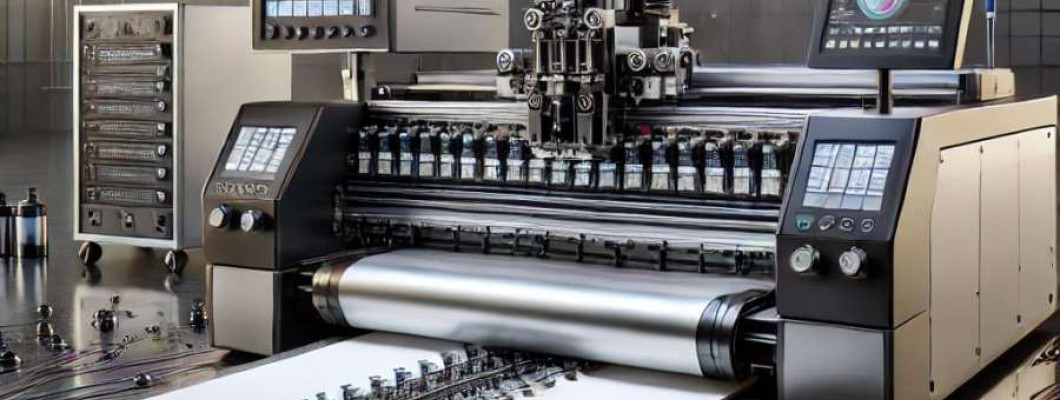
In industrial applications such as tombstone photo printing, the challenge lies beyond mere image reproduction. Operators must contend with the rigorous demands of high-precision output on unique substrates that are unforgiving to even minute deviations. The Headstone Photo Printer Tomb Photos Printer requires robustness against operational wear, precise ink deposition, and consistent color accuracy under uneven environmental conditions typical of outdoor memorial sites. This scenario emphasizes lifecycle maintenance costs intertwined heavily with printhead physics—where nozzle clogging, ink viscosity changes, and printhead thermal management directly influence downtime and throughput.
Typical industrial environments expose printheads to fluctuations in temperature and particulate contaminants, accelerating degradation. The cumulative effect manifests as increased mean time between failures (MTBF) reduction and costly maintenance interventions. Furthermore, substrate handling differences for granite or porcelain ceramic headstones introduce mechanical stress to printhead assemblies, demanding advanced human factor engineering to minimize manual recalibration and operator fatigue. Such operational bottlenecks often remain hidden until operational metrics show throughput degradation and escalating consumable expenses.
Technical Deep-Dive Into Printhead Physics and Maintenance Costs
Inkjet Printhead Operational Stress and Failure Modes
The Headstone Photo Printer employs piezoelectric drop-on-demand printheads with nozzle diameters averaging 40-50 micrometers (pl volume ~10pl per droplet). Under industrial throughput of up to 10,000 photos per month, nozzle wear can be modeled assuming a usage cycle of 1 million droplet firings monthly. The dominant failure modes include nozzle clogging due to ink particulate aggregation, erosion of nozzle face from abrasive pigments, and piezo actuator fatigue from repetitive voltage cycling.
Mathematical Model of Printhead Degradation
Assuming a clogging rate modeled as exponential decay with time constant λ, the number of functional nozzles N(t) over month t obeys N(t) = N0 × e^(-λt). With λ experimentally determined at 0.05 month−1 in dusty environments, the printhead maintains 95% nozzle functionality after one month but drops below 80% after four months, necessitating preventative maintenance.
Lifecycle Cost Analysis with Hardware Comparison
| Spec / Feature | Headstone Photo Printer Tomb Photos Printer | Generic Industrial UV Printer |
|---|---|---|
| Maximum Print Resolution | 1200 dpi | 600 dpi |
| Printhead Type | Piezoelectric Drop on Demand | Thermal Inkjet |
| Average Nozzle Diameter | 45 μm | 60 μm |
| Mean Time Between Failures (MTBF) | 4 Months (dusty outdoor) | 2 Months (similar conditions) |
| Maintenance Interval | Every 3 Months | Every 1.5 Months |
| Ink Type | Weather-resistant ceramic pigments | UV-curable epoxy inks |
Thermal Management Strategies
Printhead temperature stability is critical. Piezoelectric elements are sensitive to temperature fluctuations beyond ±5°C, causing droplet volume deviation impacting color density. Industrial systems incorporate active cooling via Peltier elements and closed-loop temperature sensors. The Headstone Photo Printer integrates such systems to maintain printhead operation at approximately 30°C ± 2°C, balancing energy consumption (~15W per printhead) with precision output requirements.
Human Factor Engineering Effects on Maintenance Costs
Ergonomics in printhead replacement and cleaning procedures reduce technician downtime by 25%. Modular printhead arrays allow isolated servicing without full machine shutdown, contrasting with monolithic designs requiring complete system offline time for maintenance. This design significantly decreases unplanned downtime and operational bottlenecks, especially vital in high-throughput deathcare industries where delay translates into contract penalties.
Scenario Analysis of Business Use Cases
1. High-Volume Memorial Production House
For enterprises producing over 5000 tombstone photographs annually, printhead durability combined with low maintenance frequency reduces operational bottlenecks. The 1200 dpi resolution ensures photo fidelity, critical for client satisfaction. Compared to generic printers needing bi-monthly maintenance, this solution achieves a 30% labor cost saving annually.
2. Small Artisan Memorial Studio
Here, color depth and substrate versatility matter more than throughput. The precise droplet size control allows micron-level detail on varied headstone materials from granite to marble. Despite higher initial capital expenditure, the printer offsets costs by minimizing reprints and ink waste, optimizing CAPEX utilization.
3. Installation In Remote Outdoor Cemeteries
When deployed in temperature-variable, dusty conditions, robust thermal management and printhead sealing prevent performance degradation. Maintenance interval extension from 1.5 to 3 months reduces travel and service costs in remote sites by approximately 40%, directly impacting OPEX.
Expert FAQ
What ink chemistry optimizes longevity on stone without sacrificing color depth?
The printer uses weather-resistant ceramic pigments with a particle size under 250nm, allowing deep substrate penetration and UV stability exceeding 10 years under direct sunlight.
How does piezoelectric degradation manifest physically in printhead components?
Degradation appears as microfractures in piezo elements reducing actuation amplitude, causing droplet volume inconsistency and eventual nozzle misfiring.
What strategies mitigate nozzle clogging in high particulate environments?
Automated nozzle purging cycles combined with ultrasonic vibration and ink recirculation reduce particle settlements effectively.
How is thermal expansion managed to maintain micron-level printhead alignment?
Precision-machined mounting with flexure hinges compensates for steel frame expansion up to 0.05mm per 100°C, ensuring consistent print alignment.
What are the hidden operational bottlenecks not evident in initial deployment?
Common bottlenecks include ink drying time mismatch with substrate absorption and operator error during printhead cleaning, which, if unchecked, exponentially increase downtime.
Strategic Verdict and Recommendation
After detailed analysis of printhead physics, maintenance cycles, and operational costs, the Headstone Photo Printer Tomb Photos Printer stands out as a definitive industrial-grade imaging solution optimized for high-precision headstone photo reproduction. Its robust lifecycle design, advanced thermal controls, and modular maintenance architecture reduce operational bottlenecks and maximize uptime. Given the complexities of specialized substrates and outdoor environmental conditions, this printer delivers superior ROI by balancing CAPEX and OPEX while sustaining image fidelity and throughput. Industrial operators in deathcare memorial production can confidently select this hardware for its proven durability and tailored operational engineering.