
Lifecycle Maintenance Costs and Printhead Physics Define Viability of A3 Spot UV Printing Machines
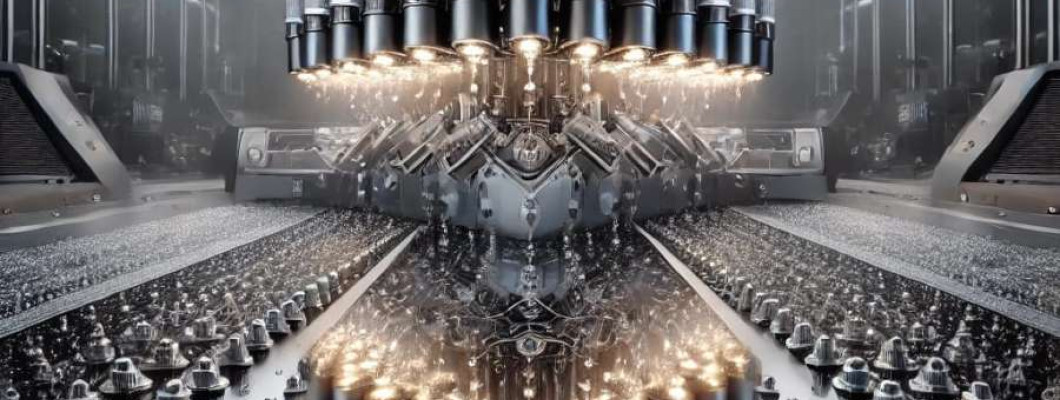
The Industrial Reality of Spot UV Printing Maintenance
In modern printing environments, introducing an A3 Spot UV Printing Machine UV Coating Printer demands careful anticipation of lifecycle maintenance costs intertwined with the physics of printhead operation. Unlike typical digital printers, Spot UV printers deploy ultra-violet light curing chemistry combined with precise mechanical coating applications. The gap between theoretical throughput and practical uptime emerges from nuanced operational bottlenecks, including printhead clogging due to ink viscosity variations, UV lamp degradation over extended cycles, and substrate handling inconsistencies. For industrial users, these factors translate into unplanned downtime and costly part replacements, impacting asset longevity.
Mechanically, the printhead's micro-nozzle arrays operate at droplet volumes commonly between 10-30 picoliters (pl), requiring stable ink rheology and thermally stable substrates. Variations in ambient temperature and humidity cause notable fluctuations in cure rates, with UV lamps degrading from initial intensities of 1500 mW/cm2 to below 900 mW/cm2 after approximately 2000 operational hours. This decline directly impacts coating adhesion quality and throughput speeds, resulting in either increased reject rates or necessitating slower print speeds to maintain quality. These realities create a hidden cost layer often overlooked during ROI calculations.
Thermal and Mechanical Dynamics of Printhead Functionality
Evaluating the A3 Spot UV Printing Machine’s printhead reveals critical physics governing printhead lifetime and coating precision. The printhead uses piezoelectric actuators to eject droplets at frequencies up to 20 kHz with an average nozzle diameter of 20 micrometers (µm). Under continuous operation, thermal expansion in the printhead chassis reaches 15 µm over a 40°C range, which can induce micro-misalignments between nozzle arrays and substrate, deteriorating spot accuracy below the required 60-micron spatial resolution.
The UV curing chamber operates via a bank of mercury vapor lamps calibrated for peak spectral output at 365 nm wavelength, essential for polymerizing UV coatings. Lamp power consumption sits near 250 W per lamp, with four lamps cycling sequentially to minimize heat accumulation, yet the radiative heat flux can elevate chamber temperatures to 60°C. This thermal environment requires forced air cooling systems rated at 150 CFM with a noise floor of 62 dB(A), critical for maintaining printhead integrity and consistent varnish viscosity. Variations in these parameters prompt coating irregularities and accelerated printhead failures.
Data-Driven Comparison of Industrial Coating Methods
| Parameter | Traditional Solvent-Based Coating | A3 Spot UV Printing Machine UV Coating |
|---|---|---|
| Drying Time | 10-15 minutes (oven/air drying) | Instantaneous (UV curing) |
| Energy Consumption per Print (Watts) | Approx. 450 | Approx. 320 |
| Print Speed (A3 sheets/hour) | 50-60 | 70-80 |
| Maintenance Interval (hours) | 500-700 (cleaning solvent) | 800-1000 (UV lamp and printhead) |
| Environmental Compliance | Volatile Organic Compounds (VOC) concerns | Low VOC, higher safety standards |
Maintenance Costs Influenced by Ink Chemistry and Hardware Wear
The ink chemistry used in the A3 Spot UV Printing Machine demands a balance between viscosity, curing speed, and adhesion properties. Viscosity ranges between 12-18 centipoise (cP) at 25°C ensure stable droplet formation; deviations outside this window contribute to nozzle clogging. The most common maintenance actions include printhead cleaning cycles performed every 200 runtime hours and full lamp replacements scheduled between 1800-2200 operational hours, each with costs approximating $400-600 per intervention.
Particularly notable is the printhead’s piezoelectric lifespan traditionally rated at 10 million cycles per nozzle. At 20 kHz firing frequency, this corresponds to roughly 140 hours of continuous use per nozzle before signal degradation arises. Industrial workflows employing batch printing must therefore implement staggered operational cycles and preventive maintenance to avoid sudden failures. Such operational discipline directly impacts asset depreciation rates and overall equipment effectiveness (OEE).
Infrastructure Integration and Its Effect on Throughput
Integrating the A3 Spot UV Printing Machine into existing print shops requires accommodations for electrical supply and ventilation. It demands a 220 V single-phase input with peak consumption spikes of 1.8 kW during curing lamp ramp-up, mandating dedicated circuit breakers and power conditioning to prevent voltage drop. Moreover, the forced air cooling system necessitates a minimum exhaust airflow of 200 CFM to the atmosphere, meaning HVAC modifications may be required in confined or temperature-controlled spaces.
Software integration challenges arise with proprietary UV curing profiles and printhead control algorithms not always compatible with generic Print Management Systems (PMS). This necessitates dedicated interfaces or middleware to synchronize print job data, which can add initial overhead but ultimately ensures consistent quality and reduces operator error.
Scenario Analysis Showing Real-World Impact on Businesses
Use-Case 1 - Small Packaging Manufacturer
For a packaging firm producing runs of 500-1000 A3 sheets per day, the rapid curing capability reduces turnaround by approximately 25%, slashing post-print drying times from hours to seconds. However, maintenance cycles increase operational cost by about 8%, requiring scheduled downtime every 3-4 weeks. The machine’s sub-1 mm positional accuracy supports fine spot varnishing demanded for brand-enhanced packaging.
Use-Case 2 - High-Volume Commercial Printer
A commercial print house running 8-hour shifts benefits from the machine’s 70-80 sheets per hour throughput combined with consistent printhead maintenance plans. While energy consumption per print is slightly elevated compared to solvent-based methods, the environmental compliance savings and faster job completion offset operating expenses. The key driver is the machine’s modular UV lamp array, allowing partial lamp replacement to minimize downtime.
Use-Case 3 - Specialty Artisan Print Shop
Artisan shops emphasizing precision spot UV effects on premium substrates find the machine’s micron-level dot positioning superior to traditional screen coating. However, substrate handling features are limited, requiring operator skill to avoid thermal warping. Maintenance cycles are adaptively planned, and the machine’s compact footprint aligns with boutique operational constraints.
Expert FAQ on Advanced Operational Considerations
- What factors most significantly influence the printhead’s lifespan?
- Key factors include droplet ejection frequency, ink viscosity stability, thermal cycling within printhead components, and frequency of cleaning cycles. Maintaining ink within 12-18 cP and minimizing extended idle periods reduces piezoelectric fatigue.
- How does UV lamp degradation affect coating uniformity?
- UV lamp irradiance decreases from 1500 to under 900 mW/cm2 after about 2000 hours, causing slower polymerization rates and uneven varnish adhesion, which can produce visible artifacts and increased reject rates.
- Are there recommended environmental controls for optimal operation?
- Maintaining ambient temperature between 20-25°C and relative humidity at 40-50% ensures stable varnish viscosity and prolongs equipment life. Forced air cooling must be unobstructed to prevent heat buildup in curing chambers.
- What infrastructure upgrades are critical for optimal uptime?
- Dedicated 220 V power with surge protection, enhanced ventilation delivering at least 200 CFM exhaust, and integration middleware with existing PMS systems ensure stable operation and quality consistency.
- How can print throughput be maximized without sacrificing maintenance?
- Implementing staggered printhead usage, scheduling routine cleaning every 200 hours, and deploying lamp cycling strategies extends hardware life while maintaining top speeds near 80 A3 sheets per hour.
Strategic Verdict and Recommendation for Industrial Deployment
Given the intricate balance between printhead physics, UV curing technology, and lifecycle maintenance costs, the A3 Spot UV Printing Machine UV Coating Printer represents a pragmatically viable, industrial-grade solution for enterprises seeking high-throughput, quality spot UV finishing. Its calibration toward thermal management and modular lamp systems directly addresses operational bottlenecks common in industrial print environments.
The machine’s asset longevity, driven by robust printhead design and optimized maintenance intervals, supports viable CAPEX amortization across several years with manageable OPEX profiles. Its environmental compliance advantages and instantaneous curing further position it ahead of solvent-based alternatives. For businesses scaling from prototype phase to mass production or diversifying product finishes, this system delivers a balanced hardware/software ecosystem with industrial resilience.
Potential adopters should closely assess their infrastructure readiness for electrical and ventilation upgrades, but these costs are outweighed by reduced downtime and improved quality control. Overall, investment in the A3 Spot UV Printing Machine UV Coating Printer is recommended for companies prioritizing print precision, environmental standards, and lifecycle cost efficiency.