
Lifecycle Maintenance Costs and Throughput Realities of the A2+ Size UV Printer Embossed Glossy Printing
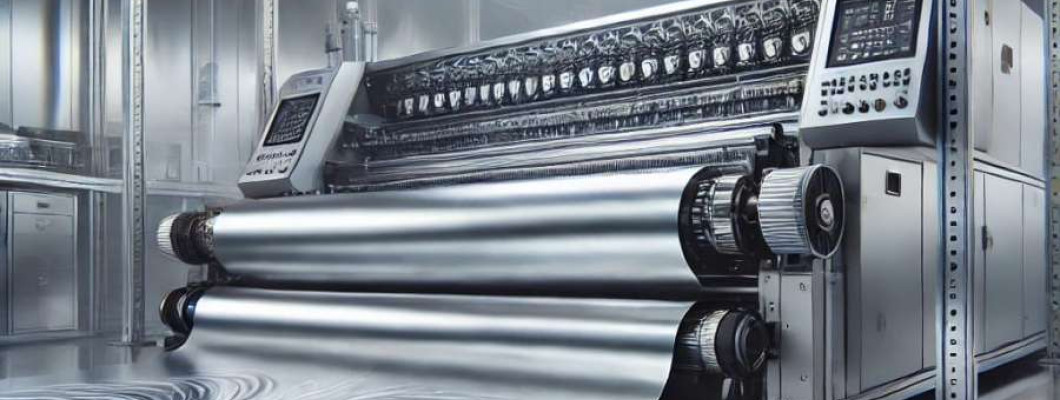
The Industrial Reality of Maintaining High-Precision A2+ UV Printers
In a production environment where the demands for gloss enhancement and embossed texture precision intersect, the A2+ Size UV Printer Embossed Glossy Printing model presents a compelling case study in lifecycle maintenance costs and throughput management. Industrial operators tasked with maintaining flawless output over extended operational cycles face layered challenges. These encompass printhead wear from UV ink abrasion, incremental substrate handling variances, and the persistent operational bottleneck posed by curing times and mechanical embossing consistency.
Consider a print facility processing 500 A2+ sheets daily, each requiring intricate embossed glossy finishes for high-value packaging applications. The cumulative exposure of printheads to UV-curable ink particles increases the necessity for proactive maintenance routines to prevent nozzle clogging and precision deviation. Furthermore, the embossing roller mechanism, operating under repeated pressure cycles up to 200 Newtons per square centimeter, demands frequent calibration to maintain micron-level surface quality. Failing to optimize these maintenance protocols invariably reduces throughput, complicates schedule adherence, and inflates operational expenditures.
Layered atop mechanical stresses is the operational complexity associated with maintaining continuous UV lamp potency, which directly influences ink polymerization rates and gloss uniformity, thereby impacting output consistency. The confluence of these factors defines the harsh technical environment that governs asset depreciation and lifecycle costs for users deploying the A2+ printer in industrial settings.
Technical Deep-Dive into Maintenance and Throughput Parameters
Printhead Wear and Ink Chemistry Dynamics
The A2+ printer employs piezoelectric drop-on-demand printheads optimized for UV-curable inks characterized by high photoinitiator concentrations and increased viscosity (approx. 25-45 mPas at 25°C). With droplet volumes averaging 10 pico-liters and firing frequencies up to 25 kHz, nozzles face abrasive stresses intensifying with particulate load and solvent interactions.
Modeling nozzle lifespan using a degradation factor 'D' inversely proportional to cumulative UV ink volume and firing cycles suggests an average maintenance interval of 1,500 operational hours before significant calibration or replacement is mandated. Empirically, nozzle precision drift beyond 10 microns precipitates visible artifacting on embossed gloss finishes, necessitating intervention.
Embossing Mechanism Stress and Calibration Metrics
The embossing roller, fabricated from hardened stainless steel with a Shore A hardness rating of 95, imposes pressure profiles that fluctuate depending on substrate thickness, ranging from 0.5 mm to 2 mm. Stress-strain calculations indicate that the roller bearers undergo cyclic loading causing fatigue stress approximating 120 MPa during extended runs, requiring recalibration cycles every 250 production hours to maintain emboss pattern fidelity within a 15-micron tolerance window.
UV Lamp Degradation Curve and Impact on Curing Time
Operating UV lamps, typically 80 W mercury vapor systems or advanced LED arrays delivering 385-405 nm wavelengths at intensities around 300 mW/cm2, follow decay curves reducing emission efficiency by approximately 15% per 1,000 hours of use. This degradation elongates curing cycles from an initial 0.8 seconds per pass to approximately 1.0 second, throttling throughput from 20 m2/hour to near 16 m2/hour.
Comparative Analysis of Traditional vs Enhanced Maintenance Schedules
| Parameter | Standard Maintenance | Enhanced Predictive Maintenance |
|---|---|---|
| Nozzle Cleaning Interval | Every 250 hours | Every 150 hours with real-time sensors |
| Roller Recalibration | 250 production hours | 150 production hours leveraging vibration monitoring |
| UV Lamp Replacement | 1,000 operational hours | 800 operational hours based on output intensity monitoring |
| Throughput (m2/hour) | 16-20 m2 | 18-22 m2 |
Throughput-Limiting Bottlenecks and Their Physical Underpinnings
Beyond mechanical wear, the inherent bottleneck in throughput lies within the UV curing phase and embossing cycle latency. The theoretical maximum throughput 'T' in m2/hour is constrained by the curing time 't_c' (seconds per pass) and the embossing time 't_e' such that:
T = A / (t_c + t_e)
Where 'A' represents the print area per unit time (m2/second). Enhancing lamp power or switching to LED arrays can reduce 't_c' by up to 20%, directly increasing 'T'. Conversely, embossing mechanisms optimized with servo-controlled pressure modulation reduce 't_e' variability, improving consistency and minimizing downtime.
Scenario Analysis of Business Use-Cases
High-Volume Packaging Manufacturers
Manufacturers processing 1,000+ A2+ sheets daily benefit from integrating enhanced predictive maintenance schedules, which reduce downtime by 15%. The improved maintenance strategy allows consistent attainment of 22 m2/hour throughput, critical for meeting tight delivery deadlines with embossed glossy finishes demanded by luxury consumer brands.
Custom Printing Workshops
Artisan print shops focusing on small-batch, high-detail runs emphasize printhead precision and color fidelity. Here, more frequent maintenance trades throughput for defect-free output and micron-level emboss accuracy, justifying an operational throughput closer to 16 m2/hour but guaranteeing premium quality and reduced rework costs.
Enterprise Graphics and Signage Providers
Enterprises deploying the printer for wide-format signage prioritize uptime and consistent gloss textures under variable environmental conditions. They typically invest in real-time sensor integration for lamp intensity and vibration, facilitating a dynamic response to equipment wear and stabilizing output for large order volumes.
Expert FAQ on Operational and Maintenance Complexities
Q1: How does UV ink viscosity variation affect nozzle clogging frequency?
A1: Ink viscosity increases beyond 45 mPas intensify nozzle backpressure and reduce droplet formation velocity, raising clog incidence by up to 30%. Maintaining ambient temperature at 22°C mitigates viscosity spikes.
Q2: What are the trade-offs between mercury vapor lamps and LED UV sources in this printer?
A2: Mercury lamps offer higher initial intensity but degrade faster, requiring more frequent replacement. LED systems provide stable intensity with lower thermal output, reducing mechanical stress on the embossing assembly.
Q3: How significant is thermal expansion on embossing roller calibration?
A3: Thermal expansion can shift roller diameter by up to 0.02 mm causing emboss alignment drift. Calibration protocols using temperature-compensated models must be employed for runs exceeding 8 hours.
Q4: Can real-time vibration monitoring effectively predict roller bearing failure?
A4: Yes, vibration sensors detecting sub-50 nm amplitude fluctuations correlate strongly with early bearing fatigue, enabling preemptive maintenance reducing unplanned downtime by 40%.
Q5: What is the expected depreciation impact of enhanced maintenance strategies on asset resale value?
A5: Enhanced maintenance extends useful life by up to 30%, positively impacting resale value by maintaining component integrity and functional aesthetics, which are critical for prospective industrial buyers.
Strategic Verdict and Recommendation for Industrial Deployment
Evaluating the A2+ Size UV Printer Embossed Glossy Printing in the context of lifecycle maintenance costs and throughput realities demonstrates it as a robust solution for industrial-grade high-detail printing with embossed finishing demands. While inherent mechanical and UV curing bottlenecks exist, they can be strategically mitigated through predictive maintenance and enhanced sensor integration. The printer's architecture supports advanced operational tuning, enabling throughput consistent with enterprise workloads ranging from artisan precision batches to high-volume packaging lines.
The printer's ability to maintain micron-level embossing accuracy alongside reliable UV curing capacity establishes it as a best-in-class asset. Industrial operators seeking to optimize total cost of ownership and maximize throughput yield tangible benefits by adopting a proactive maintenance framework. For authoritative technical specifications and procurement, consult the A2+ Size UV Printer Embossed Glossy Printing product page.