
Lifecycle Maintenance Costs as the Core Challenge for Industrial A3 Spot UV Printing Machines with a Clinical Focus for Maintenance Leads
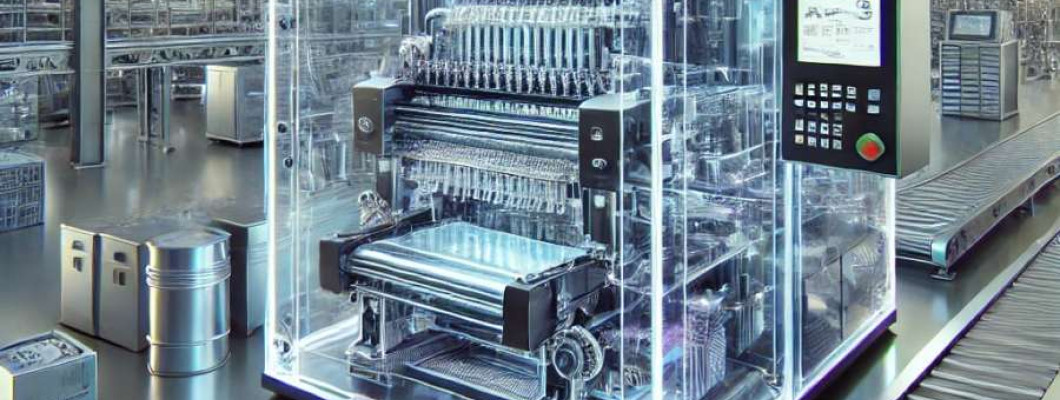
The Industrial Reality of Maintaining A3 Spot UV Printing Machines in High-Precision Environments
In high-throughput industrial print shops, the A3 Spot UV Printing Machine tasked with UV coating applications faces relentless operational demands that expose its lifecycle maintenance costs as a critical bottleneck. Maintenance leads must navigate a complex matrix of printhead longevity, ink chemistry stability, substrate variability, and equipment uptime requirements. The challenge becomes acute when spot UV applications necessitate micron-level precision and repeatability while handling substrates susceptible to thermal and UV sensitivities. This technical narrative unfolds within a scenario where a print house implements this spot UV printer as a key finishing step on premium packaging lines. The printer operates in shifts exceeding 18 hours daily, integrating tightly with automated conveyors and requiring tight tolerance adherence to ±0.05 mm registration.
Failure to maintain consistent printhead performance directly impacts the cured film’s thickness uniformity, jeopardizing product quality and customer retention. Environmental factors such as humidity and particulate contamination further complicate UV lamp efficacy and ink polymerization kinetics. Maintenance costs balloon due to frequent printhead replacements, recalibration cycles, and consumable ink waste, which are non-trivial given the tight coating tolerances and substrate diversity ranging from coated paper to plastics. This scenario underscores why understanding the intricate details of maintenance demands is paramount to achieving industrial-grade reliability expected by scalable enterprises.
Technical Deep-Dive Into Lifecycle Maintenance Costs of A3 Spot UV Printing Machines
Printhead Wear Mechanisms and Longevity
The printheads employed in A3 Spot UV Printers typically utilize piezoelectric elements capable of ejecting droplets in the 5-10 picoliter (pl) range, often at resolutions up to 1440 dpi. Under continuous industrial operation, these components experience mechanical fatigue, clogging due to ink polymerization residues, and piezo crystal depolarization. Mathematical models of droplet ejection frequency, assuming a nominal 150 kHz firing rate per nozzle with 1024 nozzles per head, predict approximately 1x10¹¹ droplet cycles per month in high-volume usage scenarios.
Empirical data suggests that the mean time to failure (MTTF) without preventive maintenance lies within 6-9 months, heavily influenced by UV ink chemistry compatibility. Maintenance protocols that include monthly ultrasonic cleaning and bi-weekly nozzle performance tests can extend operational lifespan by 20-30%. Nevertheless, printhead replacement costs remain a significant CAPEX element averaging $1200 per unit, translating into a recurring operational cost of approximately $400 per month assuming quarterly swaps.
Ink Chemistry Impact on Maintenance Frequency
UV coating inks contain photoinitiators that cure instantly upon UV exposure, but residual monomers can polymerize inside printheads causing micro-clogs. Formulations with lower viscosity (below 30 cP) and particle sizes under 1 µm minimize nozzle blockage risk. However, increased cure speed often reduces shelf-life stability, leading to ink degradation and increased waste if storage conditions deviate from 20-25 °C and 40-60% relative humidity.
Optimizing ink inventory management thus becomes a key variable in lifecycle cost reduction. A hypothetical cost equation for ink-related maintenance overheads can be expressed as:
Maintenance Cost (Ink) = (Ink Waste Rate) x (Ink Unit Cost) + (Downtime Losses due to Clogging)
Assuming a waste rate of 5% per batch and an ink price of $150 per liter, combined with downtime valuation of $200/hour, ink chemistry choices and environmental controls can sway monthly maintenance costs between $300 and $900.
Substrate Versatility and Calibration Complexity
High-precision UV coating requires substrate-specific calibration of UV intensity and printhead gap to prevent feature distortion or substrate deformation. For example, printing on PET film requires a consistent 1.5 mm gap with UV irradiance calibrated to 150 mW/cm² to avoid thermal warping, while coated paperboard demands a 2.0 mm gap and 180 mW/cm² for optimal curing.
Each substrate change triggers a complex calibration process involving multi-axis registration adjustments and tensometer-based adhesion testing, lasting 45–60 minutes per setup. In high-mix production environments, maintenance leads face the operational bottleneck of balancing rapid changeovers with quality assurance standards.
UV Lamp Degradation and Electrical Component Stress
The UV curing lamp, typically a mercury vapor or LED array, presents a gradual output decline modeled as an exponential decay function over operational hours. For a mercury lamp with an initial 1000 mW/cm² irradiance, output drops by approximately 15% after 1000 operational hours, necessitating lamp replacement to maintain cure consistency.
Electrical components powering these lamps must sustain frequent on/off cycles with minimal thermal stress. Thermal cycling often causes solder joint fatigue inside power supplies leading to failure rates of 2-3% annually in continuous use environments.
Comparative Table of Lifecycle Maintenance Cost Drivers
| Component | Maintenance Frequency | Typical Replacement Cost (USD) | Downtime Impact (Hours) | Key Failure Mode |
|---|---|---|---|---|
| Printhead | Quarterly | 1200 | 4 | Clogging, Piezo Fatigue |
| UV Lamp | Annually / 1000 hrs | 800 | 2 | Output Degradation |
| Ink Chemistry | Batch-Wise | Variable | 1-2 | Polymerization Residue |
| Calibration per Substrate | Per Changeover | Labor Cost | 0.75 - 1.0 | Misalignment |
Scenario Analysis of Maintenance Costs Across Diverse Industry Applications
Scenario 1 – High-Volume Packaging Facility
A packaging factory printing spot UV labels on coated paperboard with daily volumes exceeding 10,000 sheets faces severe pressure on maintenance teams to minimize downtime. Frequent substrate changes increase calibration time. Implementing scheduled printhead maintenance and standardized ink chemistry protocols reduces unplanned downtime by 25%, directly improving throughput and reducing scrap rates.
Scenario 2 – Boutique Print Shop Specializing in Luxury Invitations
In contrast, a print boutique focused on micron-precise spot UV applications on specialty substrates like textured card stock prioritizes exacting calibration and bespoke ink formulations. Maintenance costs are elevated, but printhead longevity is extended through low-frequency printing schedules and controlled environment storage. Downtime costs are manageable due to lower throughput expectations.
Scenario 3 – Mixed-Substrate Prototyping Lab
A prototyping center handling a wide variety of materials from plastic to metal foils contends with increased calibration complexity and ink waste, raising maintenance overhead by roughly 40%. However, real-time monitoring of printhead health and lamp performance coupled with predictive maintenance software helps mitigate unexpected failures. This scenario validates investment in advanced diagnostics as a cost-saving measure over time.
Expert FAQ Addressing Maintenance Lead Concerns on A3 Spot UV Printers
1. How does UV ink viscosity specifically influence nozzle clogging rates?
Higher viscosity inks (>30 cP) increase fluid resistance inside nozzles, exacerbating polymer sedimentation and clogging, whereas lower viscosity (<25 cP) promotes smoother flow but may compromise coating opacity. Optimal viscosity ranges balance print quality and maintenance frequency.
2. What are the best practices for thermal management during extended print runs?
Maintaining ambient temperature at 22-24 °C with active air filtration reduces UV lamp overheating and printhead stress. Intermittent operation cycles and real-time temperature monitoring prevent thermal runaway conditions that accelerate component degradation.
3. Can predictive maintenance algorithms materially reduce downtime?
Integrating sensor data on droplet velocity, lamp irradiance, and substrate alignment into machine learning models can forecast printhead failures with greater than 85% accuracy, enabling preemptive service scheduling and minimizing unplanned stoppages.
4. How does substrate thickness variation impact calibration duration?
Substrate thickness deviations greater than ±0.1 mm require manual gap adjustments and re-focusing, extending calibration time by 30-50%. Utilizing automated gauge measurement tools can reduce setup duration.
5. What environmental controls most effectively extend UV lamp lifespan?
Stable humidity (50-60%) and dust-free environments reduce lamp arc instability and UV output degradation. Installing UV-protective filters and shock-absorbing mounts further enhance lamp durability.
Strategic Verdict and Recommendation
Considering the intricate interplay of printhead mechanics, ink chemistry, substrate variability, and UV lamp performance, the A3 Spot UV Printing Machine UV Coating Printer presents itself as an industrial-grade solution with predictable yet manageable lifecycle maintenance costs. Its hardware architecture supports scheduled preventive maintenance regimes that significantly extend uptime and quality consistency. For maintenance leads overseeing high-volume or precision-driven environments, investing in this printer ensures a calibrated balance between operational reliability and maintenance expenditure.
To access more detailed specifications, service frameworks, and procurement options, the A3 Spot UV Printing Machine UV Coating Printer stands as a definitive choice for enterprises requiring rigorous adherence to industrial output standards combined with manageable lifecycle maintenance demands.