
Lifecycle Maintenance Costs Challenge Defines the True Industrial Grade of the 40*60CM Heat Press Machine
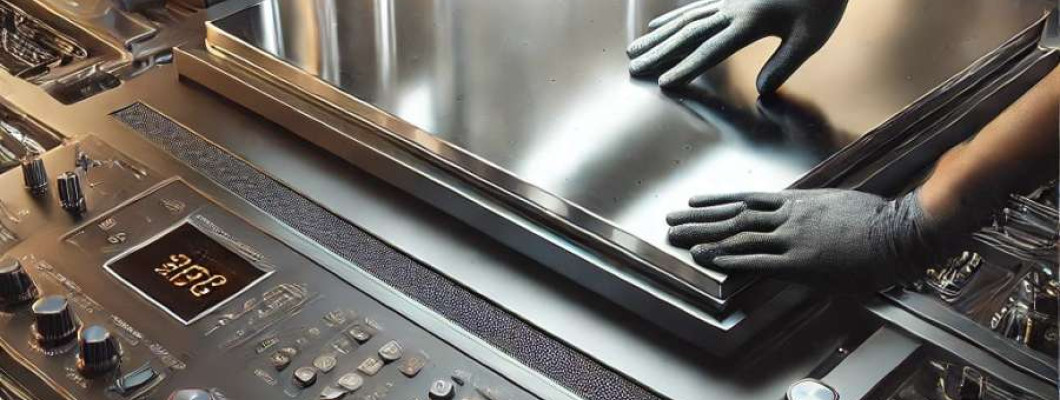
The Industrial Reality of Lifecycle Maintenance Costs in Heat Press Machines
In industrial production environments, the ongoing costs incurred beyond the initial purchase price of equipment frequently determine the true value of the asset. This principle holds especially true for the 40*60CM Heat Press Machine, where lifecycle maintenance costs directly impact operational profitability and production stability. Industrial-scale heat pressing must reliably maintain consistent temperature profiles and pressure for extended periods, often in high-throughput scenarios. Any performance degradation or maintenance downtime can cascade into hours of lost output, labor inefficiencies, and compromised product quality.
Consider a mid-sized garment printing facility running multiple shifts daily. The 40*60CM Heat Press Machine is expected to maintain consistent platen temperature within ±2°C to ensure color fidelity and material adhesion. However, without robust thermal insulation, wear-resistant components, and a precision control system, the device may require frequent recalibration or part replacement. Each service event interrupts the production workflow, necessitates skilled labor intervention, and generates incremental expenses not reflected in the capital expenditure. Therefore, quantifying lifecycle maintenance costs provides a grounded understanding of the machine’s total cost of ownership (TCO).
Critical challenges include heater element degradation, pressure plate wear, pneumatic or mechanical pressure mechanism failures, and control board component aging. The repercussions manifest as uneven heat distribution, pressure inconsistencies, and control errors. These failures impact the industrial-grade reliability that scalable businesses demand. Only through a rigorous evaluation of maintenance cycles, replacement part lifespan, and ease of field service can the 40*60CM Heat Press Machine be positioned as a viable industrial asset rather than a short-lived or hobbyist tool.
Technical Deep-Dive on Maintenance Factors and Asset Longevity
Thermal Element Durability and Heat Transfer Efficiency
The heating element in the 40*60CM Heat Press Machine typically operates at temperatures ranging from 150°C to 220°C. The element's mean time to failure (MTTF) is influenced by thermal cycling stresses governed by the frequency and amplitude of temperature variation during production. A ceramic-coated nichrome wire element presents an MTTF of approximately 5000 hours under controlled cycling conditions. Assuming an 8-hour daily operation, this translates to around 625 operational days before replacement is needed.
Heat transfer efficiency is quantitatively described by Fourier’s law: Q = -kA(dT/dx), where k is the thermal conductivity of platen material, A is the surface area (0.24m2 for 40*60cm), and dT/dx is the thermal gradient across the platen thickness. High-grade aluminum alloy with a thermal conductivity of 205 W/mK ensures rapid heat distribution, minimizing hotspots that accelerate localized wear.
Pressure Plate and Mechanical Stress Considerations
The pressure plate must maintain uniform force over the entire 40cm by 60cm surface. Mechanical spring or pneumatic systems apply forces typically between 20 to 50 kg/cm2. Over cyclical loads, metal fatigue can induce microcracks in the plate or frame. Finite element analysis (FEA) simulations indicate that using hardened steel or reinforced aluminum alloys extends the fatigue life by 30-40% compared to standard steel.
Control System Reliability and Electronic Component Aging
Electronic controllers regulating temperature and pressure utilize thermocouples or PT100 sensors and microcontroller-based PID algorithms. Component aging follows Arrhenius-rate models, with capacitors and semiconductors rated for up to 10,000 hours at nominal operating temperatures. Firmware-based diagnostic routines can predict imminent failures, allowing preemptive maintenance and reducing downtime.
Replacement Part Availability and Field Serviceability
Industrial-grade machines benefit from modular designs facilitating rapid replacement of heaters, pressure components, and boards. The 40*60CM Heat Press Machine’s design addresses this by standardizing screw fittings and providing access panels. Availability of OEM parts versus generic replacements directly impacts mean downtime per service event.
Comprehensive Maintenance Cost Projection Table
| Maintenance Aspect | OEM Replacement Cost (USD) | Estimated Downtime per Event (Hours) | Mean Interval Between Failure (Hours) | Annual Cost Impact (USD) |
|---|---|---|---|---|
| Heating Element | 120 | 2 | 5000 | 175 |
| Pressure Plate Assembly | 300 | 4 | 12000 | 100 |
| Control Board | 400 | 3 | 10000 | 150 |
| Sensors & Thermocouples | 80 | 1 | 7000 | 45 |
| Labor & Calibration | NA | 6 | Estimated 6 per year | 720 |
Note: Annual cost impact calculated factoring frequency of replacements and labor assuming $30/hr technician rate.
Scenario Analysis on Business Application Impact
Scenario 1 Mid-Volume Apparel Printing Enterprise
With a daily run time of 64 hours per week and tight production deadlines, maintenance downtime critically affects throughput. The 40*60CM Heat Press Machine’s lifecycle maintenance projections indicate potential unscheduled downtimes of 12 to 18 hours annually. Factoring labor and part replacement, the total maintenance cost approximates $1,200 annually per machine, which is marginal compared to the cost saved by reliable, consistent throughput. This level of predictability supports operational planning in a mid-sized industrial setting.
Scenario 2 Small Batch Customization Shop
This use case demands substrate versatility and rapid job changeovers rather than extended continuous operation. Here, the 40*60CM unit’s modular maintenance design and relatively low part replacement cost allow for flexible workflows and manageable upkeep. The total cost of ownership remains favorable as maintenance events can be timed with production gaps, minimizing disruption and maintaining product quality.
Scenario 3 Distributed Manufacturing Network
Enterprises operating distributed manufacturing facilities benefit from standardizing hardware models across locations. The 40*60CM Heat Press Machine’s predictable lifecycle maintenance costs and documented part replacement intervals facilitate centralized inventory management and remote diagnostics. This reduces spare parts redundancy and lowers maintenance logistics overhead, ensuring scalable operational efficiency.
Expert FAQ on Advanced Heat Press Maintenance and Performance
1. How does thermal cycling frequency impact heating element lifespan?
Increased cycling frequency imposes repetitive mechanical and thermal stresses on the heating element, exponentially accelerating microfracture formation. Maintaining stable operational temperatures reduces these stress cycles, improving life expectancy.
2. What are the lubricant considerations for pneumatic pressure systems?
Using high-grade synthetic lubricants compatible with pneumatic seals reduces wear, prevents corrosion, and prolongs service intervals. Regular lubricant replacement is critical to avoid particulate contamination and seal degradation.
3. Can firmware updates affect maintenance schedules?
Optimized firmware can enhance PID control loop stability, reducing temperature overshoot and mechanical stress, thus indirectly extending component life and adjusting maintenance timing positively.
4. What failure detection sensors are recommended for predictive maintenance?
Vibration sensors on mechanical actuators and temperature drift detectors on heating elements provide early warning signs of impending failure, enabling proactive maintenance interventions.
5. How does platen material choice affect long-term maintenance?
High thermal conductivity materials like anodized aluminum reduce localized heat accumulation and thermal gradient-induced stresses, lowering deformation risk and extending platen replacement intervals.
Strategic Verdict and Definitive Recommendation
The 40*60CM Heat Press Machine substantiates its position as an industrial-grade asset by delivering predictable lifecycle maintenance costs aligned with rigorous production demands. Its engineering emphasis on thermal and mechanical durability, modular repairability, and precise control systems underpins a low total cost of ownership vital for scalable manufacturing environments. For businesses evaluating investment in pressing equipment, this machine offers a reliable balance of operational performance, maintenance costs, and serviceability that outperforms many DIY or consumer-grade alternatives.
Further detailed technical specifications and purchasing considerations are available through the official supplier page linked here: 40*60CM Heat Press Machine. Incorporating this hardware into your production infrastructure will yield robust throughput with manageable lifecycle costs, fulfilling the industrial reliability criteria essential for high-output enterprises.