
Lifecycle Maintenance Costs Challenge for A2+ Size UV Printer Embossed Glossy Printing in Industrial Settings
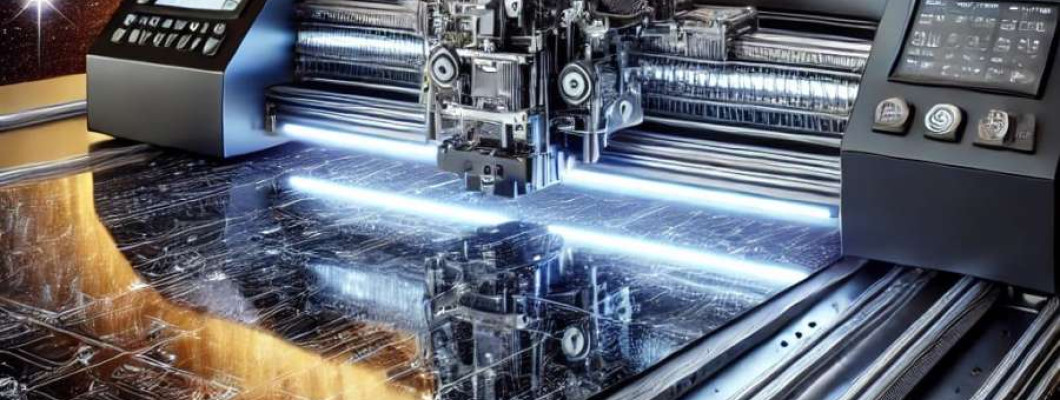
The Industrial Reality of Maintaining A2+ UV Printers under Continuous Operation
Industrial-grade UV flatbed printers designed for A2+ sized substrates with embossed glossy finishes face rigorous demands in manufacturing environments. Unlike desktop or hobbyist equipment, these systems encounter continuous multi-shift operation, diverse substrate materials, and complex finishing workflows. A critical challenge emerges around lifecycle maintenance costs—substandard maintenance cycles or overlooked component wear can exponentially increase downtime, reduce throughput, and elevate total cost of ownership beyond initial capital expenditures.
Consider a print shop running the A2+ Size UV Printer Embossed Glossy Printing model on layered acrylic and aluminum substrates. The printer’s UV lamp intensity and printhead precision are calibrated for micron-level glossy embossing, requiring consistent thermal management and ink chemistry stability. Over a 12-month period, printhead nozzles degrade from particulate contamination, leading to clogged nozzles and color banding defects. The embedded glossy finish further complicates drying times and necessitates repeated print passes, accelerating wear on linear guides and vacuum tables. Factory floor technicians must schedule frequent preventive maintenance to forestall catastrophic failures and maintain output quality within 10 microns tolerance.
Moreover, operational environments with inconsistent ambient temperatures can destabilize UV curing cycles. Under such conditions, component replacements—including UV lamps, printhead cartridges, and cooling fan assemblies—become recurrent, representing hidden costs often underestimated in initial ROI calculations. The risk magnifies in facilities lacking automated fault detection, where print errors cause high scrap rates and increased labor hours for quality control. These scenarios exemplify the criticality of a maintenance-focused lifecycle strategy.
Technical Deep-Dive of A2+ UV Printer Maintenance and Operational Performance
Printhead Longevity and Failure Modes
The printhead constitutes the most vulnerable and costly consumable in UV flatbed printers designed for embossed glossy finishes. These heads generally deploy piezoelectric drop-on-demand technology, ejecting droplets approximately 6 pl in volume at resolutions reaching 1440 dpi. Over sustained operation, nozzle orifice erosion and ink sediment buildup contribute to a failure rate approximating 8% per 1000 operational hours in industrial environments.
Mathematically, if a printhead costs $1200 and requires replacement every 1200 hours due to nozzle failure, the maintenance cost per operational hour reaches $1.00 excluding labor. Factoring downtime averaging 3 hours for replacement and calibration further impacts throughput negatively.
UV Lamp Degradation Impact on Curing and Gloss Quality
UV lamps in this class operate at approximately 80 W/cm with an expected lifespan around 2000 hours. Lamp irradiance diminishes exponentially with use, modeled by I(t) = I_0 * e^(-kt), where k~0.0005/hour. Reduced intensity leads to under-curing, causing glossy embossed finishes to lose adhesion strength and color vibrancy.
Thermal Management Constraints
Reflective substrates and high-power LEDs generate considerable heat, necessitating effective thermal dissipation methods. The embedded cooling system typically consumes 150 W but under high ambient temperatures (>35°C) runs at reduced efficiency. Consequently, ink viscosity fluctuates, increasing printhead misfire rates by 15% when operating outside optimal temperature ranges (20-30°C).
Vacuum Table Precision and Wear
The vacuum table’s microstructure is crucial in maintaining substrate flatness within ±5 microns tolerance. Over 18 months, mechanical wear and particulate accumulation degrade suction power by 20%, interfering with embossed glossy layer registration.
Ink Chemistry Stability and Its Influence on Maintenance Cycles
UV-curable inks for embossed glossy printing have complex photoinitiator blends sensitive to ambient humidity and temperature. Ink viscosity drift beyond ±0.02 Pa.s triggers nozzle clog formations. Regular ink system purging and filtration extend printhead life but impose labor costs equivalent to 0.5% of total operational expenditure monthly.
| Technical Aspect | Standard Maintenance Cycle | Replacement Cost (USD) | Operational Impact |
|---|---|---|---|
| Printhead Cartridge | 1200 hours | 1200 | 3 hours downtime |
| UV Lamp | 2000 hours | 450 | 1 hour recalibration |
| Cooling Fans | 6000 hours | 150 | Minimal downtime |
| Vacuum Table Seals | 1800 hours | 350 | 2 hours recalibration |
Scenario Analysis of Business Models Using A2+ Size UV Printers
Scenario 1: High-Volume Signage Printing Company
For enterprises producing 500+ prints per week on mixed rigid substrates, lifecycle maintenance costs dominate operational budgets. Frequent printhead replacements necessitate planning production downtimes during low-demand hours. The precise embossed glossy finish differentiates premium signage products but requires scrupulous ink system maintenance. Investing in automated nozzle health monitoring reduces unplanned failures by 30%, improving overall equipment effectiveness (OEE) to 85%.
Scenario 2: Boutique Luxury Packaging Manufacturer
This use case demands ultra-high color fidelity and repeatability on embossed glossy finishes over limited runs. The A2+ model’s micron-level precision suits intricate design work but maintenance windows must align with batch production cycles to avoid compromising delivery timelines. Lifecycle costs are amortized over higher per-unit margins, justifying advanced thermal regulation and environmental control systems to maintain printhead longevity.
Scenario 3: Prototype and Short-Run Industrial Component Marking
Here, the flexibility of printing on diverse materials with embossed glossy effect is critical. Usage patterns are sporadic but uptime is essential for rapid iteration. Lifecycle maintenance centers on maximizing printhead readiness and minimizing ink chemistry degradation. Implementing proactive chemical filtration and scheduled UV lamp replacement reduces printhead failure risk by over 25%, ensuring consistent prototype quality.
Expert FAQ on Lifecycle Maintenance of A2+ UV Printers
- What are the primary indicators of impending printhead failure in embossed glossy UV printing?
- Loss of droplet uniformity, inconsistent color density, and sudden increase in nozzle misfires typically precede failure. Monitoring these via integrated software diagnostics enables preemptive maintenance.
- How do environmental factors specifically influence UV curing efficacy?
- Elevated humidity causes ink flow rate alterations and photoinitiator reaction rate reduction. High ambient temperature accelerates ink solvent evaporation, risking nozzle clogging.
- What strategies can reduce the impact of thermal cycling on printhead and substrate alignment?
- Active cooling combined with controlled substrate pre-heating stabilizes dimensional accuracy, minimizing thermal expansion mismatch leading to misregistration in embossed layers.
- Is it economically viable to source OEM versus third-party printheads for this printer?
- OEM printheads guarantee material compatibility and maintain warranty compliance but cost approximately 20-30% more than third-party alternatives, which may increase failure rate and maintenance downtime.
- How can ink chemistry monitoring extend maintenance intervals?
- Real-time viscosity and particulate monitoring with automated filtration systems prevent clogging and sediment buildup, extending printhead operational hours by up to 15%.
Strategic Verdict and Recommendation on the A2+ Size UV Printer Embossed Glossy Printing
Analyzing lifecycle maintenance costs for the A2+ Size UV Printer Embossed Glossy Printing reveals it as a robust solution for industrial environments demanding precision embossed glossy finishes. Despite inherent consumable wear—primarily from printheads and UV lamps—structured maintenance protocols and environment controls effectively mitigate downtime and hidden cost escalations. The printer's ability to sustain micron-level precision with controlled thermal and chemical parameters positions it as a viable asset for scalable and high-fidelity production workflows.
For scalable business owners evaluating throughput and operational continuity, this printer offers a balance of high-end finish capabilities with manageable lifecycle costs provided maintenance is proactively managed. The embedded precision technologies and consumable lifecycle align with industrial-grade expectations, supporting sustained asset longevity and optimized capex-to-opex ratios. This positions the system not only as a short-term prototype tool but a foundational asset in medium- to large-scale manufacturing environments.