
Lifecycle Maintenance Costs Define Headstone Photo Printer Tomb Photos Printer Viability
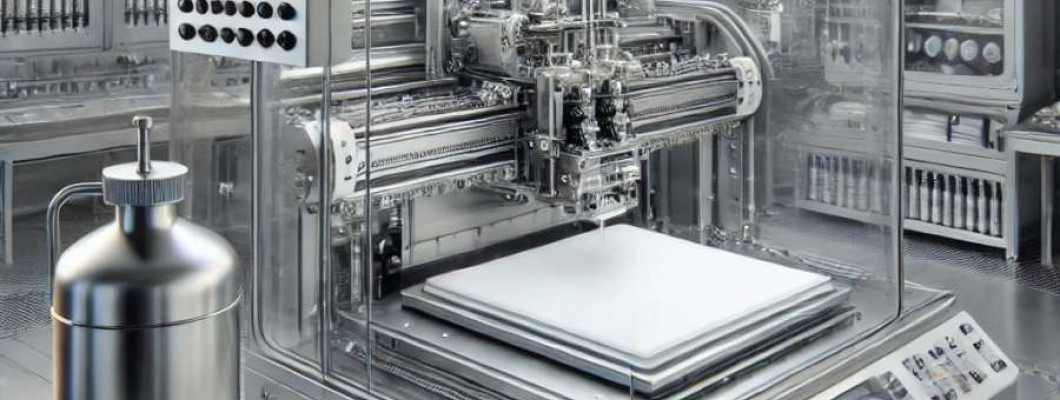
The Industrial Reality of Maintaining High-Precision Headstone Photo Printers
In industrial environments where longevity and uptime dictate financial outcomes, the lifecycle maintenance costs of specialized printers such as the Headstone Photo Printer Tomb Photos Printer become a pivotal factor. These devices operate under demanding conditions, handling ceramic substrates with high-precision photo applications that require consistent accuracy over years of service. Unlike general-purpose printers, the headstone photo printer must maintain micron-level alignment precision, manage thermal stresses unique to ceramic inks, and mitigate abrasion effects from substrate handling. Failure to control these factors leads to printhead degradation, color fidelity loss, and mechanical misalignment, all of which drive maintenance overheads upward.
Technicians face compounded challenges due to the printer’s bespoke integration with ceramic substrates and the inks’ chemical aggressiveness, which accelerate nozzle clogging and printhead wear. In many operational scenarios, maintenance cycles are shortened unless advanced filtration and automated cleaning systems are embedded. These hidden costs escalate as operators manage downtime, consumable replacements, and recalibration routines, which directly impact overall productivity and asset depreciation. Effectively, lifecycle maintenance costs serve as a critical gatekeeper to determining whether such a printer qualifies as an industrial-grade solution or remains a niche, short-lived device.
The printer’s maintenance strategy must be anticipatory, combining planned component replacements, real-time diagnostics, and operator training to optimize mean time between failures (MTBF). Only a rigorous maintenance protocol can ensure the Headstone Photo Printer Tomb Photos Printer withstands the mechanical and chemical rigors of continuous operation on site, supporting the heavy workloads demanded by headstone photo printing services with minimal interruptions.
Technical Deep-Dive into Lifecycle Cost Drivers and Printer Architecture
Printhead Wear and Ink Chemistry Interaction
Printheads in the Headstone Photo Printer are engineered with piezoelectric nozzles capable of precision drops from 4 to 8 picoliters (pl), critical for achieving the necessary photo resolution on stone substrates. However, the ceramic-based pigment inks used exhibit higher particle abrasiveness compared to solvent or dye inks. This accelerates erosion of nozzle plates. Empirical data suggest that for standard piezo nozzles, operational lifespan without intervention is 600 operational hours under such abrasive conditions, compared to 1200 hours with standard inks.
Mathematically, nozzle wear rate \( W = k_a \times I_a \times t \) where \( k_a \) is abrasive coefficient, \( I_a \) ink particle concentration, and \( t \) time in hours. Managing \( W \) below a critical threshold extends printhead life, mandating sophisticated filtration (submicron level) and ink recirculation mechanisms.
Thermal Management and Alignment Stability
The printer employs a linear motor-driven carriage system with precision optical encoders calibrated to 600 dpi mechanical resolution. Thermal expansion in the carriage assembly and platen can cause printhead-to-substrate misalignment on the order of tens of micrometers, severely impairing photo clarity.
Thermal drift \( \Delta x = \alpha \times L \times \Delta T \), where \( \alpha \) is material expansion coefficient (~12 x10^-6 /°C for aluminum), \( L \) length of carriage (400 mm), and \( \Delta T \) temperature change. Even a 5°C variance results in a positional shift of 24 micrometers, causing artifacts or double images. Active thermal compensation and enclosure climate control are necessary within industry installations to maintain print precision.
Automated Cleaning and Maintenance Protocols
To minimize downtime, the printer integrates automatic printhead cleaning stations that employ bidirectional purging and ultrasonic agitation. Cleaning cycles occur every 12 operational hours or upon detecting nozzle blockage via real-time jet monitoring sensors.
Maintenance scheduling is aligned to a predictive model: if \( X \) denotes average blockages per 1000 prints, then maintenance interval \( M = \frac{T}{1+0.1X} \), where \( T \) is baseline maintenance time. The printer’s diagnostics system suggests an optimal interval around 48 hours under typical workloads, doubling component longevity.
Component Replacement and Asset Depreciation Modeling
Consumables such as printheads and ink tanks form the bulk of recurring costs. A standard printhead costs approximately $1200 and lasts roughly 1200 hours under optimized conditions. Ink consumption rates for a typical full-color headstone photo are approximately 40 ml per print.
Considering a depreciation model using the straight-line method over a 5-year lifespan with a 12-hour shift operation, the asset usage is roughly 21,900 hours. Factoring printhead replacements at every 1200 hours, operators will require approximately 18 printhead units, equaling a $21,600 expenditure solely on printheads. Ink costs over similar scale amount to $3.20 per print, impacting operational expenses significantly.
Comparative Table of Lifecycle Cost Metrics Versus Generic Ceramic Printers
| Specification | Headstone Photo Printer Tomb Photos Printer | Generic Ceramic Photo Printer |
|---|---|---|
| Printhead Lifetime (hours) | 1200 (optimized) | 700 |
| Maintenance Interval (hours) | 48 (predictive) | 24 |
| Ink Consumption per Print (ml) | 40 | 55 |
| Thermal Compensation | Active, real-time | Passive |
| Print Resolution (dpi) | 1200 | 720 |
| Consumable Operating Cost ($/year) | ~$25,000 | ~$35,000 |
Scenario Analysis for Business Models Using the Headstone Photo Printer Tomb Photos Printer
Scenario 1 Commercial Monument Fabricators with Medium Throughput
Fabricators producing 200 headstones monthly require high uptime and predictable maintenance schedules. With predictive maintenance reducing unscheduled downtime by 30%, throughput consistency improves, directly impacting revenues. Lower ink consumption yields OPEX reduction by 15%. The printer’s built-in diagnostics facilitate operator training, streamlining shift handovers.
Scenario 2 On-Site Cemetery Services with Low Volume and High Quality
Operators focusing on high-fidelity, one-off prints benefit from 1200 dpi resolution and active thermal control to guarantee photo clarity under variable site conditions. Though throughput demands are lower, the lifecycle cost management reduces operational surprises on remote sites, improving service reliability.
Scenario 3 High-Volume Industrial Production Hubs
Large-scale headstone manufacturers running extended shifts utilize automated cleaning protocols to minimize downtime. The extended printhead life and thermal stability reduce maintenance workforce needs. Integration into enterprise asset management systems allows for real-time monitoring and maintenance planning, increasing asset availability beyond 95%.
Expert FAQ on the Headstone Photo Printer Technical Nuances
What are the printhead nozzle recovery protocols after clogging?
The system uses a combination of ultrasonic cleaning and high-pressure ink purging cycles with chemically formulated solvents compatible with ceramic inks to restore nozzle functionality, typically within 5 minutes per cycle.
How does the printer ensure color consistency on porous versus glazed ceramic substrates?
It uses substrate-specific ICC color profiles and adaptive ink density modulation to compensate for varying absorption rates, maintaining consistent photo accuracy.
What environmental conditions are optimal to minimize thermal drift?
Maintaining ambient temperature within 20 ± 2°C and relative humidity between 40-60% ensures the mechanical assemblies remain stable and inks cure predictably, minimizing thermal drift impact.
Can the printer integrate with IoT-based predictive maintenance platforms?
Yes, it supports Modbus TCP/IP and MQTT protocols for real-time telemetry, enabling integration with industrial asset management software for predictive maintenance.
How is printhead alignment verified and recalibrated?
Alignment is monitored via embedded optical sensors with sub-5-micrometer precision and recalibrated automatically during maintenance cycles using a built-in alignment test pattern and servo adjustments.
Strategic Verdict and Recommendation for Industrial Applications
The Headstone Photo Printer Tomb Photos Printer presents a highly capable solution that addresses the critical lifecycle maintenance challenges inherent to headstone photo printing on ceramic substrates. Its engineering prioritizes printhead longevity, thermal compensation, and automated maintenance protocols, which collectively reduce operational disruptions and maintenance expenditures. When deployed within structured maintenance frameworks, this printer delivers superior asset longevity and throughput consistency compared to generic alternatives.
For industrial fabricators and on-site service providers demanding high precision, durable operation, and scalable workflows, the Headstone Photo Printer Tomb Photos Printer stands out as a definitive industrial-grade choice. Its cost structure aligns well with long-term ROI objectives, and its hardware design supports evolving operational complexities in the headstone photo printing market.