
Lifecycle Maintenance Costs Define Industrial Value in the 40x60CM Heat Press Machine
The Industrial Reality of Sustained Heat Press Operations
In industrial printing environments, consistent throughput and minimal downtime define profitability. A 40x60CM Heat Press Machine, while seemingly straightforward as a thermal transfer tool, becomes the linchpin in a multi-stage production pipeline that demands absolute reliability. Early signs of component wear—such as degradation in heating elements, pressure arm misalignment, and control panel sensor drift—can cascade into costly maintenance cycles that erode operational efficiency. Additionally, heat press machines operate under high thermal stress, often exceeding cycle frequencies of 20 presses per hour with temperature settings between 150°C and 190°C, inducing accelerated aging of internal components. The true challenge faced by scalable business owners and maintenance teams is managing lifecycle costs without sacrificing output quality or uptime.
Heat transfer consistency not only impacts final product quality but directly affects rework rates. Variances in platen temperature uniformity beyond ±2°C can lead to color distortion or substrate damage, multiplying indirect operational costs. Furthermore, the 40x60CM platen size, while optimized for medium-format textiles and transfer templates, introduces mechanical load considerations. Forces up to 200N must be evenly distributed to ensure imprint fidelity, placing demands on the hydraulic or pneumatic press mechanisms. Without rigorous preventative maintenance protocols, wear in these systems can create alignment drift, press pressure variability, and increased cycle time, leading to bottlenecks in high-throughput scenarios.
Hardware Architecture and Component Stress Profiles
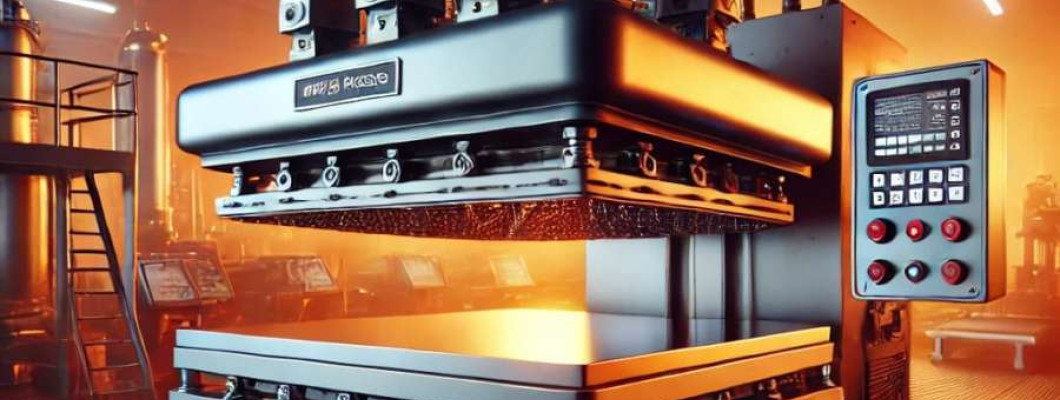
The 40x60CM Heat Press Machine traditionally incorporates a cast aluminum heating platen coupled with a silicone rubber pad to ensure pressure compliance and heat transfer efficiency. The thermal element is typically a nichrome wire coil rated at approximately 1000W to achieve the required surface temperature within 30 seconds. This rapid heat-up rate, while advantageous for throughput, significantly accelerates thermal cycling stresses. Using the Arrhenius equation for thermal degradation, we can model the expected decrease in heating element lifespan:
Lifespan Reduction Factor = exp[-Ea/(R * T)]
Where Ea is the activation energy (J/mol), R is the universal gas constant (8.314 J/mol·K), and T the operating temperature in Kelvin. Operating at 423K (150°C) versus 473K (200°C) drastically changes the element's mean time to failure, emphasizing the importance of precise temperature regulation.
Additionally, the pressure mechanism—whether manual lever or pneumatic—must maintain consistent force application across the platen. Pneumatic systems, integrating pressure regulators and solenoid valves, require routine inspection for air leaks and valve seating functionality, which impact press consistency and maintenance schedules.
Maintenance Cost Modelling and Predictive Scheduling
This machine's maintenance can be segmented into preventative and corrective categories. Preventative involves scheduled inspections every 500 operating hours focusing on heating elements, thermocouples, pressure pads, and control electronics. Corrective maintenance, triggered by failure modes such as element burnout or sensor malfunctions, incurs higher downtime and cost penalties.
A predictive maintenance schedule can leverage sensor data (temperature, pressure feedback, cycle counts) to forecast component end-of-life. For example, thermocouple drift beyond ±0.5°C over 100 cycles suggests imminent replacement needs. Under typical industrial workloads (e.g., 1000 cycles/month), failure rates and maintenance costs can be modeled:
| Component | Typical Lifespan (Cycles) | Replacement Cost (USD) | Downtime Impact (Hours) | Replacement Frequency (Months) |
|---|---|---|---|---|
| Heating Element | 20,000 | 150 | 2 | 20 |
| Thermocouple | 10,000 | 50 | 1 | 10 |
| Pressure Pad | 15,000 | 40 | 1 | 15 |
| Control Board | 30,000 | 200 | 4 | 30 |
Balancing scheduled maintenance intervals against production targets minimizes unplanned stoppages and optimizes CAPEX amortization.
Comparative Hardware Analysis of Medium-Format Heat Press Machines
Contrasting the 40x60CM model with adjacent format machines (e.g., 38x38CM and 50x70CM) reveals how platen size influences maintenance dynamics and operational throughput:
| Feature | 38x38CM Machine | 40x60CM Heat Press Machine |
|---|---|---|
| Platen Area (cm2) | 1444 | 2400 |
| Heating Element Power (W) | 800 | 1000 |
| Average Heat-Up Time (seconds) | 45 | 30 |
| Pressure Mechanism | Manual Lever | Pneumatic Assisted |
| Maintenance Frequency (months) | 12 | 10 |
| Downtime per Maintenance (hours) | 3 | 2 |
The larger platen area on the 40x60CM model allows for more substantial or varied substrate processing, justifying the increased thermal power and pneumatic pressure assist mechanisms for efficiency. Consequently, maintenance intervals are slightly more frequent but with faster turnaround per servicing event, improving net production availability.
Control Electronics and Thermal Management Challenges
Advanced control boards in the 40x60CM Heat Press Machine typically integrate PID temperature regulation with real-time pressure sensors. The feedback loop controls the heating element duty cycle to maintain temperature within ± 1°C and modulates pneumatic pressure to sustain 150-200N force. Effective thermal dissipation is critical; thus, heat sinks and ventilation fans integrated into the chassis help maintain ambient electronics temperatures below 50°C under continuous operation.
Failures often arise from suboptimal thermal management causing premature solder joint fatigue and sensor drift. Utilizing thermal imaging in routine diagnostics can detect hotspots or uneven heating patterns that precede failures.
Scenario Analysis Demonstrates Differentiated Use Case Outcomes
Scenario 1 Medium-Scale Custom Apparel Production
A medium-sized business producing personalized T-shirts benefits from the 40x60CM platen's breadth, enabling batch processing of multiple medium designs simultaneously. The pneumatic-assisted press reduces operator fatigue and standardizes imprint pressure, translating into consistent color vibrancy and reduced rework. Lifecycle maintenance costs are managed through structured preventive routines leveraging sensor feedback. The investment balances neatly against throughput gains and quality output.
Scenario 2 Event Merchandise Printing
For event-driven merchandise where turnaround time is critical, the 30-second heat-up time and rapid cycle capability ensure the 40x60CM Heat Press Machine meets tight deadlines. Maintenance scheduling aligned with event calendars prevents unexpected failures. The larger heating area supports varied sizes of transfers from badges to sweatshirts, maximizing machine utilization.
Scenario 3 Prototype Development to Small Batch Scaling
In prototyping and low-volume production, the machine's adjustable temperature and pressure controls allow engineering teams to iterate quickly on substrate materials and transfer films. The impact on lifecycle costs is minimized as operation intensity is lower but controlled heating dynamics help predict optimal parameters. Integration challenges with existing workflows are mitigated by modular design and accessible maintenance points.
Expert FAQ Addresses Complex Operational Queries
How does platen thickness affect heat distribution uniformity?
Platen thickness—typically between 10mm to 15mm—directly influences thermal mass and heat distribution. Thicker platens retain heat longer but exhibit slower temperature ramp-up; thinner platens heat faster but risk hot spots. The 40x60CM model balances at 12mm, optimized for uniformity while supporting rapid cycling.
What are the failure modes of pneumatic assist systems in industrial presses?
Common failures include air leaks at seals, solenoid valve coil burnout, and regulator drift causing inconsistent pressure application. Preventative maintenance involves seal replacement every 10,000 cycles and coil resistance checks to ensure nominal operation.
Can predictive analytics reduce downtime on heating elements?
Yes, by monitoring temperature ramp times, power consumption, and cycle counts, algorithms can forecast imminent element failure, scheduling replacements before unplanned breakdowns.
How does power supply stability impact press performance?
Voltage fluctuations greater than ±0.5V can cause inconsistent heating element resistance, affecting temperature control and potentially causing sensor errors. Industrial-grade power conditioning equipment is recommended.
What role does platen surface finish play in transfer quality?
A polished, non-stick Teflon-coated platen ensures even contact and prevents substrate adhesion, reducing defects and cleaning cycles. The 40x60CM machine includes this finish to enhance performance.
Strategic Verdict and Recommendation for Industrial Use
Considering the lifecycle maintenance costs, operational efficiency, and thermal management, the 40x60CM Heat Press Machine stands out as an industrially robust solution optimized for scalable business applications. Its balanced platen size, pneumatic pressure system, and advanced control electronics position it above smaller or less automated alternatives. The machine's design reflects a deep understanding of the trade-offs between throughput, maintenance demands, and precision—key for enterprises seeking sustainable production.
For decision-makers aiming to streamline workflows while controlling latent operational expenses, this heat press machine is a definitive choice. It supports rigorous production schedules, facilitates predictive maintenance, and delivers consistent print quality. For more information, consider reviewing the official specifications directly at 40*60CM Heat Press Machine.