
Lifecycle Maintenance Costs Define Industrial Viability for Color Version Latte Coffee Printer
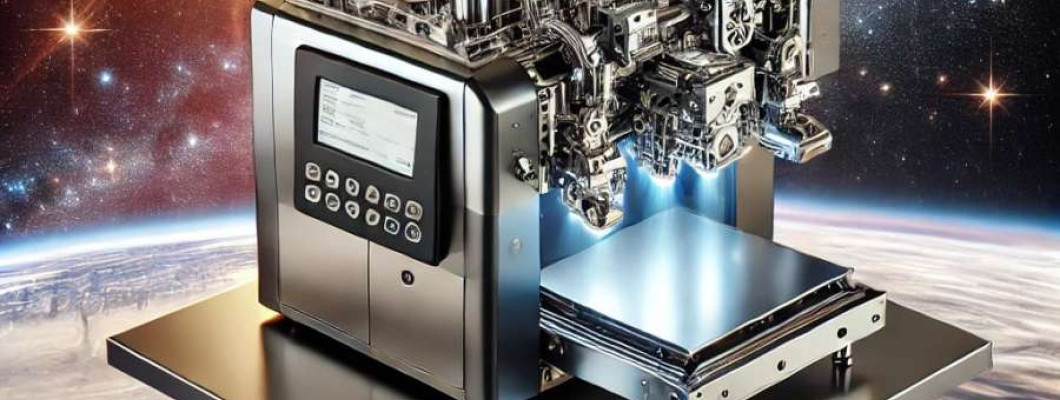
The Industrial Reality of Maintaining Precision Coffee Printing
Introducing the Color Version Latte Coffee Printer into an industrial setting involves confronting the nuanced challenges of lifecycle maintenance costs. Unlike typical consumer-grade devices, industrial printers operate in environments demanding consistent uptime and predictable maintenance schedules, essential for high-throughput production lines and premium service delivery. In the coffee art sector, where output quality directly impacts consumer perception and business reputation, maintenance delays or failures swiftly translate into downtime and lost revenue.
Maintenance reality with this printer involves addressing wear on mechanical components such as printhead nozzles, the ink delivery system, and substrate handling mechanisms. Given the interaction with food-safe inks and liquids, stringent cleaning protocols are necessary to avoid clogging and microbiological contamination. The Color Version Latte Coffee Printer uses complex microfluidic inkjet heads that deposit edible inks within droplet size ranges typically around 10-20 picoliters. Over extended operation periods, nozzle erosion and ink residue build-up must be managed via scheduled maintenance cycles and automated cleaning routines. The costs associated with technician labor, replacement parts, and consumables form the backbone of the lifecycle expenditure analysis.
Additionally, the device's embedded sensors and software diagnostic tools facilitate predictive maintenance to some extent, but industrial operators must integrate these alerts into broader operational scheduling systems. Failure to do so risks cascading failures where minor printhead blockages escalate to full nozzle array inactivity, compromising print resolution and color fidelity during peak hours.
Technical Deep-Dive Into Maintenance and Durability Metrics
Printhead Durability Under Industrial Stress
Printheads in the Color Version Latte Coffee Printer function on piezoelectric microvalve principles, optimized for precision droplet ejection. The expected operational life before significant performance degradation ranges between 1,200 and 1,500 hours, dependent on ink formulation and cleaning regimen. Hypothetically, assuming a printhead nozzle generates 10 million droplets per hour, nozzle wear can be modeled with erosion rate equations factoring ink pH, particle content, and mechanical cycling frequency.
Ink Chemistry and Impact on Maintenance Frequency
The edible inks used must balance viscosity, surface tension, and pigment particle size (approximately 200 nm) to maintain droplet consistency. Over time, ink viscosity changes due to solvent evaporation or temperature shifts increase the likelihood of clogging, necessitating more frequent maintenance. Implementing a closed-loop ink recycling system reduces solvent loss but adds complexity and cost to maintenance.
Cleaning Procedures and Automated Systems Comparison
Two primary cleaning methods exist: automated ultrasonic pulse cleaning and manual nozzle purging. Ultrasonic cleaning offers a reduction in manual labor hours by an estimated 40%, but initial capital expenditure for enhanced system integration rises by nearly 25%. The trade-off between CAPEX and OPEX must be carefully evaluated for scale.
Software Diagnostic Capabilities and Predictive Maintenance
Embedded sensors monitor printhead temperature, droplet velocity, and ink flow consistency in real-time. Using machine learning models trained on historical failure data, the system predicts nozzle failure windows with approximately 85% accuracy, allowing preemptive maintenance scheduling. Integrating these predictive analytics with enterprise resource planning (ERP) software improves asset utilization.
Comparative Table of Maintenance Cost Components
| Component | Automated Cleaning System | Manual Cleaning System |
|---|---|---|
| Initial Cost (USD) | 15,000 | 10,000 |
| Annual Labor Hours | 120 | 200 |
| Consumable Replacement Frequency | Every 6 Months | Every 4 Months |
| Average Downtime Per Incident | 30 minutes | 90 minutes |
| Estimated Annual Maintenance Cost (USD) | 7,500 | 10,200 |
Scenario Analysis of Business Application Impact
High-Volume Coffee Chain Outlet
A coffee chain operating multiple high-traffic outlets requires the Color Version Latte Coffee Printer to maintain continuous operation with minimal downtime. Lifecycle maintenance costs here have direct implications on operating budgets. Automated cleaning systems justify upfront investment by limiting labor hours and reducing downtime by 66%, an essential factor for locations processing over 500 cups daily.
Specialty Artisan Coffee Shop
For a high-end artisan shop emphasizing micron-level color accuracy and intricate designs, printhead precision and maintenance intervals influence product quality stability. Frequent manual maintenance, while more labor-intensive, allows targeted control over print conditions tailored to evolving artistic demands.
Corporate Event Service Provider
This use case demands rapid deployment and high reliability under variable conditions. Predictive maintenance integration ensures minimal operational disruption. The business benefits from cloud-based diagnostic reporting enabling remote troubleshooting and parts ordering aligned with event schedules.
Expert FAQ on Maintaining Industrial Latte Printing Equipment
Q1: What is the optimal ink viscosity range for maintaining nozzle longevity?
A1: Maintaining ink viscosity between 8-12 mPa·s ensures stable jetting performance while minimizing nozzle erosion due to excessive mechanical stress.Q2: How does temperature variation affect printhead calibration?
A2: Ambient temperature shifts beyond ±5°C from nominal 22°C lead to measurable droplet size variation by ±3%, requiring dynamic printhead recalibration.Q3: Can ultrasonic cleaning lead to premature printhead fatigue?
A3: Excessive ultrasonic power or frequency above device specification can accelerate piezoelectric element degradation, impacting printhead lifespan.Q4: What are the main factors influencing ink sedimentation in storage tanks?
A4: Pigment particle size, solvent evaporation rate, and tank agitation frequency predominantly determine sedimentation rates, necessitating daily mixing protocols.Q5: How does predictive maintenance reduce overall maintenance costs?
A5: By accurately forecasting failure windows, predictive algorithms enable just-in-time part replacements and scheduling of maintenance during low-demand periods, improving uptime by up to 15%.
Strategic Verdict and Recommendation
The Color Version Latte Coffee Printer stands out as a viable industrial-grade solution by addressing lifecycle maintenance costs with technical rigor and operational foresight. Its advanced printhead technology, supported by automated cleaning and predictive maintenance, aligns with stringent industrial uptime and quality requirements. For businesses seeking scalable, consistent color printing on latte substrates, the machine delivers measurable ROI through labor savings and reduced downtime.
For decision-makers evaluating industrial coffee printing solutions, the integration of real-time diagnostics and adaptable maintenance protocols provides a strategic asset in competitive markets. The detailed cost-benefit balance between manual and automated maintenance options allows tailored deployment based on business scale and quality demands.
We recommend further evaluation of the Color Version Latte Coffee Printer as a definitive choice for enterprises focused on sustaining high-precision output with cost-controlled lifecycle maintenance in demanding operational environments.