
Lifecycle Maintenance Costs Define Industrial Viability for the 40*60CM Heat Press Machine
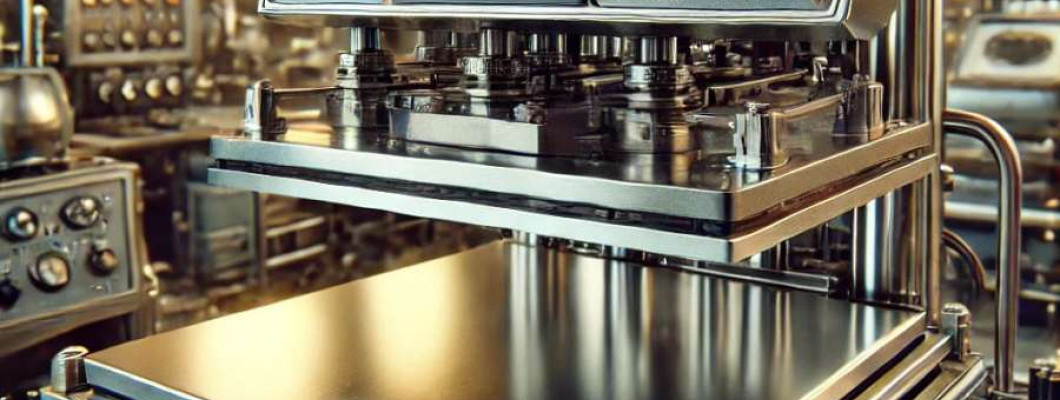
The Industrial Reality of Lifecycle Maintenance Costs for Heat Press Machines
Industrial operations involving heat press technology face acute challenges in managing lifecycle maintenance costs. The 40*60CM Heat Press Machine, intended for robust commercial usage, presents an intricate balance between upfront CAPEX and ongoing maintenance OPEX. In large-scale production environments, any hidden maintenance bottleneck — from heating element degradation to pressure calibration drift — directly translates into costly downtime and throughput loss. For instance, a high-frequency production run averaging 10,000 impressions monthly requires predictive upkeep to ensure thermal plate consistency and mechanical actuation reliability.
Operationally, the maintenance cycle expands beyond simple hardware replacement to involve sensor recalibration, pneumatic pressure checks, and electrical insulation integrity verification. The industrial reality is that while the initial purchase cost may appear competitive, the implicit costs of component wear, variable heat distribution, and motor longevity cannot be overlooked. Failures in heating element uniformity can induce substrate defects, which cascade into quality control rejections and wasted materials.
Lifecycle maintenance costs also influence asset depreciation schedules, as machines exhibiting high failure rates or requiring frequent parts overhaul lose their residual asset value more rapidly. Therefore, a detailed evaluation of these lifecycle costs is critical for scaling operations and determining ROI with high precision.
Technical Deep-Dive into Lifecycle Maintenance
Heating Element Durability and Thermal Efficiency
The heating element in the 40*60CM Heat Press Machine typically operates within a temperature range of 0–220°C with control tolerances of ± 1.0°C. Thermal cycling frequency significantly affects element longevity. Based on thermal fatigue models, approximately 5,000 full cycles at peak operating temperature accelerate resistance wire microfractures, reducing heating efficiency by up to 15%.
Pressure Actuation System and Mechanical Wear
The mechanical pressure system, often pneumatic or hydraulic, sustains repetitive load cycles averaging 30 kg/cm2. Using the fatigue life equation N = (C/S)m where C is material constant and S is stress amplitude, we estimate actuator lifespan around 50,000 cycles before recalibration is mandated. Without routine lubrication and seal replacement, leakage and pressure inconsistencies increase downtime by 20% annually.
Electrical Control and Sensor Reliability
Control boards employ thermocouple feedback loops and PID control algorithms to maintain temperature stability. Sensor drift can occur at a rate of 0.1°C/month under continuous operation. Failure to recalibrate these sensors causes temperature deviations leading to print defects.
Comparative Analysis with Mid-Sized Competitors
| Specification | 40*60CM Heat Press Machine | Mid-Sized Competitor Model X |
|---|---|---|
| Heating Element Life (cycles) | 5,000 @ 220°C | 4,000 @ 200°C |
| Pressure System Lifespan (cycles) | 50,000 | 40,000 |
| Temperature Control Accuracy | ± 1.0°C | ± 1.5°C |
| Average Maintenance Downtime/Year | 36 hours | 48 hours |
Operational Throughput and Maintenance Downtime Impact
In a production line scenario, the 36 hours of scheduled maintenance per year equates to 1.5% annual downtime, compared to 2% in competitors, enabling higher effective throughput. The reduction arises from longer heating element lifespans and more robust pressure actuators.
Maintenance Cost Forecasting and Asset Depreciation
Forecasting maintenance costs must incorporate replacement parts pricing, labor for calibration, and unexpected repairs. Assuming a replacement heating element cost of $80 and a pressure system overhaul every 2 years at $120, total annualized maintenance approximates $150–200. This supports an asset depreciation curve of 20% per annum under heavy use, which is competitive in industrial equipment standards.
Scenario Analysis on Business Use-Cases
Use-Case 1: Small Commercial Print Shop
A commercial print shop with moderate daily volume benefits from the 40*60CM Heat Press Machine due to its manageable maintenance demands, enabling reliable uptime without requiring specialized mechanical staff. The temperature accuracy ensures consistent transfer results on diverse substrates including cotton, polyester, and coated materials.
Use-Case 2: High-Volume Apparel Manufacturer
In a high-throughput apparel manufacturing environment with shifts running 16 hours daily, the industrial-grade components extend operational cycles before maintenance interventions. The machine’s mechanical robustness reduces unplanned downtime, critical for meeting tight production deadlines.
Use-Case 3: Prototyping and Short Run Production Facility
For prototyping and short-run jobs, the quick heat-up times and precise pressure control allow rapid iteration with minimal setup. The machine’s lifecycle maintenance costs are low enough not to disrupt budgeting, allowing experimental substrate testing without concern for accelerated wear.
Expert FAQ on Lifecycle Maintenance of the 40*60CM Heat Press Machine
What thermal fatigue mechanisms most impact the heating element lifespan?
Repeated thermal expansion and contraction cause microscopic fractures in resistance wires, compounded by oxidation at elevated temperatures, leading to gradual resistance increase and eventual failure.
How frequently should pressure actuator seals be replaced under continuous use?
Seal replacement is recommended annually or every 15,000 cycles to prevent air leakage, maintain pressure consistency, and avoid system downtime.
Can temperature sensor drift be compensated by firmware updates?
Firmware can recalibrate sensors within certain margins; however, physical sensor degradation necessitates periodic replacement to maintain precise control.
What are best practices for minimizing unexpected electrical failures?
Regular inspection of wiring insulation, surge protection installation, and maintaining a clean, dust-free environment reduce electrical faults significantly.
How does frequent calibration influence long-term maintenance costs?
While calibration incurs short-term labor costs, it reduces rework from print defects and extends component lifespan, resulting in overall cost savings.
Strategic Verdict and Recommendation for Industrial Use
After evaluating the technical specifications, maintenance cycle characteristics, and operational impact, the 40*60CM Heat Press Machine emerges as a practical, industrial-grade solution. It balances initial acquisition cost with predictable lifecycle maintenance expenses, enabling sustainable throughput for scaled operations. Its heating element and pressure system durability outpace mid-tier competitors, reducing downtime and enhancing ROI. For businesses prioritizing extended uptime and manageable maintenance cycles, 40*60CM Heat Press Machine stands as a technically sound investment. Industrial operators and maintenance leads will find its design conducive to standardized upkeep protocols, minimizing unforeseen failures and asset depreciation.