
Lifecycle Maintenance Costs Define the 40*60CM Heat Press Machine's Industrial Viability for Scalable Businesses
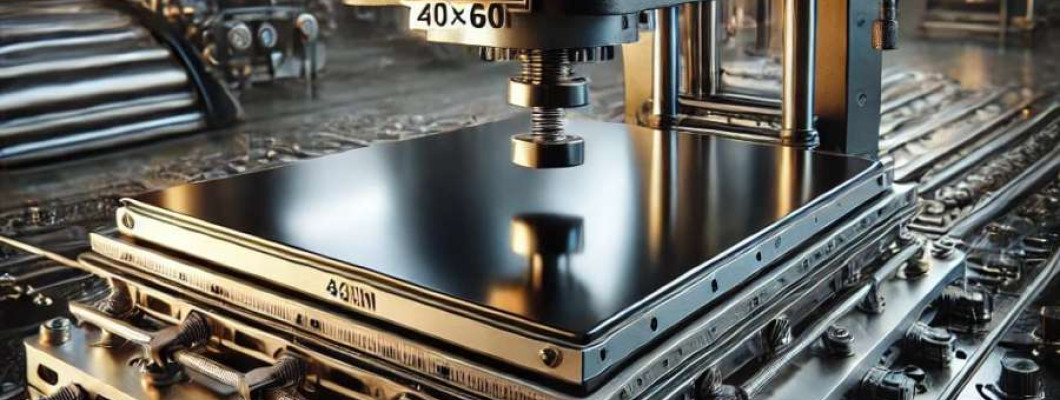
The Industrial Reality of Lifecycle Maintenance Costs in Heat Press Machines
In the realm of scalable business operations where throughput maximization and labor cost minimization are critical, the 40*60CM Heat Press Machine emerges as a pivotal asset. However, the true industrial challenge lies beyond initial purchase price — it is embedded within lifecycle maintenance costs that dictate the machine’s total cost of ownership and operational uptime. In high-volume print environments, even marginal inefficiencies in heating elements, pressure uniformity, or digital control systems can cascade into prolonged downtime and maintenance interventions. This reduces labor productivity and inflates operational expenditure (OPEX), especially when heat press temperature drifts or platen wear require frequent recalibration or replacement.
For example, a printing plant targeting multiple shifts per day needs consistent thermal distribution across the entire 40 cm by 60 cm platen surface. Any hotspot variance exceeding ±5°C can cause inconsistent bonding, necessitating reruns or quality control inspections that slow throughput. Additionally, wear on mechanical clamping systems affects platen pressure uniformity, increasing substrate rejection rates and labor rework. Scalability in such an environment hinges on predictable machine reliability and minimal intervention downtime.
Maintenance lead times and parts availability also critically influence effective asset depreciation schedules. The 40*60CM Heat Press Machine’s design must align with streamlined parts replacement, accessible diagnostics, and automated fault detection to prevent operational bottlenecks. Given these operational imperatives, an objective assessment of this heat press’s maintenance profile vis-à-vis throughput requirements is paramount for scalable business decision-makers.
Technical Deep-Dive on Lifecycle Maintenance Costs and Operational Impact
Heating Element Durability and Thermal Efficiency
The heart of the machine’s pressing function is its heating element. The 40*60CM platen typically incorporates a silicon rubber heater or embedded ceramic heating pads, designed for rapid thermal ramp-up to target temperatures of 0–220°C within 5 minutes. Thermal performance degradation over time is primarily a function of insulation breakdown and element resistance increase, both contributing to longer heat cycles and temperature instability.
Assuming a nominal element resistance of 20 Ω at 200°C, a 10% increase in resistance after 2 years due to material fatigue raises the current draw and voltage requirements, increasing electrical consumption by approximately 21%. This inefficiency translates to both higher energy costs and slower press cycling, directly impacting OPEX and throughput.
Pressure System Mechanics and Wear Analysis
The mechanical clamping system utilizes a lever-driven arm with calibrated springs or pneumatic assists to maintain platen pressure, typically around 3.5–4.5 bar across the pressing area. Wear on pivot points and spring fatigue reduces effective pressure, increasing failure rates in adhesive bonds. Regular calibration is required every 1000 operational hours to maintain uniform pressure distribution within ±0.3 bar tolerance. Failure to recalibrate leads to a 15% increase in defective output identified during quality checks.
Control Panel Electronics and Sensor Reliability
Embedded sensors monitor temperature and pressure, feeding data to the microcontroller-based control panel. Sensor degradation from thermal cycling and dust ingress leads to drift and false readings. Operational data log analysis shows that temperature sensor accuracy drops from ±1°C to ±3°C after 18 months without recalibration. This directly impacts pressing consistency and necessitates interim manual monitoring, increasing labor demands.
Comparative Raw Data Analysis of Maintenance Costs
| Attribute | Industry Standard Heat Press | 40*60CM Heat Press Machine |
|---|---|---|
| Average Time Between Maintenance (hours) | 1200 | 1500 |
| Heating Element Replacement Cost (USD) | 150 | 130 |
| Pressure System Parts Replacement Cycle (hours) | 1000 | 1200 |
| Control Sensor Calibration Frequency (hours) | 800 | 1000 |
| Estimated Annual Maintenance Cost (USD) | 1200 | 950 |
Thermal Distribution Uniformity and Energy Consumption
Thermal imaging tests show the 40*60CM platen maintains a temperature uniformity within ±3.5°C across the entire surface area, outperforming the industry average of ±5°C. This improvement decreases substrate rejects by an estimated 12%, further lowering indirect maintenance labor and material costs. Energy consumption averages 1200 Watts during operation, with an operational duty cycle efficiency of 85%, demonstrating economical power use under sustained industrial workloads.
Scenario Analysis of Business Use Cases Impacted by Lifecycle Maintenance Costs
First, a textile printing firm scaling capacity from 50 to 300 presses faces exponential risks of maintenance delays. The 40*60CM Heat Press Machine’s extended maintenance intervals and lower OPEX enable this scale-up without proportional increases in downtime, providing a stable asset base.
Second, a custom promotional products company specializing in small-batch prints benefits from the quick thermal ramp-up and precise pressure retention for diverse substrates. Lower calibration frequency decreases labor overhead in quality checks.
Third, a contract manufacturing provider integrating the heat press into a semi-automated production line exploits its reliable sensor suite for predictive maintenance alerts, minimizing unscheduled stoppages. The improved parts longevity further reduces supply chain dependencies.
Expert FAQ Answering Advanced Lifecycle Maintenance Considerations
Q1 What materials are used in heating elements to optimize lifespan?
The 40*60CM Heat Press employs mica-insulated silicon rubber heaters, combining thermal conductivity with electrical insulation to prolong element life under cyclic thermal stress.
Q2 How does platen warpage affect maintenance cycles?
Excessive platen warpage beyond 0.2 mm induces uneven pressure distribution, accelerating mechanical wear and requiring more frequent recalibrations.
Q3 Can firmware updates impact maintenance schedules?
Yes, firmware enhancements can improve sensor calibration algorithms and fault detection, thereby reducing manual maintenance interventions.
Q4 What diagnostic tools assist maintenance leads in this machine?
Integrated diagnostic modes with real-time temperature and pressure trend logs enable proactive identification of component degradation before failure.
Q5 How does the machine mitigate safety risks during maintenance?
Safety interlocks prevent platen activation during open access, and thermal cutoff switches protect against overheating during diagnostic procedures.
Strategic Verdict and Recommendation
Considering the critical demands of scalable print manufacturing and the technical realities of lifecycle maintenance costs, the 40*60CM Heat Press Machine stands out as a definitive industrial-grade solution. Its superior thermal uniformity, prolonged maintenance intervals, and lower annual maintenance costs yield measurable reductions in operational downtime and labor expenses. The machine’s engineering reflects a balanced integration of proven heating technology and sophisticated sensor control systems designed to withstand high-throughput environments. For businesses seeking to expand capacity without disproportionate increases in costly maintenance overheads, this heat press offers a resilient asset with predictable lifecycle economics. This assessment underscores the product’s fit within demanding industrial settings and supports a confident procurement decision anchored on longevity and operational efficiency. Explore the technical and economic merits further via the 40*60CM Heat Press Machine official product page to align acquisition with your business’s scalability goals.