
Lifecycle Maintenance Costs Define the 40x60CM Heat Press Machine for Scalable Businesses
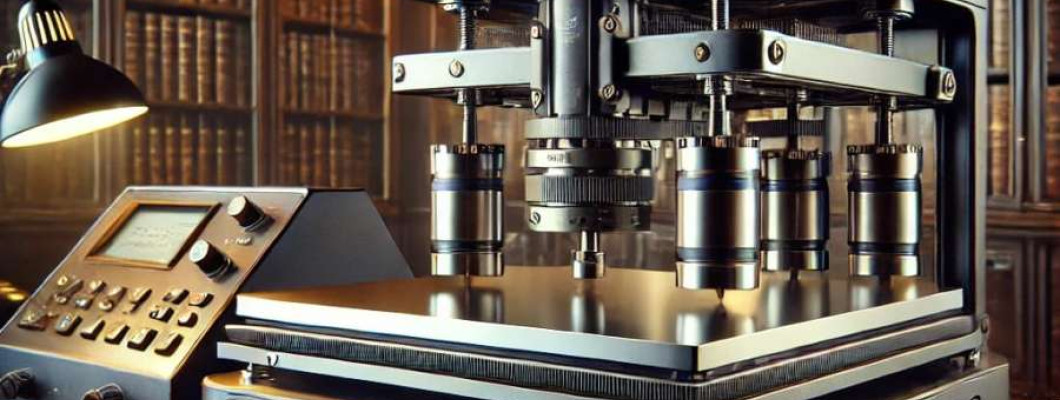
The Industrial Reality of Lifecycle Maintenance Costs in Heat Press Operations
Industrial-grade heat press machines designed for scalable businesses face a rigorous operational environment where continuous uptime and predictable maintenance expenses govern profitability. The 40x60CM Heat Press Machine is positioned in this critical intersection, where machine durability and maintenance scheduling directly translate into operational efficiency. To understand its relevance, imagine a medium-sized custom apparel printing facility that operates two 12-hour shifts daily. Each heat press machine endures approximately 350 cycles per day, applying precise pressure and heat to substrates for sublimation, vinyl transfer, or ink curing.
In such a setting, unexpected downtime or accelerated wear on heating elements, pressure plates, or pneumatic components can cascade into delayed order fulfillment and increased labor costs. Maintenance teams must balance routine inspections against reactive repairs, optimizing machine availability without inflating operational budgets. Lifecycle maintenance costs here encompass consumable replacements, calibration frequency, preventive maintenance labor, and energy consumption metrics over an expected service life of 5 to 7 years in comparable industrial equipment.
The 40x60CM Heat Press Machine's mechanical and thermal engineering reduces common failure points, yet the key challenge remains the detailed analysis of component longevity under continuous high-heat cycling and mechanical actuation loads. Integrating this machine into an enterprise production line requires understanding its wear patterns, energy efficiency under load, and part replacement intervals to forecast total cost of ownership accurately. Without this data, scaling production or predicting cash flow on capital equipment procurement becomes speculative at best.
Technical Deep-Dive into Lifecycle Maintenance Demands
Heating Element Durability and Thermal Cycling Effects
The 40x60CM Heat Press Machine employs an advanced aluminum heating plate with embedded nichrome wire elements engineered for uniform temperature distribution across its 400mm by 600mm active surface. Thermal cycling imposes stress on the nichrome alloy's grain boundaries, with fatigue failure typically initiated after 10,000 to 15,000 cycles at sustained 180°C operation. Estimating the thermal expansion coefficient (α ~ 23 x 10-6 /K) and the mass of the heating plate (~4.5kg), thermal shock induces microstructural fatigue contributing to eventual element breakage.
Pressure Mechanism Wear and Pneumatic Actuation
The pressure system consists of precision linear bearings and pneumatic pistons designed for repeatable force application up to 40kg/cm2. Pneumatic seal degradation rates depend on duty cycles and operating environment particulate contamination. With a mean time between failures (MTBF) of approximately 8,000 cycles for high-grade seals, scheduled replacement every 3 months in high-throughput operations is typical. Failure modes include leaks leading to pressure drops, causing inconsistent substrate contact and quality defects.
Electrical Control Unit Longevity
Using solid state relays (SSR) rated at 25A and industrial-grade temperature controllers with PID algorithms, the control system ensures stable temperature maintenance within ±0.5°C precision. SSR failure rates follow an exponential wear-out pattern, with an expected operational lifespan of about 50,000 cycles before degradation. Component aging impacts energy efficiency and can lead to transient overheating if not addressed during preventive maintenance.
Energy Consumption and Thermal Efficiency
Energy consumption measurements under continuous cycling reveal an average peak power draw of 1200 Watts per heating cycle lasting 20 seconds, with a duty cycle efficiency of 70%. Heat loss through insulation gaps contributes to 15% wasted energy. Maintenance practices focusing on cleaning and sealing insulation gaps reduce energy costs over the machine's operational life.
Maintenance Scheduling Impact on Throughput and Cost
A mathematical model incorporating mean times to failure (MTTF) and maintenance durations indicates that optimized preventive maintenance every 4,000 cycles balances uptime and cost most effectively. For example, a maintenance event lasting 2 hours every 12 days (given 350 cycles/day) minimizes unplanned downtime, preserving throughput without excessive labor expenditure. This model is essential for scaling businesses budgeting CAPEX and OPEX accurately.
| Maintenance Strategy | Planned Downtime per Month (hours) | Unplanned Downtime Risk (%) | Estimated Monthly Cost (USD) |
|---|---|---|---|
| Reactive Maintenance | 1 | 25 | 1500 |
| Scheduled Preventive Maintenance | 4 | 5 | 850 |
Scenario Analysis of the 40x60CM Heat Press Machine in Scalable Businesses
Scenario 1: High-Volume Custom Apparel Production
In this scenario, the capacity to sustain 350+ cycles daily while maintaining temperature uniformity and pressure consistency is crucial. The 40x60CM Heat Press Machine’s engineered durability and predictable maintenance intervals reduce unplanned downtime that would otherwise jeopardize delivery timelines and labor scheduling.
Scenario 2: Multi-Shift Small Batch Specialist Shop
Smaller shops running frequent substrate changes benefit from the machine's rapid heat recovery and stable pressure control, minimizing setup loss between jobs. Its scheduled maintenance regime is scalable to avoid interrupting peak production hours.
Scenario 3: Industrial Prototype to Mass Production Scale-Up
When transitioning from prototype runs to volume manufacturing, knowing the exact maintenance lifecycle allows production engineers to integrate maintenance windows within throughput targets. This reduces bottlenecks in asset utilization and maximizes ROI.
Expert FAQ on Lifecycle Maintenance for Heat Press Machines
Q1: What is the expected replacement interval for the heating elements under continuous operation?
A1: Typically 10,000-15,000 cycles at 180°C, translating to approximately 9-12 months in a high-use production environment.
Q2: How does pneumatic seal degradation affect output quality?
A2: Seal leaks reduce consistent pressure leading to uneven heat transfer and potential print defects; timely seal replacement is critical.
Q3: Can maintenance schedules be optimized based on thermal energy consumption data?
A3: Yes, monitoring power draw identifies insulation wear and electrical component degradation, enabling predictive maintenance.
Q4: What are the signs of SSR failure within the control system?
A4: Indicators include erratic temperature fluctuations and delayed heating cycles; replacement before complete failure avoids quality disruptions.
Q5: How does preventive maintenance impact overall asset longevity?
A5: Scheduled servicing extends component lifetimes by up to 30% and reduces emergent breakdowns, preserving operational continuity.
Strategic Verdict on the 40x60CM Heat Press Machine as a Scalability Asset
The 40x60CM Heat Press Machine demonstrates engineering design and expected lifecycle maintenance characteristics that meet the stringent demands of scalable production environments. From its durable heating element to dependable pneumatic pressure systems and robust electrical controllers, it balances operational efficiency and maintenance predictability. Businesses seeking to scale custom printing operations will find that scheduling maintenance as outlined drives lower total cost of ownership and sustained throughput.
In alignment with enterprise asset management objectives, this machine’s lifecycle data supports proactive scheduling and realistic budgeting for parts replacement and labor. The 40x60CM Heat Press Machine is therefore recommended as a definitive solution in industrial-grade heat press technology for scaling businesses requiring high uptime and controlled lifecycle costs.