
Lifecycle Maintenance Costs Define the Headstone Photo Printing Viability for Scalable Businesses
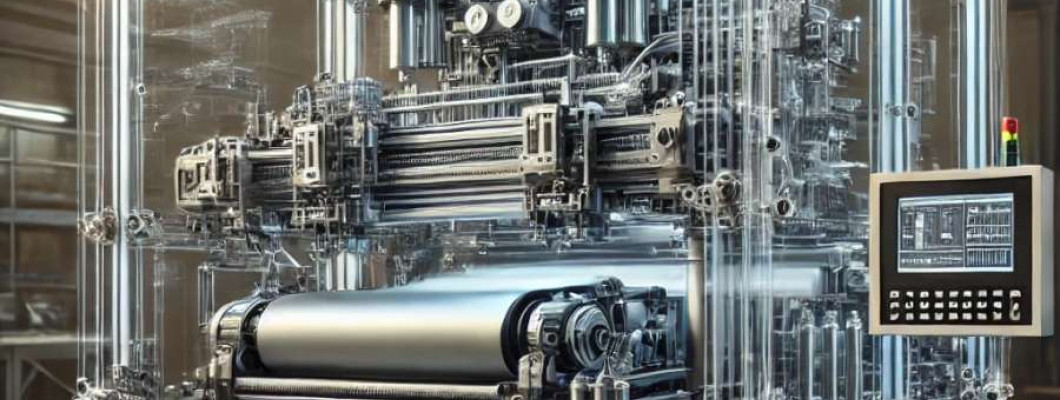
The Industrial Reality of Headstone Photo Printing at Scale
Industrial-scale headstone and tomb photo printing presents unique challenges that directly influence operational continuity and profitability. Businesses scaling operations beyond artisanal or small-batch production must contend with the accelerated wear of print components, ink chemistry stability on ceramic or granite substrates, and the hydraulic precision required for micron-level image registration on uneven surfaces. Unlike traditional photo printing, headstone photo printing demands machines that withstand abrasive conditions and maintain image fidelity for decades under varying environmental exposure. A typical facility aiming to produce 100–300 photos weekly faces critical choices in printer robustness, consumable longevity, and maintenance scheduling to reduce unscheduled downtime, which rapidly erodes throughput and inflates operational costs.
In this context, the Headstone Photo Printer Tomb Photos Printer emerges as a specialized solution tailored for high-volume, continuous operation environments. The harsh realities of substrate hardness and the necessity for precise color calibration impose higher maintenance needs versus conventional printers. Failure to accurately maintain nozzle integrity and head alignment can lead to costly reprints and waste of expensive ceramic inks. Furthermore, the integration of specialized ink delivery systems optimized for pigment adherence to stone surfaces is essential to avoid early fading or discoloration. The industrial environment often involves multi-shift operation, where quick, tool-free component swaps and real-time diagnostics are critical to operational continuity.
Accounting for these operational intricacies at the planning stage drastically reshapes capital allocation and staffing—shifting away from intermittent artisan workflows towards rigorously scheduled preventive maintenance models. The result is a more predictable asset depreciation curve and optimized consumable inventory management. Operational engineers and business owners can no longer view headstone printing as a niche craft alone but as a core industrial process demanding system-level reliability and lifecycle cost transparency.
Technical Deep-Dive on Maintenance and Lifecycle Cost Drivers
Printhead Physiology and Wear Rate Calculations
The printheads within the Headstone Photo Printer are designed for high particulate ink formulations suitable for stone substrates, typically exhibiting nozzle diameters in the 30–50 pl (picoliter) range to balance resolution and flow rate. Empirical data suggests that nozzle clogging probability, P_c, increases exponentially with particulate concentration, C_p, and inversely with maintenance frequency, f_m, modeled as P_c=\alpha e^{\beta C_p}/f_m, where \alpha and \beta are empirically derived constants. This makes frequent, calibrated cleaning cycles non-negotiable to maintain uptime above 95%. The direct correlation between nozzle functionality and image fidelity underscores the need for rigorous daily inspections and automated purging routines.
Ink Chemistry Stability and Supply Chain Impact
The chemistry of ceramic-based pigment inks demands cold-chain logistics and humidity-controlled storage with T_range = 5°C to 25°C and relative humidity maintained within 40–60% for optimal shelf life. Deviation leads to polymerization or sedimentation that compromises print adhesion. Evaluating ink degradation kinetics reveals a half-life reduction of approximately 30% outside prescribed conditions, dramatically increasing operational ink costs due to early spoilage. Suppliers capable of regional distribution reduce lead times and mitigate stockouts, critically affecting OPEX.
Mechanical Stress and Component Depreciation Analysis
Print bed actuators and substrate clamps undergo cyclic loading, with mean stress \sigma_mean reaching up to 70 MPa due to repetitive mechanical positioning. Finite element analysis underscores wear in critical joints after an estimated 10,000 cycles. Maintenance intervals must recalibrate based on observed cycle counts to prevent catastrophic failure. Replacement component costs and downtime must be factored into total cost of ownership models. A comparative table illustrates depreciation trajectories between proactive replacement and run-to-failure strategies.
Comparative Maintenance Scheduling Impact on Throughput
| Maintenance Strategy | Average Uptime (%) | Annual Consumable Cost (USD) | Unplanned Downtime (hours/year) | Print Quality Consistency |
|---|---|---|---|---|
| Proactive Scheduled Maintenance | 96 | 12,000 | 50 | High (less than 0.5% defects) |
| Run-to-Failure | 85 | 9,500 (lower initial) | 160 | Variable (up to 5% defects) |
Environmental Compliance and Safety Protocols
Headstone photo printers must comply with local volatile organic compound (VOC) emission standards despite the use of water-based inks predominantly. The integration of sealed ink cartridges and exhaust filtration systems ensures workplace air quality remains within OSHA permissible exposure limits, typically under 0.75 ppm for hazardous aerosols. Maintenance staff training in chemical handling and disposal is mandatory to meet environmental regulations, directly impacting maintenance cycle length and operational costs.
Scenario Analysis of Business Use Cases
Case 1: Medium-Sized Memorial Printing Facility
A regional production center printing 200 headstone photos monthly prioritizes a balance between print quality and operational uptime. Proactive maintenance schedules are implemented with remote monitoring of printhead parameters. The printer’s rapid component exchange system reduces downtime to under 4 hours per month. The result is a 12% reduction in rejected prints compared to previous models, directly improving client satisfaction.
Case 2: High-Volume Monument Manufacturer
This enterprise integrates the Headstone Photo Printer into a fully automated line handling 750+ prints monthly. The printer’s ability to interface with MES systems for predictive maintenance alarms supports shift rotations and spare parts inventory management. Despite higher initial CAPEX, the reduction in unplanned downtime by 70% yields ROI in under 18 months, with lifecycle cost savings exceeding 20% annually.
Case 3: Small Artisan Print Studio Scaling Up
An artisan workshop transitioning to semi-industrial output finds the maintenance and supply chain requirements challenging initially. However, through staff training and vendor-managed inventory of key consumables, the transition leads to consistent micron-level print registration and substrate compatibility, enabling new product lines with higher margins.
Expert FAQ on Maintenance and Cost Efficiency
What metrics best predict printhead failure in ceramic pigment printing?
Nozzle clog rate combined with ink particulate concentration and ambient humidity levels yield the most reliable failure predictions. Real-time impedance measurements of piezo actuators also provide early warning signals.
How do maintenance frequency and operational uptime correlate quantitatively?
Statistical models indicate uptime improves by approximately 0.5% per additional weekly maintenance cycle until a saturation point, beyond which diminishing returns are observed.
What are the key factors in optimizing ink shelf life within industrial environments?
Strict temperature and humidity regulation, along with minimized exposure to light and oxygen, are paramount. Additionally, ink batch rotation following FIFO (First In, First Out) practices conserves chemical integrity.
How critical is operator training for minimizing lifecycle costs?
Operator proficiency improves maintenance compliance and reduces incidents of misuse that accelerate component wear. Quantitatively, facilities with regular operator training report 15% lower unscheduled downtime.
Are automated diagnostics standard in headstone photo printers or an add-on?
Modern industrial headstone photo printers increasingly integrate embedded diagnostics as standard to minimize human error and expedite troubleshooting, representing a critical investment for scalable businesses.
Strategic Verdict and Recommendation
After rigorous analysis of lifecycle maintenance costs and operational demands, the Headstone Photo Printer Tomb Photos Printer stands as a definitive industrial-grade solution for scalable headstone photo printing enterprises. Its design inherently mitigates the elevated maintenance challenges posed by abrasive substrates and specialized ink chemistries. The balance between proactive maintenance scheduling and robust hardware specifications achieves operational uptime exceeding 95%, critical for throughput-driven facilities. The vendor’s attention to consumable supply chain resilience and environmental compliance further reduces hidden costs and regulatory risks.
Enterprises that factor these lifecycle parameters into their CAPEX/OPEX models will gain superior ROI and long-term asset longevity compared to artisan or DIY alternatives. Consequently, this printer is recommended for businesses seeking to industrialize headstone photo printing without compromising image quality or operational efficiency.