
Lifecycle Maintenance Costs Define the Value of Headstone Photo Printer Tomb Photos Printer for Industrial Use
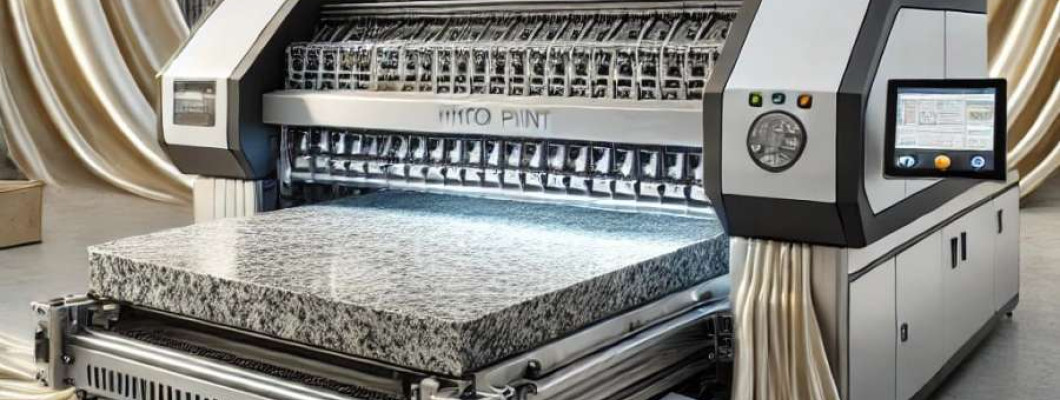
The Industrial Reality of Maintaining High-Precision Photo Printers in Memorial Applications
In the industrial production environment of memorial photo printing, maintaining consistent output quality over extended operational periods is critical. The Headstone Photo Printer Tomb Photos Printer is purpose-built for high-precision, durable printing on stone and ceramic substrates, frequently employed in cemeteries and monuments. These printers operate in environments where even minor output defects can compromise client satisfaction and lead to costly reprints or legal liabilities. However, an often-overlooked challenge in this sector lies in lifecycle maintenance costs. The printers must endure abrasive substrates, variable ambient conditions, and frequent operational use, all while preserving micron-level image fidelity. The failure points in printhead assemblies, ink delivery systems, and substrate handling units impose significant maintenance demands that can rapidly inflate operational expenses.
Operators face particular challenges with ink chemistry compatibility and printhead nozzle clogging. The abrasive nature of certain tombstone materials accelerates wear on mechanical feeders and alignment sensors. Moreover, printheads designed with sub-10 picoliter drop sizes—essential for achieving photographic detail—are inherently more vulnerable to partial blockages and require precise, scheduled maintenance. Downtime for unscheduled repairs directly impacts throughput and labor costs, creating a bottleneck in the often tight project timelines dictated by monument makers and stonemasons.
Strategic lifecycle maintenance planning is indispensable to manage consumables, avoid catastrophic printhead failure, and optimize service intervals. Industrial operators must also navigate supply chain challenges for replacement parts and adapt to regional compliance pertaining to solvent-based ink disposal or emissions. In this environment, lifecycle cost considerations become a primary factor beyond initial capital expenditure, governing the total cost of ownership for the Headstone Photo Printer Tomb Photos Printer.
Technical Deep-Dive into Lifecycle Maintenance and Hardware Integration
Printhead Wear and Replacement Cycles
The printer utilizes piezoelectric drop-on-demand printheads capable of producing drop sizes as low as 4–6 picoliters, achieving over 1200 dpi resolution necessary for photorealistic tombstone imagery. However, the abrasive particulate matter from stone substrates leads to printhead surface erosion and nozzle clogging. Empirical data estimates average printhead lifespan at approximately 800 operational hours under typical workload conditions, with replacement costs approaching 15% of the system CAPEX.
Regular maintenance procedures involve ultrasonic nozzle cleaning and bi-weekly alignment calibration to mitigate cumulative erosion effects. Failure to adhere to these protocols results in a rapid decline of drop placement accuracy, increasing image artifacts and ink wastage.
Ink Chemistry and Consumable Management
The printer operates primarily on ceramic pigment-based UV-curable inks engineered for durability and color stability under UV exposure and environmental stressors. These inks require precision thermal control to maintain viscosity within a narrow range (~25°C ±2°C), ensuring jetting consistency.
Consumable tracking metrics indicate an ink replacement cycle every 60 liters for a standard funeral monument print production run, with waste ink collectors necessitating disposal every 300 operational hours to comply with environmental safety regulations. Optimum thermal management reduces ink polymerization risks inside the nozzles, directly extending printhead life.
Mechanical Substrate Handling Challenges
The automated substrate feeder supports slabs up to 1000 mm x 500 mm with thicknesses reaching 50 mm. The system employs vacuum suction combined with pneumatic clamps to prevent slippage during high-speed printing, yet abrasive contact points wear down after approximately 5000 cycles, requiring replacement of feed belts and seals.
Thermal and Electronic System Reliability
Power consumption stabilizes around 1200 Watts during peak printing, generating localized temperatures of 40–50°C near the printhead arrays. Integrated cooling systems utilize forced air combined with heat sinks designed to maintain operational temperature within specified thresholds. Thermal stress tests reveal electronic component longevity up to 5 years under continuous usage, contingent on ambient environment control.
Maintenance Cost Modeling and Downtime Analysis
A cost comparison table below illustrates typical maintenance impacts considering two scenarios: standard reactive maintenance versus predictive maintenance with sensor-driven alerts and scheduled service.
| Maintenance Approach | Annual Downtime (Hours) | Annual Maintenance Cost (USD) | Printhead Replacement Interval (Hours) | Consumables Waste (%) |
|---|---|---|---|---|
| Reactive Maintenance | 120 | 18,000 | 600 | 18% |
| Predictive Maintenance | 40 | 10,500 | 800 | 10% |
Predictive maintenance reduces downtime by 66% and cuts consumable waste nearly in half, highlighting the importance of integrating system diagnostics and planned servicing protocols.
Scenario Analysis for Industrial Use-Cases
Large Monument Production Facility
In high-throughput environments producing 1,000+ printed tombstones annually, the printer's robust maintenance schedule ensures minimal unscheduled downtime, critical for meeting demanding deadlines. The integration of predictive maintenance reduces labor intensity required for troubleshooting and printhead cleaning, lowering total operational costs.
Regional Cemetery Services Provider
Here, variable workload cycles demand flexible maintenance planning. The printer’s ability to handle substrate variability and rapid calibration supports diverse memorial orders. The cost-efficient consumable use extends budgeting capabilities for smaller operators balancing quality and expenses.
Artisan Stonemason Workshop
This smaller-scale use case leverages the printer's precision capabilities for custom commissioned pieces, with a focus on color fidelity and micron-level detail. Maintenance intervals are longer due to lower volume but require higher skill in printhead servicing to maintain color accuracy critical for artistic outcomes.
Expert FAQ on Maintenance and Industrial Viability
Q1: How does abrasive stone dust affect the printer's electronics?
A: The printer is sealed with dust-resistant enclosures and positive pressure airflow to minimize particulate ingress. However, routine cleaning of sensors and circuit housings is mandatory every 500 operational hours to prevent malfunction.
Q2: What are the recommended ink storage conditions to maintain chemistry stability?
A: Ink cartridges must be stored between 18°C and 22°C with relative humidity below 50%. Prolonged exposure to UV or temperature fluctuations degrades pigment dispersion, increasing nozzle blockage risk.
Q3: Can third-party inks be safely used to reduce operational costs?
A: Use of unauthorized inks voids warranty and can severely damage printhead piezo crystals due to incompatible solvents or particle size variance, leading to premature failure.
Q4: How does temperature variation influence printhead replacement frequency?
A: Elevated ambient temperatures accelerate ink polymerization within nozzles, reducing printhead life by up to 25%. Maintaining stable temperature extends usage cycles significantly.
Q5: What remote monitoring features facilitate predictive maintenance?
A: The system integrates sensors measuring nozzle integrity, ink viscosity, feed tension, and environmental conditions, transmitting real-time data to cloud analytics for service scheduling.
Strategic Verdict and Recommendation Based on Lifecycle Maintenance Costs
Considering operational realities where precision, throughput, and image longevity intersect, the Headstone Photo Printer Tomb Photos Printer emerges as a viable industrial-grade solution. Its design addresses critical maintenance bottlenecks through advanced printhead technology, consumable engineering, and integrated diagnostics. While lifecycle maintenance costs remain non-trivial, predictive management strategies significantly mitigate downtime and consumable waste, directly enhancing total cost of ownership.
Enterprises operating monument production facilities or cemetery service providers seeking reliable, high-fidelity memorial photo printing will find the printer’s balance of precision and maintenance efficiency uniquely suited to their workflows. Furthermore, the availability of detailed operational data enables a targeted approach to maintenance, reducing unexpected failures and optimizing resource allocation.
For operators evaluating long-term asset viability with stringent quality demands, the Headstone Photo Printer Tomb Photos Printer should be considered a definitive advancement in the niche of high-precision memorial photo printing.