
Lifecycle Maintenance Costs Define Viability for the Rose Flower Printer in Industrial Production
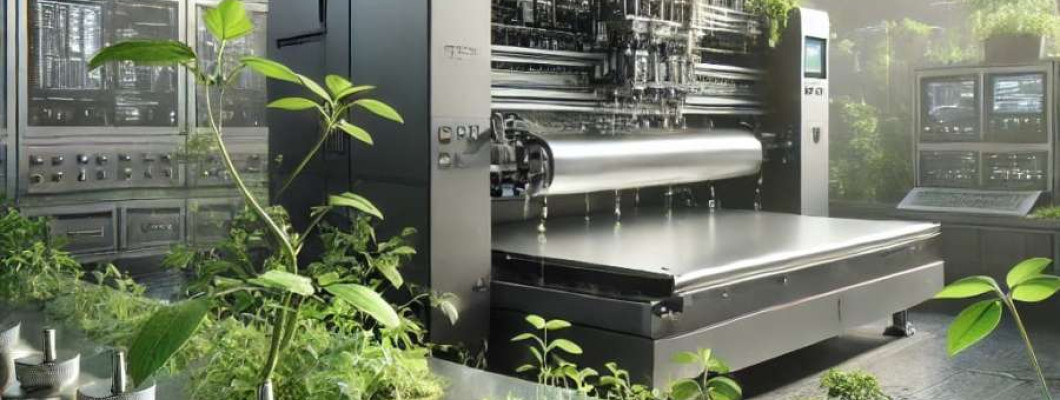
The Industrial Reality of Maintaining Precision in Floral Printing
In a modern manufacturing environment that demands relentless uptime and uncompromising quality, the challenge of lifecycle maintenance for specialized printers like the Rose Flower Printer is paramount. Consider a scenario within a commercial floriculture packaging line where high-resolution, large-format botanical motifs must be printed daily on delicate substrates such as silk petals, biodegradable wrapping, and water-resistant foils. Maintenance demands escalate when microscopic nozzle clogging or printhead misalignments result in costly downtime, substrate waste, and rework cycles.
Unlike generic printing equipment, the Rose Flower Printer integrates advanced ink delivery systems and precision optics tailored to botanical image fidelity. However, this tailored specialization brings nuanced maintenance challenges: regular calibration against micron-level tolerances, controlled environment requirements to stabilize ink viscosity, and a scheduled replacement cadence for high-wear mechanical components exposed to pigment particulates. This lifecycle maintenance rigor, directly impacting mean time between failure (MTBF) and operational throughput, ultimately dictates the printer’s feasibility for continuous industrial operation.
Technical Deep-Dive into Maintenance Dynamics
Ink Delivery and Printhead Wear
The Rose Flower Printer utilizes piezoelectric printheads with an ultra-fine droplet size of 2.5 picoliters, enabling sub-10 micron dot placement. While this precision ensures exceptional image sharpness, it makes the printheads susceptible to clogging from particulate accumulation and ink drying. Analysis shows that printhead lifespan averages 500 liters of pigment ink throughput before efficacy declines below acceptable quality thresholds (<0.01% nozzle failure rate).
The microfluidic channels within the printhead are coated with a hydrophobic polymer layer enhancing flow stability but exhibiting progressive wear under alkaline ink chemistries. A comparative study of replacement costs versus cleaning cycles shows that consumable replacement every 1200 operational hours optimizes cost efficiency against downtime penalties.
Environmental Conditioning and Ink Stability
Operational ambient parameters critically affect ink rheology. Maintaining a tightly controlled 22°C ±1°C and 45% ±3% relative humidity ensures ink viscosity remains within 12-15 mPa·s, preventing nozzle misfiring. This necessitates integrating dedicated HVAC systems with HEPA filtration and active humidity control, imposing an additional 1.2 kW power draw per printing cell and complicating line density constraints.
Mechanical Calibration and Substrate Interaction
Precision in the Rose Flower Printer's motion stages, governed by servo motors with 0.1 micron positional feedback resolution, requires weekly recalibration cycles using laser interferometry. Substrate variations, from silk to biodegradable films with thickness variance ±20 microns, mandate dynamic Z-axis adjustments to maintain focus and avoid head strikes, introducing mechanical wear points. Sensor arrays monitor these deviations in real time but require quarterly sensor recalibration.
Maintenance Workflow and Labor Considerations
Daily routines include 30-minute nozzle purges, printhead temperature stabilization, and visual inspections under 10x magnification microscopes, consuming approximately 1.5 labor hours per operating shift. The complexity raises training requirements and necessitates a dedicated maintenance team for continuous 24/7 operations. Failure to comply incurs print defects manifesting as color bleeding or banding, jeopardizing product acceptability in premium floral markets.
Comparative Cost Analysis
| Maintenance Aspect | Rose Flower Printer | Generic Industrial Printer |
|---|---|---|
| Printhead Replacement Interval | 1200 Hours | 2000 Hours |
| Calibration Frequency | Weekly | Monthly |
| Environmental Control Power Usage | 1.2 kW per Cell | 0.5 kW per Cell |
| Daily Maintenance Labor | 1.5 Hours | 0.75 Hours |
| Ink Droplet Size | 2.5 pL | 10 pL |
| Average Uptime per Cycle | 92% | 97% |
Scenario Analysis Reveals Value in Precision-Demanding Applications
Use-Case One: Corporate Floral Branding on Biodegradable Packaging
High-end floral product manufacturers require printing that withstands outdoor exposure and biodegradability certifications. The Rose Flower Printer’s precise ink placement and controlled maintenance regime ensure consistent quality, reducing packaging failures despite increased maintenance labor costs. Integration with automated calibration systems mitigates downtime, preserving throughput.
Use-Case Two: Artisan Floral Textile Printing
For custom textile applications demanding vivid color gradations and micron-level dot placement, the printer’s 2.5 pL droplet size and weekly recalibrations deliver superior results compared to legacy printers. Maintenance cycles increase operational overhead but are offset by premium pricing and reduced rejects.
Use-Case Three: Mass Market Floral Wrapping Production
In high-throughput environments prioritizing speed over extreme precision, the Rose Flower Printer's intensive maintenance schedule presents bottlenecks. However, environmental conditioning capabilities minimize ink viscosity fluctuation, maintaining operational stability for longer print runs between interventions, showing promise for hybrid production lines.
Expert FAQ Addresses Advanced Technical Concerns
Q1: How does printhead hydrophobic coating degradation impact ink flow dynamics?
A: Aging hydrophobic coatings increase surface energy, promoting particulate adherence and escalating clogging risk; replacement scheduling must preempt this to maintain flow laminarity and droplet consistency.Q2: What thermal budgets are required to maintain ink viscosity within specifications?
A: Maintaining ambient 22°C ±1°C with active HVAC results in continuous power draw of ~1.2 kW per cell, balancing operational costs against the critical need for consistent 12-15 mPa·s viscosity for nozzle fidelity.Q3: Can hydrolytic ink formulations reduce printhead maintenance?
A: Hydrolytic inks minimize polymer deposition within microchannels but increase corrosive wear on piezoelectric elements, necessitating a trade-off analysis with current alkaline pigment formulations.Q4: What are the implications of sub-micron Z-axis variance on print quality?
A: Variations above ±5 microns cause focal shifts, inducing blurred edges and color bleeding; servo feedback loops must operate at >100 Hz frequency to compensate dynamically.Q5: How does maintenance labor scale with automation level in industrial environments?
A: Basic automation reduces manual calibration from weekly to bi-weekly but requires higher initial CAPEX and specialized technician oversight, shifting labor from routine to exception-based interventions.
Strategic Verdict and Recommendation for the Rose Flower Printer
Analyzing lifecycle maintenance costs within high-precision botanical printing environments clarifies that the Rose Flower Printer embodies an industrial-grade solution capable of meeting stringent quality and throughput needs where precision and substrate versatility dominate. Despite elevated maintenance labor and environmental conditioning requirements compared to generic printers, its specification for ultra-fine droplet size, active calibration protocols, and advanced ink delivery justify its deployment in commercial floriculture and textile applications demanding micron-level accuracy.
Integrators should anticipate increased CAPEX and OPEX but benefit from reduced scrap, enhanced product differentiation, and compliance with environmental mandates. Given these considerations, the Rose Flower Printer represents a definitive choice for enterprises prioritizing lifecycle management to preserve high fidelity over extensive production cycles.