
Lifecycle Maintenance Costs Drive the Real Value of A2+ Size UV Printer Embossed Glossy Printing
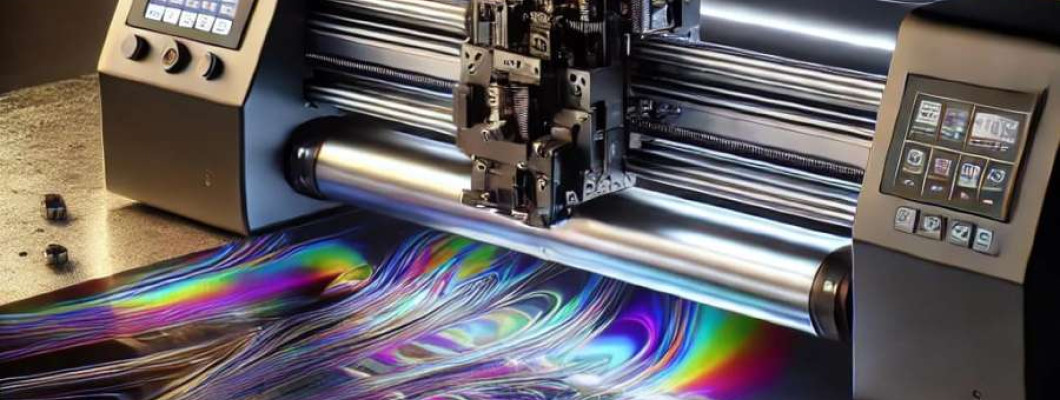
The Industrial Reality of Maintaining High-Precision UV Printing Equipment
Transitioning from prototyping to industrial-grade production using an A2+ size UV printer embossed glossy printing system confronts manufacturers with a significant challenge: lifecycle maintenance costs. This is more than the upfront capital expense; it encompasses the layered complexities of printhead longevity, UV lamp wear, system calibration, and substrate surface consistency over operational cycles. High gloss and embossed effects rely on precision ink droplet placement and UV curing processes that degrade subtly yet measurably over time. Without rigorous lifecycle maintenance, these printers face degraded print quality, increased rework, and unplanned downtime resulting in operational bottlenecks. The cost implications ripple across labor, materials, and throughput, especially when printing on diverse substrates requiring exacting gloss finish and embossed textural fidelity.
Consider a print shop running this A2+ UV printer in a mid-volume environment. Each 24-hour shift exposes the printheads to particulate buildup and ink viscosity changes, leading to microscopic nozzle blockages. Concurrently, UV LED arrays at nominal power output gradually lose irradiance, compromising polymerization of the UV ink. If proactive maintenance schedules—not simple reactive fixes—are not instituted, asset deterioration accelerates. The human factor engineering related to operator interface and diagnostic tools also critically shape the ability to detect faults early. The consequence is a cascading effect on production schedules, with tight delivery windows jeopardized by equipment unpredictability.
Technical Deep Dive into Maintenance Cost Drivers and Hardware Stress Points
Printhead Wear and Ink Chemistry Interaction
The core of the A2+ size UV printer embossed glossy printing system is its inkjet printhead technology designed for microdroplet ejection at resolutions exceeding 1440 dpi. The printheads operate with droplet sizes typically measured between 4 and 6 picoliters (pl). Given the high-gloss UV inks’ photoinitiator-rich formulations, aggressive solvent compositions accelerate nozzle erosion and clogging phenomena. Assuming a nozzle clog rate increase of 0.5% per 100 hours of operation, and a total nozzle array count of 256 nozzles per head, the expected maintenance interval to avoid quality degradation is under 500 operational hours.
UV LED Array Irradiance Decay
UV curing effectiveness correlates directly with radiant power density, measured in mW/cm², of the LED array. Starting at a nominal 1000 mW/cm² output, typical array longevity predicts a 20% irradiance drop after 1000 operating hours. Given the polymerization kinetics of UV ink, a decrease below 800 mW/cm² impacts curing depth, promoting incomplete gloss setting or embossing defects. Regular irradiance measurement and scheduled LED module replacements are therefore essential maintenance controls to sustain output quality.
Calibration Complexity and Surface Consistency
The embossed glossy effect requires multi-pass printing with ultra-precise positional repeatability in the range of ±0.05 mm. Thermal drift in the printer’s mechanical components over extended shifts leads to misalignment. Implementing closed-loop calibration using embedded cameras and real-time substrate height sensing counters these shifts but adds layers of maintenance in sensor cleaning, firmware updates, and mechanical recalibration. The interplay between ambient temperature variations and UV lamp heat dissipation further complicates mechanical stability.
Maintenance Workflow and Cost Modeling
Calculating maintenance costs involves integrating consumable replacement, technician labor, downtime costs, and spare parts inventory overhead. For instance, printhead replacement can cost approximately $2,000 per unit with a recommended life of 1,500 operational hours. Downtime for replacement averages 2 hours including calibration and testing, equating to output loss of roughly 100 prints at 50 seconds per print cycle. Adding preventive maintenance tasks such as nozzle cleaning, UV intensity verification, and substrate sensor recalibration can extend uptime but require trained personnel, approximately 15% of total operational labor.
Comparison Table of Maintenance Impact Between Predictive and Reactive Approaches
| Maintenance Strategy | Operational Hours Between Failures | Downtime per Cycle (hours) | Print Quality Consistency (%) | Labor Cost Impact (%) |
|---|---|---|---|---|
| Predictive Maintenance | 1500 | 1.2 | 98 | 15 |
| Reactive Maintenance | 500 | 2.8 | 85 | 35 |
Scenario Analysis of Maintenance Costs Across Business Use-Cases
1. Mid-Volume Commercial Printing Shop
For commercial print businesses producing promotional materials, the focus centers on balancing throughput with print fidelity. Maintenance lapses rapidly degrade the embossed glossy features, increasing reprint rates and material waste. Predictive maintenance scheduling aligns operational uptime with client deadlines, ensuring consistent output at scale.
2. High-End Packaging Manufacturer
Packaging producers demand micron-level surface texture accuracy for brand differentiation. Here, maintaining UV lamp irradiance is critical to produce sharp embossing without compromising substrate integrity. Lifecycle maintenance protocols reduce the risk of presentation defects, which carry higher cost implications per unit.
3. Prototype and Short Run Artisan Print Studio
Small studios prioritize color depth and substrate versatility. While throughput is lower, printhead nozzle health and calibration precision become paramount to sustain high-quality glossy emboss effects on diverse substrates. Diligent maintenance reduces scrap rates and protects delicate mechanical subsystems from premature failure.
Expert FAQ About Lifecycle Maintenance Costs for A2+ UV Printers
Q1: How does ink chemistry variability affect nozzle clog frequency?
A1: Ink viscosity and solvent volatility alter drying rates at the nozzle plate, increasing clog risks especially in high pigment load UV inks.
Q2: Can firmware updates reduce maintenance overhead?
A2: Advanced firmware can optimize droplet firing sequences and self-cleaning cycles, extending nozzle life and reducing required manual intervention.
Q3: What role does ambient temperature control play in lifecycle costs?
A3: Maintaining a stable 23 ±2 °C environment minimizes thermal drift, reducing mechanical recalibration cycles and printhead stress.
Q4: How is the embossed surface depth maintained over long runs?
A4: Precise UV dose management and repeated calibration of embossing layers ensure consistency, offsetting polymerization shrinkage and substrate deformation.
Q5: What are optimal spare parts stocking practices?
A5: Holding critical components like printheads and UV LED modules in inventory balances repair turnaround time against capital tied in spare inventory.
Strategic Verdict and Definitive Recommendation
When assessing the total cost of ownership for the A2+ Size UV Printer Embossed Glossy Printing system, lifecycle maintenance emerges as a determinative factor influencing operational viability. The technology’s capacity for delivering industrial-grade, high-fidelity embossed glossy finishes across diverse substrates justifies its deployment in precision-demanding environments. The availability of predictive maintenance frameworks, combined with comprehensive technical diagnostics and modular component replacement, enables businesses to mitigate risks associated with printhead wear, UV irradiance decay, and mechanical drift.
For organizations intent on elevating production quality while managing operational costs, integrating this printer developed for rigorous maintenance protocols represents an intelligent capital outlay. Detailed technical insights into maintenance intervals, labor involvement, and calibration complexity reveal that this system supports sustained print quality well beyond typical short-run equipment. The A2+ Size UV Printer Embossed Glossy Printing is thus recommended as a robust, industrial-grade solution capable of meeting stringent quality and throughput demands with a clear lifecycle maintenance strategy. This positions it favorably in the market for scalable business operations valuing long-term asset longevity and reduced unplanned downtime.