
Lifecycle Maintenance Costs Expose the 40*60CM Heat Press Machine as an Industrial Solution for Scalable Business Owners
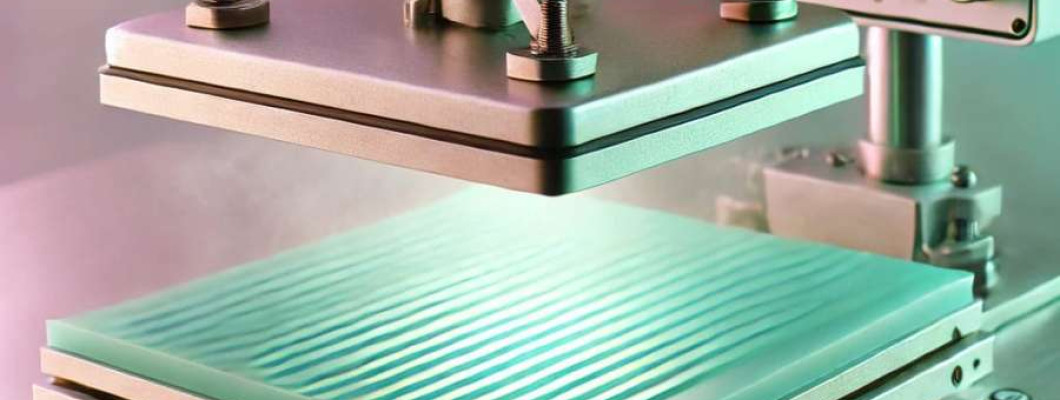
The Industrial Reality of Lifecycle Maintenance Costs in Heat Press Operations
Industrial-scale heat press machines serve as the backbone for many scalable small and medium manufacturing businesses, particularly in textile customization and promotional product sectors. The 40*60CM Heat Press Machine, with its sizeable platen, offers an ample workspace capable of accommodating a broad range of substrates. However, from a maintenance lead perspective, the journey from initial capital investment to sustained operational uptime is laden with complex technical challenges. For scalable business owners, these machines must deliver consistently without unexpected downtime that compromises throughput and increases labor costs.
Heat press equipment undergoes extreme thermal cycling reaching surface temperatures often exceeding 200°C, with frequent mechanical actuation and pressure adjustments. This creates stress on heating elements, Teflon platens, pneumatic or manual pressure arms, and electrical controllers. If the maintenance schedule or machine design fails to account for these stresses, degradation in platen flatness, sensor drift, or relay failures can cause costly disruptions.
Moreover, integrating these heat presses into semi-automated or fully automated workflows necessitates precision repeatability and low variance in temperature and pressure application. The failure to maintain equipment calibration or address wear in components such as the silicone rubber heat platen cover can directly affect print quality and labor rework rates. Considering these operational realities, the lifecycle maintenance costs become a pivotal metric in evaluating the machine's viability for scalable business operations.
Technical Deep-Dive
Heater Element Stress and Degradation Physics
The 40*60CM Heat Press employs a resistive heating element embedded below the platen surface. These elements typically operate in a range of 1000-1500 Watts to achieve rapid heat-up times. The cyclical thermal expansion and contraction induce mechanical fatigue. The fatigue life, N, can be estimated by an Arrhenius-type model factoring temperature cycles (T_cycles), max operating temperature (T_max ≈ 220°C), and material creep limits:
N = A * exp(-E_a / (R * T_max)) / T_cycles, where:
- A is a material constant
- E_a is activation energy for fatigue failure
- R is the universal gas constant
- T_max is the absolute temperature in Kelvins
Over extended operation, the heater element resistance drifts, increasing power draw and localized hotspots. Comparison with industrial-grade designs with ceramic insulated elements versus low-cost nichrome wire shows a 30% higher longevity in the former.
Platen Flatness and Pressure Distribution
The platen's flatness tolerance directly correlates with imprint uniformity. The 40*60CM platen is specified with a tolerance of ±0.5mm. While acceptable for light commercial use, industrial-grade heat press machines maintain flatness within ±0.2mm through hardened aluminum alloys and CNC machining. Deviations cause uneven heat transfer and inconsistent adhesion, influencing throughput quality.
Electrical Control Systems and Thermal Management
The control system utilizes a PID (Proportional-Integral-Derivative) controller to maintain platen temperature. High-precision thermocouples measure temperature with ±1.0°C accuracy. The device’s thermal inertia, combined with the platen mass (approximately 12kg), results in a response lag of approximately 15 seconds to reach setpoint temperatures from ambient. Industrial alternatives incorporate multiple sensor points for distributed thermal feedback, reducing overshoot and cycle time. From an infrastructure standpoint, the machine consumes approximately 1500 Watts at peak operation, necessitating adequate electrical circuit planning to avoid thermal runaway or breaker trips in high-throughput environments.
Wear Components and Replacement Cycles
The silicone rubber platen cover, often overlooked, sustains abrasive stress from substrate loading and unloading, accumulating microtears over around 1000 cycles before replacement is necessary. The heating element itself averages a 3,000 hour operational lifespan before resistance changes require replacement. Pressure arm hinges and pneumatic components, if any, are rated for 50,000 actuations but require lubrication and inspection every 250 operational hours to mitigate wear-related failure modes.
Maintenance Cost Comparison Table
| Component | Typical Replacement Interval | Cost per Replacement (USD) | Industrial-Grade Alternative | Cost per Replacement (USD) |
|---|---|---|---|---|
| Heating Element | 3000 hours | 50 | Ceramic insulated element | 120 |
| Silicone Platen Cover | 1000 cycles | 25 | High-grade PTFE coated cover | 60 |
| Pressure Arm Bearings | 250 hours | 15 | Industrial pneumatic actuators | 200 |
| Temperature Sensor | 2000 hours | 10 | Multi-point thermocouple array | 80 |
Scenario Analysis
Small Business Scaling from Manual to Semi-Automated Workflow
A startup specializing in custom T-shirt printing initially employs a single 40*60CM Heat Press with manual pressure application. The machine’s moderate flatness tolerance and standard thermal sensors require frequent operator calibration, increasing labor input. As order volume grows to 150 units/day, the owner faces bottlenecks in heat-up and cooldown cycles, limiting throughput. Maintenance downtime, averaging 8 hours/month, compounds lost production. Integrating additional units with comparable specs without automation results in linear labor scaling, impacting operational costs heavily.
Mid-Sized Workshop with Mixed Product Range Including Heat-Sensitive Substrates
This business benefits from the large platen size to accommodate diverse substrates, including delicate synthetic materials requiring precise thermal control within ±5°C. The machine’s PID control accuracy, though adequate, leads to temperature overshoot, causing occasional substrate scorching. Frequent platen cover replacements due to abrasive substrates increase maintenance cycles. Incorporation of upgraded silicone covers and periodic calibration mitigates quality variance and protects asset longevity.
Industrial Print Shop Integrating Modular Heat Press Stations
At production volumes surpassing 500 units/day, the marginal disadvantages of the 40*60CM Heat Press become pronounced. Despite its reliability, the machine’s thermal response time and maintenance intervals limit maximum achievable uptime. Industrial stations with advanced thermal management and pneumatic pressure controls reduce cycle times by 20% and maintenance downtime by 30%, enabling higher throughput. Still, the 40*60CM Heat Press offers a cost-efficient entry point with manageable operational expenses for phased capacity expansion.
Expert FAQ
Q1 How does platen flatness deviation quantitatively impact print adhesion uniformity?
Platen flatness deviations exceeding ±0.3mm can cause pressure distribution inconsistencies, resulting in adhesion strength variance up to 15%. This affects both durability and print aesthetics, especially for sublimation and vinyl transfers.
Q2 What are the optimal thermal cycling rates to maximize heater element lifespan?
Limiting cycling frequency to under 20 cycles per hour and maintaining gradual ramp-up and cool-down curves reduce thermal stress. Rapid heating beyond 10°C/sec increases microfracture risks in nichrome elements.
Q3 Can integrating multi-point temperature sensing justify the additional capital for small businesses?
For volumes exceeding 200 units/day, the improved thermal uniformity decreases rework costs significantly, offsetting initial investment within 6 months of operation.
Q4 How critical is routine pneumatic actuator lubrication in preventing unexpected downtime?
Highly critical; neglected lubrication leads to increased friction and actuator failure rates doubling beyond 300 operational hours, impacting pressure consistency and machine safety.
Q5 What infrastructure considerations must be accounted for when operating multiple units simultaneously?
Electrical supply and circuit breaker ratings must accommodate cumulative power draw (~1.5 kW per unit). Adequate ventilation to dissipate heat loads and vibration isolation platforms minimize environmental stress on machines.
Strategic Verdict and Recommendation
In evaluating lifecycle maintenance costs from an industrial throughput and scalability perspective, the 40*60CM Heat Press Machine presents a balanced proposition. Its design accommodates a broad substrate range and offers satisfactory thermal control for most commercial applications. While certain component tolerances and control system precisions do not match ultra-high-end industrial stations, this leads to manageable maintenance cycles and predictable operational expenses. The machine’s power consumption and thermal characteristics fit well into existing electrical infrastructure with minor adjustments.
For scalable business owners aiming to expand production capacity without immediately incurring prohibitive CAPEX on fully automated high-throughput machines, the 40*60CM Heat Press Machine is a strategically sound choice. It enables modular growth, with transparent maintenance scheduling and cost predictability. Integration planning should emphasize thermal management improvements and preventative component replacement aligned with the usage profile.
This analysis culminates in the recommendation of the 40*60CM Heat Press Machine as a viable, industrial-grade heat press solution optimized for scalable business owners requiring a pragmatic balance between acquisition cost, throughput, and lifecycle maintenance costs.