
Lifecycle Maintenance Costs Expose the 40x60CM Heat Press Machine as Industrial Grade for Scalable Business Owners
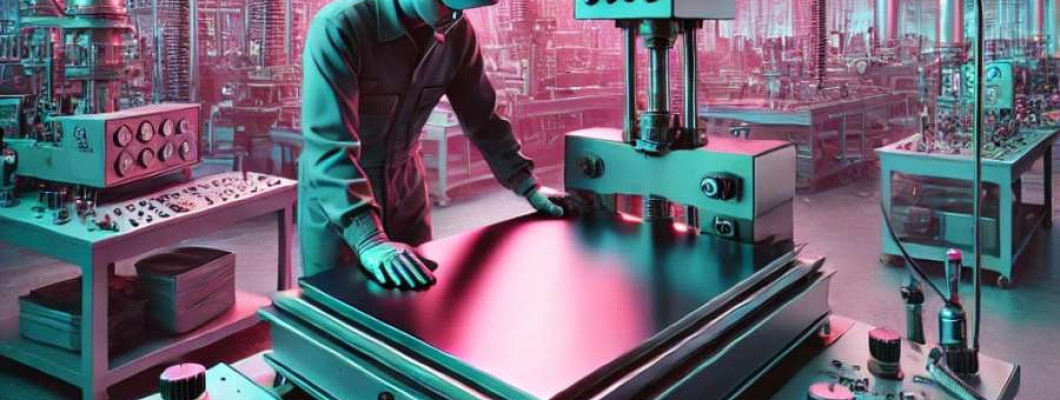
The Industrial Reality of Maintaining Heat Press Machines in High-Volume Production
For a scalable business owner, the transition from small-scale operations to industrial-grade throughput demands machines with predictable lifecycle maintenance costs and long-term reliability. A 40x60CM heat press machine, due to its moderate platen size and heat delivery mechanism, must be evaluated carefully not only for upfront capital expenditure but for the hidden operational burden it imposes during extended use. In a high-turnover environment, downtime due to wear on heating elements, pressure systems, and control boards can drastically reduce production capacity and inflate labor costs. The challenge is to anticipate these maintenance cycles, understand their triggers, and ensure that repair or replacement downtime aligns with business goals rather than interrupting them.
In practice, heat press machines operating at full load for 10+ hour shifts face accelerated degradation of silicone or Teflon-coated heat platens, thermocouples drifting from calibration, and pneumatic or mechanical pressure systems requiring recalibration or seal replacement. Electrical components such as solid state relays used for power modulation heat up and have finite mean time between failures (MTBF). Without a clear understanding of these lifecycle stress points, the business risks costly unexpected repairs or suboptimal throughput due to partial system failures.
Asset depreciation, when viewed through the lens of maintenance overhead, reveals a more nuanced picture. While a 40x60CM heat press machine might have an initial purchase price lower than larger industrial units, maintenance and downtime costs during peak operational periods disproportionately affect its operational expenditure (OPEX). This is a critical consideration for scalable business owners aiming to optimize cost per unit production and labor allocation.
Technical Deep-Dive on Lifecycle Maintenance Stress Points and Cost Impact
Heating Element Durability and Thermal Efficiency
The core heating element in a 40x60CM heat press is often a mica or ceramic-based resistance heater calibrated to deliver consistent heat across the platen area. The power rating typically ranges from 1400W to 1800W, designed to reach temperatures up to 220°C within 5-7 minutes. The element's longevity is affected by voltage fluctuations, ambient temperature, and duty cycle. Under continuous 12-hour operation at 1800W and 200°C, thermal fatigue cycles cause microfractures, lowering element efficiency and risking sudden failure.
Hypothetical stress calculation: Assuming N thermal cycles per day (N = 3 heating–cooling cycles in a 12-hour period), and a fatigue life of 1000 cycles before failure, the expected element lifespan would be approximately 333 days of full operation. Replacing this element involves dismantling the platen cover and recalibrating the thermocouple, which typically requires 1-1.5 hours of skilled labor costing approximately $50-$75 per intervention.
Pressure System Wear and Calibration Drift
The mechanical or pneumatic pressure system maintains substrate contact uniformity essential for quality transfers. Constant pressure is sustained at around 45-60 kg/cm2, adjusted via manual or automated controls. Seal degradation, spring fatigue, and piston wear progressively reduce pressure stability, resulting in uneven heat distribution and inconsistent print quality.
Comparing manual spring tension mechanisms versus pneumatic systems:
Manual systems require monthly recalibration and parts replacement every 6 months, while pneumatic systems reduce recalibration frequency but require air compressor infrastructure, raising initial CAPEX and introducing additional maintenance vectors.
Electrical Control Components and Failure Rate Analysis
The control board, often a PID (Proportional-Integral-Derivative) controller, governs temperature regulation and timer functions. Components such as SSRs (Solid State Relays) must handle 15-20A continuously. SSR failure modes typically include thermal overload and transient spikes, with MTBF around 50,000 hours under optimal cooling.
The heat press machine’s compact design challenges cooling efficiency. Without additional heat sinks or active cooling fans, thermal management becomes a concern. Continuous 12-hour operation at maximum power without adequate cooling can reduce SSR lifespan by up to 30%. Incorporating a small fan or heat sink can extend this to 65,000+ hours, translating into multi-year operational reliability.
Comparative Raw Data on Maintenance Cycle Frequency and Cost
| Component | Manual Spring System | Pneumatic System |
|---|---|---|
| Pressure Calibration Frequency | Monthly | Quarterly |
| Average Repair Time | 1.5 hours | 2 hours |
| Parts Replacement Interval | 6 months | 1 year |
| Maintenance Cost per Year (Estimate) | $350-$450 | $500-$600 |
Raw Material Wear on Heat Platens
The 40x60CM platen size balances substrate versatility with manageable wear footprint. Silicone or Teflon covers protect the heating surface but degrade due to abrasion from repetitive substrate placement and high-press pressure, typically requiring replacement every 12-18 months under medium-to-high usage. Failure to timely replace leads to substrate scorching and compromised design fidelity.
Scenario Analysis of Three Scalable Business Use Cases
Case 1 The Apparel Printing Startup
A growing apparel business with daily production runs of 100-150 T-shirts values consistent throughput and minimal downtime. The 40x60CM platen allows a single standard-size T-shirt to be processed efficiently with a cycle time of 45-60 seconds per press. Predictable maintenance every 6 months for heating elements and pressure recalibration aligns well with business cycles, providing uptime >95%. Labor cost per unit remains competitive.
Case 2 Customized Promotional Goods Provider
This business requires flexibility to process multi-substrate designs—mousepads, puzzles, and caps—where a 40x60CM platen hits optimal size to cover most products. However, maintenance frequency increases due to substrate variability causing accelerated platen wear. The operator must monitor platen cover integrity monthly, and proactive replacement policies reduce loss from product defects.
Case 3 Multi-Shift Print Shop Scaling to Automation
Operating 3 shifts daily to meet volume demands places exceptional wear on control electronics and heat elements. Here, investment in pneumatic pressure systems with integrated sensors reduces manual calibration labor and increases reliability. Incorporating scheduled maintenance intervals based on MTBF calculations avoids disruptive failures. Continuous monitoring enables precise CAPEX/OPEX forecasting.
Expert FAQ on Industrial Lifecycle Maintenance for Heat Press Machines
Q1 How does duty cycle influence heating element lifespan in continuous operation?
A1 Higher duty cycles cause rapid thermal expansion and contraction, accelerating fatigue microcracks. Operating at moderate temperatures for longer intervals improves element longevity compared to rapid heating to peak and cooling.
Q2 Can pneumatic pressure systems be retrofitted to manual heat presses to reduce maintenance?
A2 Yes, retrofit kits exist but require air infrastructure and may affect platen uniformity. ROI depends on production volume and downtime costs.
Q3 How critical is thermocouple calibration for print quality?
A3 Extremely critical; a 5°C deviation can cause transfer failures or substrate damage. Calibration should be biannual in heavy-use environments.
Q4 What are the risks of ignoring platen cover replacement schedules?
A4 Increased risk of scorching, inconsistent heat transfer, and frequent rework, raising OPEX and damaging brand reputation.
Q5 How do electrical component failures manifest during production?
A5 Sudden SSR failures cause loss of temperature control leading to shutdowns or overheating. Predictive thermal monitoring mitigates unexpected downtime.
Strategic Verdict and Recommendation for the 40x60CM Heat Press Machine
For scalable business owners prioritizing consistent throughput and sustainable maintenance overhead, the 40x60CM Heat Press Machine presents as a viable industrial-grade solution with appropriate lifecycle management strategies. Its platen size balances versatility and efficiency, while predictable maintenance cycles on heating elements, pressure systems, and control electronics enable precise operational planning and cost forecasting.
Integrating pneumatic pressure systems and advanced thermal management can extend component life and reduce unexpected failures, boosting uptime beyond 95% in multi-shift environments. The initial asset cost is competitive, and when coupled with proactive maintenance schedules, total cost of ownership remains favorable against larger footprint units with higher CAPEX but not necessarily better OPEX profiles.
For a detailed assessment and procurement, visit the official product page of the 40x60CM Heat Press Machine to ensure alignment with specific production needs and integration capacity within existing workflows.