
Lifecycle Maintenance Costs Expose the True Value of the 40*60CM Heat Press Machine for Scalable Business Owners
The Industrial Reality of Lifecycle Maintenance Costs in Heat Press Machines
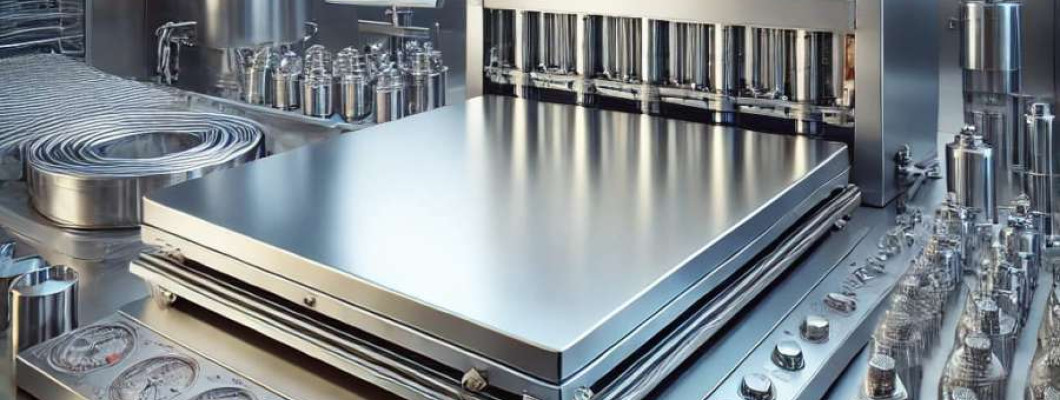
In industrial-scale print production environments, such as custom textile printing or signage manufacturing, the deployed heat press machinery forms a cornerstone of throughput and quality consistency. The 40*60CM Heat Press Machine represents a medium-format thermal press tool capable of handling a wide range of substrates within a 40 cm by 60 cm platen area. However, for scalable business owners eyeing throughput maximization and automation efficiency, it is imperative to examine not only immediate capital expenditure but the lifecycle maintenance costs that often impose hidden operational bottlenecks and erode margins over time.
Consider a mid-sized apparel company running a batch production line where multiple heat presses operate in parallel. A seemingly small degradation in platen temperature uniformity or a decline in pneumatic pressure consistency can cascade into increased setup times, greater scrap rates, and elevated labor costs due to manual recalibration. Furthermore, the downtime frequency linked to repair cycles for heating elements, pneumatic seals, and electronic control boards directly impacts daily uptime — curtailing scalability and imposing unpredictable OPEX spikes.
In such an operational reality, an industrial heat press machine's raw performance specs like maximum temperature (typically 220°C to 250°C for industrial models), pressure range (often 3 to 7 kg/cm²), and cycle speed (seconds per press) are only part of the equation. Reliable lifecycle maintenance protocols and component lifespan become decisive factors. For example, the choice of heating elements (silicone rubber heaters vs. ceramic plates), pneumatic valve durability, and control system redundancy critically determine mean-time-between-failure (MTBF) and mean-time-to-repair (MTTR), key metrics for scalable operations.
Therefore, for scalable business owners, understanding and controlling the lifecycle maintenance costs for the 40*60CM Heat Press Machine is an operational imperative. This involves deep familiarity with wear-prone components, preventative maintenance schedules, and compatible spares availability, alongside the necessary data to forecast depreciation impact on total cost of ownership (TCO).
Technical Deep-Dive Into Lifecycle Maintenance Costs for Heat Press Technology
Heat Element Efficiency and Failure Modes
The principal heating component in this model is likely a silicone rubber heating element embedded beneath the 40x60 cm platen. These heaters typically operate at 220V, drawing power on the order of 1000 to 1500 Watts to maintain 200 to 250°C operating range. The quality of the heating element directly impacts thermal uniformity, which affects print consistency and substrate damage incidence.
Under continuous industrial use, heat elements face thermal cycling stress leading to micro-cracks and eventual resistance drift. The failure rate (λ) can be modeled with Arrhenius kinetics, where the failure probability exponentially increases with operating temperature and cycle frequency. For example, a typical element rated for 10,000 cycles at 220°C may degrade to half its lifespan at 240°C due to increased molecular breakdown rates. Replacement costs, including downtime, average between $50 and $120 per unit depending on OEM.
Pneumatic System and Pressure Stability
The pneumatic actuator delivering platen pressure typically uses compressed air at regulated pressure ranges from 4 to 7 bar. Wear points include seals, valves, and cylinders. Seal degradation leads to pressure loss, reducing effective platen pressure and compromising weld quality or transfer adhesion.
Seal replacement intervals in harsh environments range from 6 to 12 months, with costs fluctuating between $30 and $80 per maintenance event. Air quality (moisture, particulates) directly impacts component longevity. Operators must install filtration and dryers to maintain pneumatic system integrity and minimize unscheduled failures.
Control Electronics and Sensor Reliability
Industrial heat presses deploy PID controllers managing temperature cycles with input from thermocouples embedded in the platen. Sensor drift and controller instability lead to temperature overshoot or undershoot, risking product defects. Mean sensor lifespan averages 3-5 years, with controller boards potentially lasting 5-7 years if protected from voltage spikes.
Electronic failure downtime is often high due to diagnostic complexity. Preventative measures include voltage surge protectors and periodic calibration of temperature sensors.
Comparison Table of Two Maintenance Approaches
| Aspect | Reactive Maintenance | Preventative Maintenance |
|---|---|---|
| Mean Downtime per Failure (hours) | 8-12 | 1-2 |
| Annual Maintenance Cost (USD) | $1200-$1800 | $800-$1200 |
| Component Lifespan (cycles or years) | Reduced by 20-30% | Maximized as per OEM specs |
| Operational Disruption | High, unpredictable | Low, scheduled |
| Spare Parts Inventory Cost | High due to emergency needs | Managed and optimized |
Mathematical Model for Total Cost of Ownership Over 5 Years
Assume:
- Initial CAPEX: $4,000
- Annual Operating Hours: 2,000
- Heat element replacement every 1,200 hours at $100
- Pneumatic seal replacement every 2,000 hours at $50
- Sensor calibration every 12 months at $150
- Downtime costs at $50/hour lost production
TCO = CAPEX + Sum of Replacement Costs + Downtime Costs
Reactive maintenance TCO tends to exceed $8,000 over 5 years, while a strict preventative regime can maintain TCO near $6,500, yielding nearly 20% operational cost savings and ensuring higher production throughput.
Hardware Comparison with Larger Format Heat Press Machines
The 40*60CM platen offers a balanced sheet size for small to medium batch runs versus larger 60*80CM or 80*100CM presses. Larger models demand higher wattage heaters (~2000 Watts), heavier pneumatic actuators, and more complex control boards, increasing maintenance complexity and downtime risks. For scalable businesses, the 40*60CM unit optimizes maintenance ease and cost without sacrificing operational flexibility.
Scenario Analysis of Business Applications and Impact on Lifecycle Costs
1. Rapid Prototyping for Apparel Startups
Startups with low-to-medium batch sizes prioritize quick changeovers. The 40*60CM press size matches typical garment panel sizes minimizing waste. Preventative maintenance minimizes downtime, critical when fulfilling tight launch deadlines with limited staff.
2. Medium Scale Custom Merchandise Manufacturer
A business producing mugs, mousepads, and textile patches benefits from the unit’s size versatility but requires rigorous pneumatic system upkeep. Losing platen pressure impacts multiple substrates with varying pressure sensitivities, necessitating scheduled seal inspections every three months.
3. Regional Print-On-Demand Franchise
In a distributed franchise setting, standardized maintenance protocols for the 40*60CM press enable predictable operational costs and spare parts logistics. The platen size matches most franchise product skins, allowing centralized parts procurement and technician training to streamline costs.
Expert FAQ Covering Non-Obvious Technical Aspects
Q1 What are the key thermal uniformity parameters to monitor for this press?
Measurement with thermal imaging should ensure temperature variance stays below ±3°C across the 40x60 cm platen to maintain adhesive consistency and prevent substrate scorching.
Q2 Can the pneumatic pressure be adjusted dynamically during cycle to optimize diverse substrates?
Some models allow manual pressure tuning; however, dynamic in-process adjustment requires integrated servo-actuated pneumatic valves, which are uncommon and increase maintenance complexity.
Q3 What are the recommended filter specifications to maintain pneumatic longevity?
Use a 5-micron particulate filter combined with a desiccant air dryer maintaining dew point below -40°C to prevent moisture-induced seal corrosion.
Q4 How does platen surface finish affect maintenance?
A smooth, polished steel platen reduces substrate sticking and wear on heating elements but may require periodic recoating to avoid oxidation and maintain consistent heat transfer.
Q5 What diagnostic tools facilitate early failure detection?
Real-time current draw monitoring of heating elements and pneumatic pressure sensors enable predictive maintenance by flagging abnormal electrical or pressure fluctuations before mechanical failure occurs.
Strategic Verdict and Recommendation
For scalable business owners balancing throughput, labor costs, and automation efficiency, the 40*60CM Heat Press Machine emerges as a highly viable industrial-grade solution. Its platen size optimally accommodates medium-scale batch runs while its component design allows for manageable lifecycle maintenance costs, critical in minimizing unexpected downtime and operational expenditure. When deployed with a preventative maintenance strategy emphasizing heater, pneumatic, and control system upkeep, the TCO remains competitively low compared to larger or less modular alternatives.
This machine bridges the gap between simple DIY presses and large-format industrial equipment, offering a balance of performance and maintainability suited to semi-automated production lines. Its moderate electrical and mechanical complexity reduces infrastructure integration challenges, enabling businesses to scale workflows efficiently without excessive capital or labor overheads.
In conclusion, investing attention to lifecycle maintenance cost management for the 40*60CM Heat Press Machine will unlock consistent print quality, higher machine availability, and superior ROI, making it a definitive recommendation for scalable enterprises seeking industrial-grade thermal press technology.