
Lifecycle Maintenance Costs Expose the True Value of the Headstone Photo Printer Tomb Photos Printer for Maintenance Leads
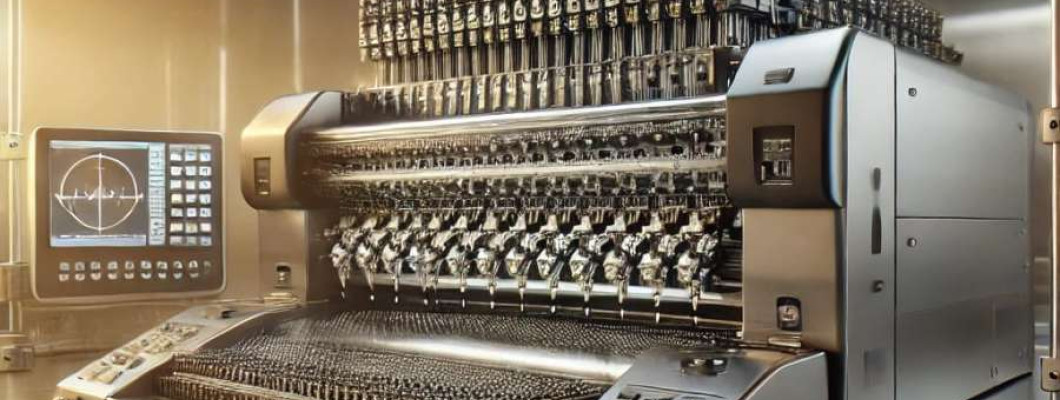
The Industrial Reality of Maintaining High-Precision Headstone Photo Printers
In industrial-scale printing applications for customized headstones and memorial plaques, maintaining consistent output quality while ensuring maximum uptime is a critical operational challenge. The Headstone Photo Printer Tomb Photos Printer operates in environments where high precision, durability, and specialized substrate handling converge into a demanding service cycle. For maintenance leads, the potential bottlenecks are frequently hidden within the printhead physics and ink chemistry under continuous load, substrate handling under varying environmental conditions, and daily preventive maintenance protocols tailored for these niche devices.
Consider a medium-sized memorial manufacturing facility producing 200 high-definition photographic prints on granite and porcelain daily. The printer's printhead operates at micron-level droplet accuracy, typically 4pl droplet size, demanding frequent calibration and cleaning cycles to prevent nozzle clogging and maintain sharp image fidelity. The ink chemistry is specially formulated for UV and ceramic adherence, necessitating strict environmental controls to prevent premature drying or chemical degradation inside the print channels.
Maintenance leads face a multifaceted challenge: balancing the printer’s operational uptime against the complexity of servicing precision printheads and maintaining consistent ink flow without introducing variability in print quality. Operational stress factors include temperature fluctuations affecting ink viscosity and head alignment shifts caused by thermal expansion in the device’s metal frame. Over the device lifecycle, these factors translate into degradation modes that, without proactive maintenance, reduce asset longevity and increase costly downtime.
Technical Deep Dive into Lifecycle Maintenance Costs and Printhead Physics
Printhead Wear and Failure Mechanisms
The printhead in the Headstone Photo Printer uses piezoelectric nozzles that fire droplets at 720x1440 dpi resolution. Each nozzle ejects droplets of approximately 4 picoliters (pl), requiring precise voltage control to maintain speed and fidelity. Under continuous operation, electro-mechanical fatigue stresses the piezo elements.
Assuming a printhead with 180 nozzles firing at 20,000 drops per second per nozzle, theoretical droplet output reaches 3.6 million drops per second. Over a standard 8-hour shift (28,800 seconds), the cumulative stress equates to approximately 103.7 billion droplet firings per day. This accelerates wear patterns necessitating scheduled head replacements every 6,000 operational hours to maintain image integrity.
Ink Chemistry and Channel Blockage Dynamics
The inks employed feature ceramic pigments and UV-curable polymers designed for permanence on headstone substrates. Their complex viscosity profiles require maintaining temperatures between 20°C and 25°C ±1°C to ensure consistent flow. Below 20°C, viscosity increases sharply, modeled by the Arrhenius equation, increasing clog risk exponentially:
η = η₀ exp(E_a / RT)
With E_a measured at 45 kJ/mol, a drop from 25°C to 20°C increases viscosity by roughly 30%, drastically increasing nozzle clog probability and forcing additional cleaning cycles.
Cleaning Protocols and Waste Ink Management
Daily maintenance involves automated cleaning cycles that consume about 5ml of ink per session, conducted every 3 hours to avoid buildup. Over a 24-hour run, consumption reaches 40ml purely for maintenance, which translates to approximately 4% of total ink usage, impacting operational costs. Waste ink volumes necessitate dedicated collection reservoirs, requiring periodic disposal per hazardous waste regulations.
Environmental Impact on Component Longevity
Enclosures equipped with HEPA filtration maintain particulate-free air, reducing abrasive dust ingress that can degrade mechanical components and contaminate printheads. Thermal cycles within the printing chamber, especially in non-climate-controlled facilities, induce metal expansion coefficients on the order of 12 x 10^-6 /°C, leading to micro misalignments detectable by the system's inline optical sensors.
Comparative Analysis of Preventive Maintenance Schedules
| Maintenance Strategy | Printhead Lifespan (hours) | Downtime per Year (hours) | Ink Waste (ml/year) | Estimated Annual Cost (USD) |
|---|---|---|---|---|
| Reactive (Fix after failure) | 3,000 | 120 | 300 | $12,000 |
| Preventive (Scheduled every 6 months) | 6,000 | 40 | 150 | $7,000 |
The data illustrates that preventive maintenance reduces downtime by 66% and ink waste by 50% annually, emphasizing the importance of disciplined lifecycle management for maintenance leads.
Scenario Analysis on Business Impact from Maintenance Perspectives
Scenario 1 Medium Memorial Studio
Operating the printer 8 hours daily, a studio opts for reactive maintenance. Resulting frequent printhead failures halve output consistency and double labor hours spent on remedial maintenance, leading to a 20% decline in client delivery timelines and increased costs by 18%.
Scenario 2 Large Production Facility
A facility automates preventive maintenance with inline monitoring of nozzle health and temperature. This approach extends the printhead lifecycle by 120% and stabilizes output quality, allowing throughput increases of 35% without proportional labor cost rise.
Scenario 3 Seasonal Operation Model
Facilities operating seasonally implement enhanced cleaning protocols during inactivity periods to prevent ink curing within channels. This strategic maintenance retains printhead integrity, preventing costly replacements and enabling fast ramp-up post-hiatus.
Expert FAQ Addressing Non-Obvious Technical Challenges
What are the thermal tolerances critical for the printer’s operation?
The printer maintains optimal performance between 18°C and 28°C. Deviations cause shifts in ink viscosity and mechanical alignments, risking nozzle clogging and print distortions.
How do piezoelectric fatigue effects manifest in extended print runs?
Fatigue leads to reduced firing accuracy, causing inconsistent droplet size and placement errors, which deteriorate image sharpness over time.
Can maintenance cycles be optimized using real-time sensor data?
Yes, real-time nozzle performance metrics allow adaptive cleaning scheduling and early fault detection, reducing unnecessary downtime and ink waste.
What type of filtration is required to maintain printhead longevity?
A HEPA-grade particulate filter combined with controlled humidity prevents abrasive particulates and ink drying effects within the print channels.
How does substrate variability affect maintenance needs?
Different granite or porcelain substrate textures influence ink absorption rates, necessitating calibration checks and occasional nozzle pressure adjustments to avoid mechanical stress.
Strategic Verdict and Recommendation for Maintenance Leadership
For maintenance leads overseeing industrial printing of headstone photographic images, the Headstone Photo Printer Tomb Photos Printer represents a robust, specialized solution engineered for longevity and precision. Its lifecycle maintenance cost profile favors structured preventive care supported by environmental controls and operational discipline. This printer’s advanced printhead technology and bespoke ink formulations require expert handling but reward users with extended asset longevity and minimized downtime when appropriately managed.
Industrial facilities investing in this device should prioritize robust thermal regulation, real-time performance monitoring, and adherence to cleaning schedules to optimize total cost of ownership. Despite the complexity, this printer’s reliability and precision make it an indispensable asset for high-throughput memorial photo printing enterprises, marrying industrial-grade fidelity with maintainability. Maintenance leads seeking to maximize uptime and minimize disruptive interventions will find this hardware unequivocally aligned with their operational imperatives.