
Lifecycle Maintenance Costs Exposed for A2+ Size UV Printer Embossed Glossy Printing and Its Industrial Viability
The Industrial Reality of Lifecycle Maintenance in A2+ UV Printers
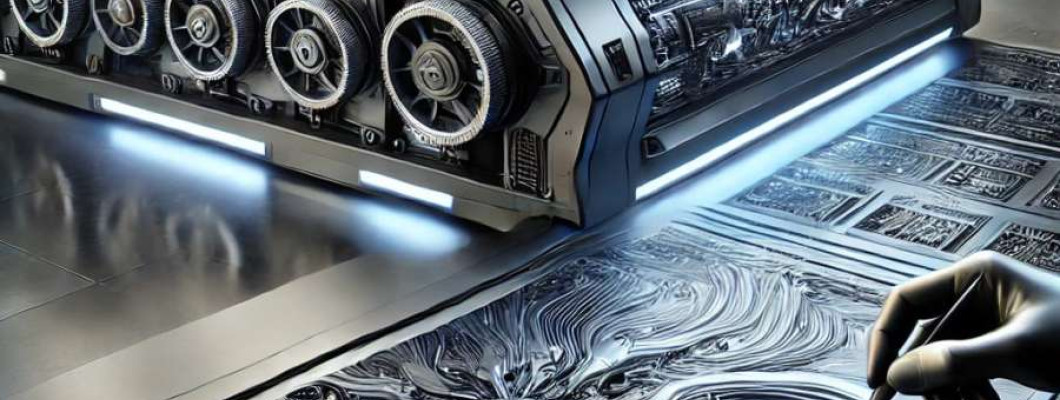
Within high-precision digital printing environments, the lifecycle maintenance costs of an A2+ Size UV Printer Embossed Glossy Printing model critically influence both long-term operational stability and total cost of ownership (TCO). These large-format printers serve demanding industrial applications where uptime and output quality are non-negotiable. Operators often encounter subtle degradation mechanisms in printhead performance, ink chemistry interactions, and mechanical wear that cumulatively impact maintenance demands. For example, the specialized embossing module integrated alongside UV glossy printing architecture introduces complex moving parts vulnerable to particulate contamination and abrasion, requiring precise maintenance protocols.
Consider a mid-sized print production facility deploying an A2+ UV printer for high-gloss packaging prototypes. Over a standard 5-year asset lifecycle, unplanned maintenance spikes from ink residue buildup inside nozzles and embossing plate misalignments can cause downtime, impacting throughput and yield. Understanding these hidden costs requires a rigorous analysis of component wear rates, consumable lifespans, and preventative maintenance schedules embedded within the printer's architecture.
Industrial realities dictate that any UV printer priced competitively but exhibiting unpredictable maintenance intervals can erode return on investment, especially as process precision demands tighten. Addressing lifecycle costs upfront involves quantifying variables such as UV lamp depreciation (measured in operating hours), printhead nozzle clog probabilities, and the robustness of glossy embossing surface finishes. This scrutiny distinguishes the genuine industrial solution from lower-tier, DIY-grade alternatives that fail under continuous high-volume production stress.
Technical Deep-Dive into Lifecycle Maintenance Costs
Printhead Wear Mechanics and Ink Interactions
The printhead array in the A2+ UV printer utilizes piezoelectric drop-on-demand technology with a droplet size precision of 3-5 picoliters (pl). Over extended usage, the interaction between UV-curable inks and printhead surfaces results in gradual nozzle erosion and clogging. Assuming an average print volume of 10,000 square meters per annum with a nominal dot density of 1440 dpi, the cumulative ink exposure accelerates printhead wear, necessitating replacement cycles averaging 18 to 24 months.
UV Lamp Depreciation and Energy Usage
UV curing lamps within the printer operate at a power rating of 200W with an effective lifespan of approximately 2000 operating hours. Degradation of lamp intensity over time produces inconsistent curing, impacting glossy finish uniformity and embossed texture fidelity. The energy consumption profile adds operational costs of roughly 4000 kWh annually under typical throughput scenarios, translating to electrical expenses that should be factored into lifecycle costing.
Embossing Module Precision Maintenance
The embossing subsystem incorporates micro-mechanical plates designed for micron-level surface texture replication. Precision alignment sensors calibrated to ±0.01 mm tolerance require periodic recalibration. Mechanical wear due to repetitive contact and particulate ingress increases the frequency of alignment adjustments and cleaning cycles. Predictive maintenance algorithms can optimize service intervals but add to system complexity.
Consumables and Material Waste Impact
Glossy embossing substrates and specialty UV inks are optimized for industrial-grade durability but represent a significant OPEX component. Material batch variability affects ink adhesion and emboss durability, prompting quality control protocols that increase waste during initial ramp-up phases or substrate changes. Reducing scrap rates from a baseline of 5% to 2% through process optimization yields measurable savings over the asset lifecycle.
Maintenance Schedule and Labor Input Analysis
Routine maintenance mandates biweekly printhead cleaning, monthly lamp inspection, and quarterly embossing module recalibration. Assuming 2 hours weekly of skilled technician labor at $50/hour, combined maintenance labor costs approximate $5200 annually. This figure is integral when comparing automation potential and throughput risks in high-demand production environments.
| Maintenance Aspect | DIY-Grade UV Printer | A2+ Industrial-Grade UV Printer |
|---|---|---|
| Printhead Replacement Interval | 12-15 months | 18-24 months |
| UV Lamp Lifespan (hours) | 1500 | 2000 |
| Embossing Module Recalibration | Irregular, reactive | Scheduled, predictive |
| Maintenance Labor Hours/Year | 100+ | 104 (2 hrs/week) |
| Material Waste Rate | 7-10% | 2-5% |
Scenario Analysis Revealing Business Implications
High-Volume Packaging Prototype Facility
This use-case demands rapid turnaround with consistent embossed gloss finish fidelity. The longer printhead lifespan and scheduled maintenance reduce downtime, enabling throughput targets of 5000 sheets/month. ROI is boosted by lower maintenance surprises and predictable labor allocation.
Specialty Artisanal Print Shop
Precision color depth and embossing details are paramount. The printer’s stable UV lamp output and micron-level embossing calibration maintain artistic integrity across runs. Lifecycle cost controls enable manageable OPEX without sacrificing quality.
On-Demand Industrial Signage Manufacturer
Reliability under continuous 24/7 operation defines success. Predictive maintenance integration reduces unscheduled failures. Energy efficiency and consumable optimization translate directly to margin improvements over a 5-year horizon.
Expert FAQ Answering Critical Concerns
What tolerance levels impact embossing repeatability?
±0.01 mm sensor calibration ensures embossed patterns maintain consistent texture replication across batches, critical for high-gloss finishes.
How does UV lamp degradation affect print quality?
Reduced lamp intensity leads to incomplete ink polymerization, causing gloss variability and diminished emboss relief sharpness.
What strategies mitigate printhead nozzle clogging?
Frequent automated cleaning cycles combined with optimized ink formulations minimize clogging risk and extend nozzle lifespan.
Can maintenance intervals be automated or predicted?
Yes, embedded sensors monitor printhead temperature, lamp hours, and embossing alignment, triggering predictive maintenance alerts that reduce unscheduled downtime.
How do substrate variations influence lifecycle costs?
Substrates with inconsistent surface energy increase scrap rates and cleaning frequency, elevating operational expenses and labor input.
Strategic Verdict and Definitive Recommendation
Assessing the lifecycle maintenance costs of the A2+ Size UV Printer Embossed Glossy Printing exposes a rigorously engineered industrial solution. Its component robustness, scheduled maintenance frameworks, and consumable efficiencies place it well beyond DIY-grade alternatives, aligning with the needs of scalable business owners demanding throughput, automation, and cost control. With printhead durability of up to 24 months, UV lamp longevity at 2000 hours, and integrated embossing precision recalibration, this system delivers dependable, predictable uptime essential for industrial production cycles. Given these attributes and the comprehensive lifecycle cost management, this printer represents a prudent, high-value investment for enterprises seeking to optimize CAPEX and OPEX while maintaining exceptional print quality and embossed finish fidelity.