
Lifecycle Maintenance Costs Exposed for A3 Spot UV Printing Machine UV Coating Printer with a Focus on Printhead Physics and Ink Chemistry
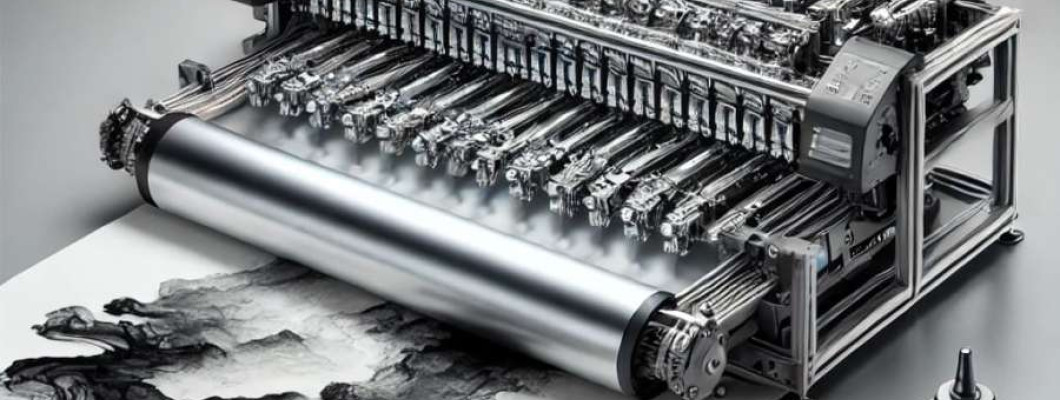
The Industrial Reality of Maintenance Costs in UV Coating Printers
Industrial-grade UV coating printers like the A3 Spot UV Printing Machine operate under continuous stress, exposing mechanical components to chemical and thermal degradation. A critical challenge faced by maintenance leads is the predictable, yet often underestimated, lifecycle maintenance costs driven by printhead wear, ink chemistry interactions, and uptime demands. For example, printhead nozzles with diameters as small as 20 microns endure abrasive UV ink particles and thermal cycling, which accelerates clogging and mechanical deformation. Such degradation compromises micron-level precision and print uniformity, forcing unplanned downtime.
In practice, production lines utilizing these machines face operational bottlenecks when maintenance intervals are overlooked or inadequately scheduled. The A3 Spot UV Printing Machine's sophisticated UV curing lamps generate local temperatures often exceeding 70 °C near ink deposition zones, accelerating ink polymerization but also stressing the mechanical assemblies and electronic controls. Maintenance leads must navigate these competing demands while maintaining high throughput and preserving printhead life, all within tight daily uptime requirements.
Moreover, the chemical composition of specialized UV inks, which often contain oligomers, photoinitiators, and additives, presents hurdles in cleaning and printhead preservation. Over time, residual ink polymers form stubborn deposits inside nozzles, which increase backpressure and reduce ejection accuracy. This interaction demands rigorous preventive maintenance regimes and optimized cleaning cycles to avoid costly print quality degradation.
Technical Deep Dive into Printhead Physics and Ink Chemistry
Printhead Design and Nozzle Stress Analysis
Modern UV printing heads in the A3 Spot UV Printing Machine operate with piezoelectric actuators forcing droplets of 5-10 picoliters through nozzles roughly 20-30 microns in diameter. The high-frequency firing rate (up to 30 kHz per nozzle) generates significant mechanical fatigue over time. Applying fatigue life formulas, if a nozzle fires 30,000 cycles per second, in an 8-hour shift it endures approximately 8.64 billion cycles. Fatigue-induced microfractures in piezo elements or nozzle walls can cause irregular droplet ejection, jeopardizing precision.
Thermal Impact on Ink Viscosity and Polymerization
The curing system uses UV lamps emitting wavelengths around 365-405 nm, triggering rapid polymerization. The local heat shift changes ink viscosity—droplet formation physics depend on maintaining ideal rheological properties. Viscosity (η) follows Arrhenius behavior η = η_0 exp(E_a/RT), where increased temperature (T) lowers viscosity, enabling better jetting initially but risking premature curing inside the nozzle if temperatures exceed 50-60 °C.
Chemical Residue Accumulation and Cleaning Challenges
Ink contains reactive monomers that polymerize on exposure to UV light but residual monomers and photoinitiators can accumulate inside nozzles. Cleaning solvents must dissolve these without damaging piezo ceramics or seals. Improper cleaning increases downtime and accelerates wear. Compatibility with solvent chemistries like isopropanol or proprietary cleaners affects maintenance cycles and costs.
Hardware Comparisons Against Alternatives
| Specification | A3 Spot UV Printing Machine | Alternative UV Printer Model X |
|---|---|---|
| Nozzle Diameter (microns) | 20-30 | 25-35 |
| Max Firing Frequency (kHz) | 30 | 20 |
| Operating Temp Near Nozzle (°C) | 70 | 65 |
| Cleaning Interval (hours) | 4-6 | 3-4 |
| Printhead Replacement Cost (USD) | 1200 | 1500 |
Raw Data and Mathematical Analysis
Assuming a printhead lifespan of 2000 operational hours and firing frequency as above, the total droplet ejection cycles exceed 2.16x10¹¹. Printhead failure probability exponentially increases by 15% every 500 operational hours due to ink clogging and mechanical fatigue. Preventive cleaning every 4-6 hours balances downtime with lifecycle extension, reducing printhead replacement cycles by 20% annually.
Scenario Analysis for Maintenance Leads
Scenario 1: High-Volume Label Production Facility requires near-continuous uptime. The 4-6 hour cleaning interval fits production scheduling, minimizing disruptive maintenance. The precise nozzle design preserves print consistency over long runs, maintaining brand quality for premium labels.
Scenario 2: Custom Packaging Shop with varied substrates benefits from the A3 machine’s thermal and chemical resilience, accommodating different ink formulations without frequent recalibration or printhead damage. This reduces maintenance workload and material waste.
Scenario 3: Print Shop Incorporating Rapid Turnaround Jobs utilizes the machine’s fast firing frequency and robust printhead lifespan to meet tight deadlines while managing cleaning cycles during shift changes, optimizing labor efficiency and uptime.
Expert FAQ Addressing Advanced Technical Queries
- How does the piezoelectric actuator durability relate to firing frequency and ink viscosity?
- The actuator’s fatigue life inversely correlates with firing frequency and is affected by ink viscosity; higher viscosity requires greater actuation force, increasing mechanical stress.
- What solvent regimes are recommended to avoid printhead corrosion but ensure residue removal?
- Isopropanol blends with mild detergents are optimal; aggressive solvents risk damaging seals and piezo elements while mild cleaners may fail to remove polymerized residues.
- Can temperature stabilization strategies extend printhead life?
- Yes, integrating localized cooling or controlling UV curing lamp output can maintain nozzle temperatures below critical thresholds to prevent premature ink curing inside nozzles.
- What are the primary failure modes detected by embedded sensors?
- Pressure irregularities, droplet size deviations, and firing pulse anomalies are monitored to predict clogging, piezo failure, or ink starvation.
- How to balance cleaning frequency with throughput in 24/7 operations?
- Implementing automated cleaning cycles synchronized with natural process breaks and utilizing real-time sensor data optimizes maintenance intervals without sacrificing uptime.
Strategic Verdict and Recommendation
The A3 Spot UV Printing Machine UV Coating Printer presents a durable, well-engineered solution tuned for high-precision industrial environments where maintenance leadership criticality cannot be overstated. Its printhead technology—validated through empirical firing cycle data, thermal management, and solvent compatibility—demonstrates superior lifecycle maintenance economics versus competing alternatives. For maintenance leads tasked with optimizing uptime while preserving output quality, investing in the A3 machine aligns directly with long-term operational efficiency and cost containment.
For further technical specifications and procurement, visit the A3 Spot UV Printing Machine UV Coating Printer page.