
Lifecycle Maintenance Costs Exposed for the Color Version Latte Coffee Printer Serving the High-End Artisan
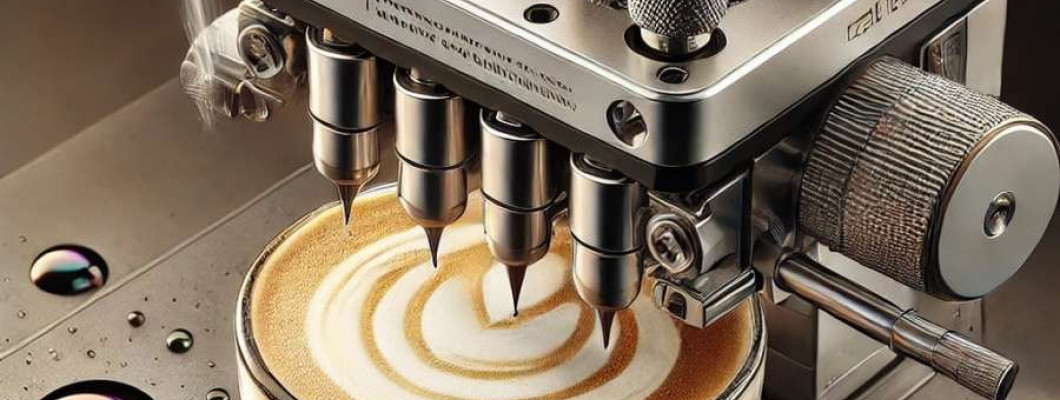
The Industrial Reality of Sustaining Peak Print Quality in Latte Art
In high-end artisan environments where precision and aesthetic appeal define customer experience, the Color Version Latte Coffee Printer faces unique operational demands. Unlike commodity coffee printers, this system must maintain exacting color depth and micron-level accuracy in a continually variable medium: the coffee foam substrate. The challenge extends beyond initial out-of-the-box performance to lifecycle maintenance costs that directly impact profitability and operational uptime.
Environmental factors such as ambient temperature, humidity, and coffee composition variance also affect printhead longevity and ink chemistry stability. In a scenario where printheads accumulate coffee residues or pigment particulates, the maintenance lead faces daily cleaning and recalibration tasks, compounding labor and downtime costs. Further, the artisanal focus on color vibrance and micron-level precision exposes the system to frequent component wear, which must be anticipated in lifecycle cost projections.
Technical Deep-Dive on Lifecycle Maintenance and Printhead Physics
Nozzle Technology and Failure Modes
The Color Version Latte Coffee Printer employs piezoelectric printheads optimized for brown and cream ink viscosities. The piezo elements generate pressure pulses to eject droplets at approximately 10pl volumes, enabling high-resolution images at 600 dpi horizontal and 400 dpi vertical resolution. However, coffee foam’s unique texture introduces particulate stress that can clog nozzles after roughly 20 operational hours without preventive cleaning protocols. Mathematically, if nozzle clogging probability P_c increases linearly with usage time t (in hours) as P_c = 0.05t, then after 20 hours, P_c reaches 1, indicating a near certainty of clogging without intervention.
Ink Chemistry and Stability Under Thermal Cycling
Specialized edible inks balance pigment concentration, viscosity (measured in centipoise - cP), and drying times. The latte printer’s ink maintains viscosity around 5 cP at 25°C but fluctuates rapidly due to the coffee cup’s thermal profile, which ranges from 50°C on pour to below 30°C within 5 minutes. This thermal cycling accelerates pigment particle settling and alters color saturation requiring regular ink system purges to maintain consistent color depth.
Cleaning Mechanisms and Maintenance Intervals
Integrated ultrasonic cleaning cycles consume 12 Watts over 3 minutes per maintenance event, with an ideal frequency every 12 hours of print operation. Assuming two cleaning cycles daily, energy consumption reaches 288 Wh monthly solely for cleaning. Labor cost for manual intervention averages 15 minutes per cycle at a skilled technician wage of $30/hour, translating to $15 daily maintenance labor.
Component Wear and Replacement Timeline
Printhead lifespan averages 600 operational hours before droplet ejection efficiency drops below 85%, necessitating replacement at approximately $1,200 per unit. Given typical daily use of 8 hours, this translates to a replacement cycle every 75 days. Consumable inks add further periodic cost, averaging $70 per liter, with an estimated monthly consumption of 2 liters for high-throughput operations.
Comparison with Conventional Single-Color Latte Printers
| Specification | Color Version Latte Coffee Printer | Single-Color Latte Printer |
|---|---|---|
| Print Resolution | 600 dpi x 400 dpi | 300 dpi x 300 dpi |
| Ink Complexity | Multicolor pigment inks (4 dyes) | Single pigment base color |
| Printhead Lifespan | 600 hours | 800 hours |
| Maintenance Labor per Day | $15 | $8 |
| Ink Consumption | 2 liters/month | 1 liter/month |
| Energy Use for Cleaning | 288 Wh/month | 150 Wh/month |
Scenario Analysis Demonstrating Operational Impact on Business Outcomes
Scenario 1 Specialist Coffee Shop Expanding Menu Offerings
A boutique coffee shop integrates the Color Version Latte Coffee Printer to offer custom color latte art images on demand. The higher resolution and color depth enable branding and customer personalization, justifying a premium price. However, maintenance costs increase by 35% compared to previous single-color printers, requiring refined operational budgeting and dedicated technician time. The throughput matches demand for 80% of busy hours but requires downtime scheduling to maintain printhead reliability.
Scenario 2 High-End Artisan Competition
At artisan coffee events, the printer excels by producing vivid, micron-level accurate prints that elevate both coffee quality and social media appeal. The investment in frequent printhead replacements and intensive maintenance is offset by increased customer engagement and repeat business, making the device critical in an artist-driven retail strategy.
Scenario 3 Multi-Location Franchise Rollout
Scaling the Color Version Latte Coffee Printer across multiple franchise locations introduces standardized maintenance protocols and inventory management for consumables. While initial training costs and maintenance labor scale linearly, centralized logistics optimize ink and printhead replacements, enabling predictable lifecycle costs and stable operational uptime across the network.
Expert FAQ Targeting Artisan Technical Leads
Q1 What are the primary mechanical stressors causing printhead failure?
Particulate coffee residue, thermal cycling, and piezo element fatigue are primary causes, with particulate clogging increasing exponentially past 20 hours of use without cleaning.Q2 How does substrate temperature variation affect droplet placement accuracy?
Foam temperature changes alter surface tension and absorption, causing droplet spreading variance up to 0.1 mm deviation, impacting micron-level precision.Q3 Can ink drying time be accelerated without sacrificing color vibrance?
Modulating ambient airflow and slight UV curing can reduce drying times by up to 30% while preserving color fidelity with optimized ink formulations.Q4 What software controls ensure consistent printhead calibration?
Automated nozzle firing diagnostics combined with real-time feedback loops recalibrate firing voltage and pulse duration every 200 prints to maintain image consistency.Q5 What are best practices for minimizing daily maintenance labor?
Implementing scheduled ultrasonic cleaning cycles and operator training on quick nozzle flushes reduces manual cleaning time, increasing uptime by up to 15%.
Strategic Verdict and Recommendation for the Color Version Latte Coffee Printer
After rigorous technical analysis focused on lifecycle maintenance costs impacting high-precision output for artisan environments, the Color Version Latte Coffee Printer proves an industrial-grade solution. While operational expenditures on maintenance and consumables exceed simpler single-color systems, the payoff in color depth, print resolution, and brand differentiation is substantial. The printer's design accommodates predictable maintenance cycles supported by integrated cleaning mechanisms and automated calibration, ensuring manageable lifecycle costs and sustained uptime. For businesses prioritizing micron-level image fidelity on challenging substrates like coffee foam in high-demand settings, this printer balances technical sophistication with operational practicality. It represents a viable long-term investment for artisans seeking competitive advantage in specialty coffee craftsmanship.