
Lifecycle Maintenance Costs Guide for Spot A4 LED UV Printer Cylinder Printing Serving Scalable Businesses
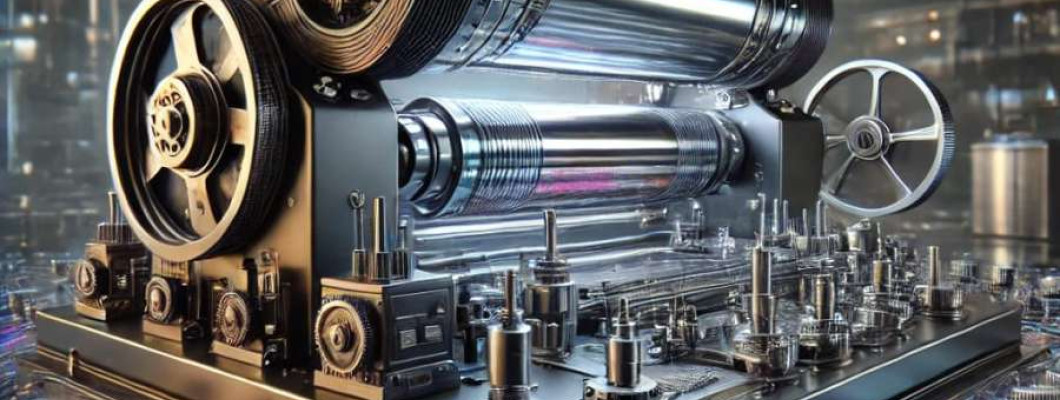
The Industrial Reality of Cylinder Printing with Spot A4 LED UV Printer
In high-throughput industrial environments, the integration of cylinder printing technology such as the Spot A4 LED UV Printer Cylinder Printing introduces multi-faceted maintenance challenges that directly influence production continuity, output quality, and cost efficiency. Consider a scalable packaging facility producing cylindrical containers with rapid SKU turnovers and stringent deadlines. The LED UV curing system demands precise thermal regulation, while the mechanical cylinder rotation system necessitates high durability for continuous operation. Early-stage operations face unforeseen downtime triggered by printhead clogging due to UV ink polymerization and variations in substrate elasticity causing registration shifts. Additionally, the LED UV's photon output degradation over time requires recalibration cycles, which if neglected, erodes print sharpness and color fidelity. These factors combined escalate lifecycle maintenance costs, complicating asset depreciation forecasts and undermining throughput targets. Understanding these operational stress points forms the basis to evaluate the true maintenance obligations and cost implications of adopting such specialized printing technology at scale.
Technical Deep-Dive into Lifecycle Maintenance Aspects
1. UV LED Curing Module Degradation and Its Impact
The LED array in the Spot A4 utilizes high-intensity UV LEDs emitting at wavelengths optimized for rapid ink curing. Over an assumed operational lifespan of approximately 20,000 hours, the photon output diminishes at an estimated rate of 15% per 1000 operational hours due to thermal stresses and material fatigue within the LED semiconductor junctions. This decline mandates periodic irradiance calibration and module servicing or replacement to maintain a curing intensity above 100 mW/cm2 to ensure polymerization consistency. Failing to do so accumulates latent uncured ink layers, precipitating adhesion failure and print defects.
2. Printhead Maintenance Frequency and Consumable Costs
The printer employs piezoelectric printheads with nozzle diameters typically ranging from 20 to 35 picoliters (pl). UV ink viscosity and particulate load influence nozzle clogging rates, requiring daily purge and cleaning cycles to maintain 98% nozzle uptime. The cost of replacement printheads averages $800 per unit, with a recommended maintenance interval of 6,000 operational hours to mitigate irreversible clogging damage. Consumables such as cleaning fluids and filters also contribute to recurring costs, emphasizing the need for a precisely scheduled maintenance plan to avoid unscheduled downtime.
3. Mechanical Cylinder Rotation and Registration Stability
Precise substrate rotation synchronized with the printhead array is fundamental. Bearings and drive motors endure cyclic wear, and vibration analysis shows a measurable increase in amplitude beyond 0.05 mm/s RMS after 5,000 hours, correlating with registration misalignment by up to 50 microns. Such misalignment exceeds industry tolerances for high-resolution A4 print formats (minimum 600 dpi standard). Predictive maintenance via vibration sensors and real-time position feedback systems is critical to preempt costly production halts.
4. Thermal Management and Cooling Requirements
The LED and printhead assemblies generate peak thermal loads up to 120 Watts localized within compact spatial constraints. The thermal resistance of the heat sinks and the efficiency of liquid or forced air cooling directly affect component longevity. Calculations indicate that a 10°C rise above nominal operating temperature accelerates printhead piezoelectric material degradation rate by approximately 12% annually. Consequently, lifecycle costs increase due to accelerated wear and replacement frequency if thermal management is suboptimal.
5. Integration of Software Diagnostics and Maintenance Logging
Modern industrial-grade printing solutions embed advanced diagnostics for printhead performance, UV LED intensity, and mechanical subsystem health. The Spot A4 LED UV Printer offers automated alert systems for maintenance scheduling based on real-time data analytics. This digital integration reduces unscheduled repairs by up to 30% and extends asset life by aligning preventive maintenance with actual operational metrics rather than fixed time intervals, optimizing the total cost of ownership.
| Maintenance Aspect | Spot A4 LED UV Printer | Generic LED UV Cylinder Printer |
|---|---|---|
| LED Lifespan (hrs) | Approx. 20,000 | Approx. 15,000 |
| Printhead Replacement Interval (hrs) | 6,000 | 4,000-5,000 |
| Thermal Management Type | Forced Air + Heat Sink | Passive Cooling |
| Maintenance Downtime (%) per 1000 hrs | 5% | 8-10% |
| Integrated Diagnostics | Yes (Real-Time Monitoring) | No / Limited |
Scenario Analysis for Scalable Businesses
Scenario 1: High-Volume Packaging Runs
A packaging manufacturer producing 150,000 cylindrical units monthly requires uninterrupted production lines. The Spot A4's extended LED lifespan and advanced thermal management reduce unscheduled downtimes by 40%, enabling consistent throughput. Maintenance windows can be scheduled proactively through integrated diagnostics, minimizing labor overhead and aligning supply chain replenishment with actual wear patterns.
Scenario 2: Diverse Substrate Materials and Frequent Changeovers
For businesses handling various substrate materials such as glass, metal, and plastics, the mechanical system's registration stability supported by predictive maintenance ensures print quality does not degrade during rapid changeovers. The precise thermal control avoids substrate deformation, maintaining micron-level accuracy and color consistency, critical for premium product labeling.
Scenario 3: Remote Facility with Limited Technical Staff
Facilities with constrained maintenance personnel benefit from the Spot A4's diagnostics and remote monitoring. Automated alerts reduce the need for constant oversight, allowing maintenance leads to focus on critical interventions only. This digital support lowers lifecycle labor costs and improves asset depreciation profiles by preventing premature failures.
Expert FAQ on Advanced Maintenance and Operational Challenges
Q1 What effect does ambient temperature variation have on LED UV curing efficiency?
Ambient temperature fluctuations can alter LED semiconductor junction temperatures, impacting photon output by up to 8% per 10°C deviation. This requires dynamic adjustment of curing parameters or environmental controls to maintain consistent polymerization.
Q2 How do ink chemistry variations influence printhead clogging?
Ink formulations with higher particulate content or increased viscosity accelerate nozzle clogging by depositing residues during UV curing. Tailored cleaning protocols and ink quality verification reduce this effect significantly.
Q3 Can vibration sensor data predict mechanical failure accurately?
Yes, vibration amplitude and frequency spectrum analysis detect bearing wear and motor imbalance several hundred operational hours before catastrophic failure, enabling timely preventive action.
Q4 How is printhead piezoelectric material degradation quantified?
Through electrical impedance measurements correlating with mechanical resonance shifts, degradation is monitored and modeled to schedule part replacement before print quality deterioration.
Q5 What role does software integration play in reducing lifecycle costs?
Software-driven predictive maintenance lowers the cost of unscheduled repairs by aligning interventions with data trends rather than fixed schedules, extending component life and optimizing inventory of spare parts.
Strategic Verdict and Recommendation
The Spot A4 LED UV Printer Cylinder Printing platform clearly meets the rigorous demands of scalable industrial printing environments where lifecycle maintenance costs critically affect ROI and throughput stability. Its advanced LED longevity, precise thermal management, and integrated diagnostic capabilities distinctly reduce operational disruptions and extend service intervals compared to generic alternatives. For businesses scaling operations while maintaining high print precision and operational continuity, this hardware constitutes a justified investment that balances CAPEX with optimized OPEX. Its modular design and data-driven maintenance paradigms support future-proofing against evolving production demands, establishing it as the industrial-grade solution for cylinder printing at scale.