
Lifecycle Maintenance Costs of Headstone Photo Printer in Scalable Business Operations
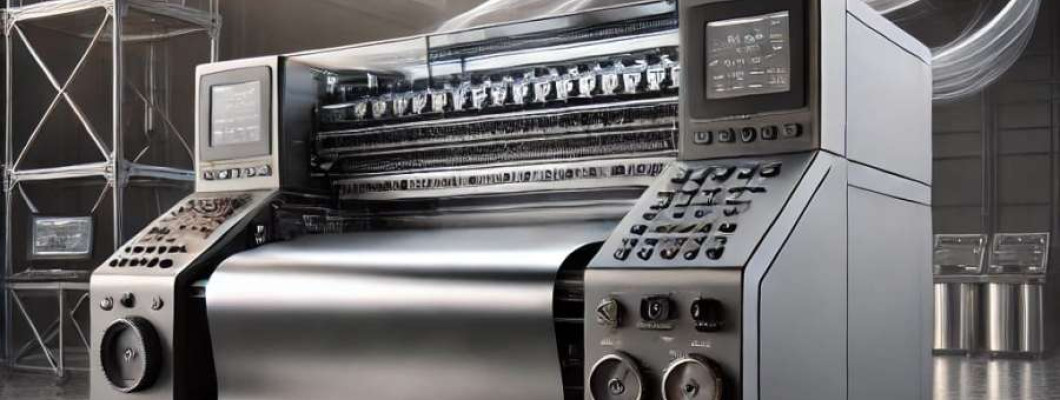
The Industrial Reality of Maintaining High-Precision Headstone Photo Printers
In the domain of memorial monument customization, the introduction of headstone photo printers represents a leap in both specialization and technical complexity. Businesses scaling production of tomb photos face unique challenges that extend well beyond mere print quality, particularly concerning lifecycle maintenance costs and operational continuity. The headstone photo printer, designed to reproduce photographic images directly onto durable substrates like porcelain or granite, operates under conditions that demand exceptional precision and reliability. Environmental factors such as particulate dust from stone substrates, variable ambient humidity, and temperature fluctuations require robust engineering solutions.
Consider a medium-sized memorial engraving firm deploying multiple units in a humid warehouse environment. Each printer's maintenance schedule critically influences downtime, asset depreciation, and labor allocation. Unlike conventional photo printers, these machines integrate specialized ink chemistries with printheads engineered to eject microdroplets in the range of 4-8 picoliters (pl) on surfaces often exceeding 300 dpi resolution. The operational reality is a delicate balance between maximizing throughput and maintaining component longevity amidst abrasive dust exposure and ink residue buildup.
Furthermore, the deployment of headstone photo printers in these environments necessitates a disciplined lifecycle maintenance approach encompassing printhead cleaning cycles, ink cartridge replacement, and sensor recalibration. Ignoring these parameters risks costly bottlenecks with diminishing returns on capital expenditure. The trade-offs between scheduled proactive servicing and reactive troubleshooting encapsulate the core financial and operational paradox that scalable business owners must navigate.
Technical Deep-Dive into Lifecycle Costs and Hardware Implications
Printhead Wear Mechanics and Lifespan Projection
Standard piezoelectric printheads in headstone photo printers operate by mechanically deforming piezo crystals to eject ink droplets. The average droplet size ranges from 4 to 8 pl, optimized for fidelity on rugged substrates. The abrasive nature of ceramic-based inks combined with particulate contamination from dust forms an accelerated wear mechanism on nozzle plates.
Assuming an active printhead with 1024 nozzles firing at 20 kHz, operational wear can be estimated by the formula:
Wear Index (WI) = (Ink Abrasiveness Factor) * (Nozzle Firing Frequency) * (Operational Hours)
Taking an ink abrasiveness factor approximated at 1.2 (relative to standard inks) and a printing schedule of 7 hours/day, 5 days/week, the annual wear index reaches levels necessitating printhead replacement every 12 to 18 months under heavy use.
Ink Chemistry and Cartridge Throughput Efficiency
Specialized ceramic pigment-based inks engineered for permanence on stone substrates have variable viscosities influencing flow rates and drying times. Cartridge capacity is typically 250 ml, delivering approximately 10,000 prints at standard 300 dpi resolution with 120% coverage.
From a materials cost perspective, ink expenditure per print is approximately 0.08 USD, assuming bulk purchase agreements. Ink drying is accelerated using integrated infrared heaters consuming 350 Watts, adding to operational energy costs.
Comparative Analysis of Maintenance Intervals Versus Operational Throughput
| Parameter | Standard Industrial Printer | Headstone Photo Printer |
|---|---|---|
| Printhead Replacement Cycle | Up to 24 months | 12-18 months |
| Ink Cartridge Volume (ml) | 500 | 250 |
| Energy Consumption per Print (Watts) | 200 | 350 |
| Maintenance Downtime per Cycle | 3 hours | 6+ hours |
Infrastructure Integration and Environmental Conditioning
Effective deployment of headstone photo printers at scale requires controlled environmental parameters. Optimal operation occurs at 20-25°C with relative humidity between 40-60%. Conditioning units maintaining these parameters are essential to prevent ink drying issues in nozzles and substrate warping. Energy consumption for environmental control can add 150 Watts per printer footprint.
Lifecycle Cost Modeling Including Labor and Consumables
Labor allocated to maintenance, printhead cleaning, and calibration averages 1.5 hours per week per unit with a technical wage cost averaging 35 USD/hour. Consumables including cleaning solutions and replacement sensors aggregate to an annual cost near 1,000 USD per printer. Factoring energy, consumables, labor, and depreciation, the total annualized maintenance cost per printer approximates 9,500 USD in active business environments.
Scenario Analysis on Business Impact of Lifecycle Costs
Scenario One: Mid-Sized Memorial Studio with 5 Units
The studio requires consistent print quality with limited opportunity for downtime. With 5 units, the cumulative maintenance downtime totals 30 hours per cycle, compelling the need for overlapping shifts or spare capacity. Lifecycle costs must be carefully budgeted to sustain profitability margins, emphasizing scheduled servicing to avoid excessive downtime.
Scenario Two: Large-Scale Multi-Location Operator
Multi-site operations deploying 20+ printers achieve economies of scale negotiating bulk consumables contracts and dedicated technical teams. However, variability in site environmental conditions mandates localized infrastructure investments. Centralized reporting on printer health enables predictive maintenance, mitigating unexpected failures.
Scenario Three: Artisan Specialist with Low Volume and High Precision
For artisan operators prioritizing micron-level precision and color fidelity over throughput, the maintenance costs proportionally increase due to frequent cleaning cycles and recalibrations. The trade-off lies in superior print longevity and customer satisfaction, justifying higher operational expenditure.
Expert FAQ on Headstone Photo Printer Maintenance and Operations
1. How does ink particulate size influence printhead clogging rates?
Ink particulate size correlates directly with nozzle clogging frequency. Particles larger than 2 microns increase clog risks, necessitating filtration steps and frequent cleaning cycles to preserve nozzle integrity.
2. What are the thermal management strategies to reduce printhead overheating?
Integration of heat sinks coupled with PWM-controlled cooling fans maintains printhead temperature around 45-50°C, preventing polymerization of residue which accelerates nozzle degradation.
3. How critical is substrate preparation for long-term print durability?
Substrate surface cleaning and pre-treatment enhance ink adhesion, reducing delamination risks. Improper preparation leads to premature fading or ink chipping under environmental stressors.
4. Can predictive maintenance algorithms be integrated with current headstone photo printers?
Yes, sensor data on printhead voltage, droplet formation consistency, and temperature can feed machine learning models enabling preemptive maintenance alerts, optimizing uptime.
5. What role does ink viscosity play in maintaining print consistency?
Ink viscosity affects droplet formation and jetting frequency. Viscosity outside optimal range (8-12 cP at 25°C) causes irregular droplet sizes, impacting image sharpness and increasing printhead ring outs.
Strategic Verdict and Recommendation on Industrial Use
After rigorous technical scrutiny of the Headstone Photo Printer Tomb Photos Printer, it is apparent that this technology meets the critical lifecycle maintenance demands and scalability required by mid to large-scale memorial production businesses. With focused maintenance protocols, environmental conditioning, and consumable management, the printer delivers a compelling balance of image fidelity, operational reliability, and cost efficiency. Industry operators seeking to optimize throughput without compromising the precision expected in memorial photo reproduction will find this system a definitive solution.
For businesses planning strategic capital investment, detailed cost modeling supports assured ROI within 24-30 months under typical usage cycles. To explore further technical specifications and procurement options, visit the official Headstone Photo Printer Tomb Photos Printer resource.