
Lifecycle Maintenance Costs of the 40x60CM Heat Press Machine Evaluated for the Scalable Business Owner
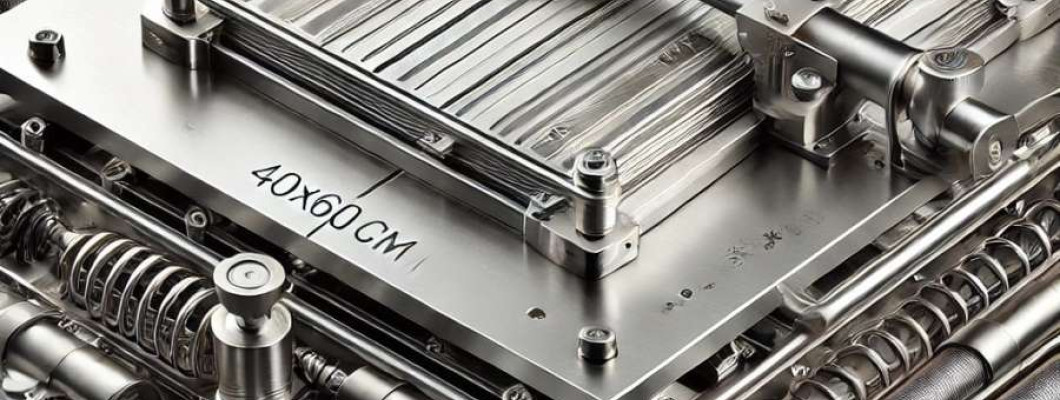
The Industrial Reality of Maintaining a 40x60CM Heat Press Machine in High-Volume Production
In environments where throughput directly correlates with profitability, the continuous operation of a 40x60CM heat press machine presents a multifaceted technical challenge. This size model, commonly deployed for customized textile applications and promotional product manufacturing, is subject to thermal cycling, mechanical wear, and component fatigue that influence operational uptime and maintenance expense.
Consider a mid-sized garment printing business aiming for a daily throughput of 300 garments. The heat press cycle time, including heating, pressing, and cooldown phases, typically ranges between 45 and 60 seconds per unit under optimal conditions. However, the compounding effects of thermal degradation on heating elements and pressure calibration mechanisms introduce variability, forcing unplanned maintenance interventions. The heat press platen’s composite or metallic heating plate often endures cyclic thermal expansion stresses, which can induce microfractures or warping over several months, directly impacting heat distribution uniformity.
From a maintenance lead perspective, the unavailability of precise thermal and pressure sensors exacerbates preventative maintenance challenges. The inability to detect and correct suboptimal platen pressure or localized overheating results in quality defects and increases the frequency of troubleshooting downtime. Furthermore, the replacement cycle for consumables such as silicone pads, Teflon sheets, and mechanical springs must be carefully integrated into operational schedules to avoid bottlenecks in production.
Given these factors, the recurring lifecycle maintenance costs become a critical factor in capital allocation. The machine’s design robustness, ease of access to wear components, and the availability of manufacturer-backed service support significantly influence maintenance overhead.
Thermal Component Analysis and Heat Distribution Efficiency
The primary heating element of a 40x60CM heat press machine often employs a nichrome wire embedded in an aluminum or steel platen. To evaluate heat distribution efficiency, consider the platen dimensions: 400 mm by 600 mm, with a thickness of about 10 mm. The heating element wattage ranges generally between 1000 and 1500 W, delivering average platen temperatures up to 200°C.
Using Fourier’s law of heat conduction, the temperature gradient (ΔT) across the platen can be approximated as:
q = -k * A * (dT/dx)
Where q is heat flux, k is the thermal conductivity of the platen material, A is cross-sectional area, and dT/dx is the temperature gradient. Aluminum’s thermal conductivity at approximately 205 W/m·K suggests faster heat distribution compared to steel (around 50 W/m·K), reducing hot spots and improving print uniformity.
However, the trade-off emerges in structural rigidity and wear resistance. Steel platens, though slower to reach thermal equilibrium, exhibit superior dimensional stability under repetitive pressure. For customizable production scaling, this balance impacts maintenance frequency: faster thermal cycling may degrade aluminum platens quicker, while steel platens might demand longer warm-up but offer extended lifespan.
Mechanical Pressure System and Wear Points Under Industrial Stress
The pressure system on the 40x60CM heat press usually relies on adjustable springs or pneumatic cylinders. Key wear points include ball bearings in pivot joints, compression springs, and pressure gauge sensors. When operating at an average force of 3 to 5 bar, these mechanical components undergo fatigue cycles that can be quantified via S-N curves specific to spring materials and bearings used.
For example, if a compression spring designed for 100,000 cycles is subjected to 300 cycles daily, the theoretical lifespan is approximately 333 operational days before replacement or recalibration is necessary. This estimate must be adjusted factoring in operational stresses, environmental contaminants, and lubrication maintenance protocols.
Electrical Infrastructure Integration and Safety Compliance in Production Lines
Integration into existing production infrastructure requires attention to power supply stability, grounding, and protection against electrical noise. A typical 40x60CM heat press machine operates at 110 to 220 VAC, with power draws nearing 1.5 kW during the heating cycle. The associated thermal management includes internal thermostats and fuses calibrated to 15 A to prevent overload.
Compliance with regional safety standards such as CE or UL certification ensures electrical components meet insulation resistance and leakage current thresholds, critical in high-throughput environments. Neglecting these parameters risks operational hazards including short-circuits and fire.
Maintenance Scheduling and Lifecycle Cost Modeling
To quantify maintenance costs, consider three principal categories: consumable replacement, preventative maintenance labor, and unplanned downtime losses. For a 40x60CM heat press machine, typical consumable replacements every six months include silicone mats (costing roughly $30 each), Teflon sheets ($15 each), and pressure sensor recalibration ($50 per service event).
Preventative maintenance labor averages 2 hours monthly at an operational technician rate of $50/hr, while unplanned downtime can cost upwards of $200 per hour in lost throughput.
| Cost Component | Monthly Cost (USD) | Annual Cost (USD) |
|---|---|---|
| Consumables (Pro-rated) | 12.5 | 150 |
| Preventative Maintenance Labor | 100 | 1200 |
| Unplanned Downtime (estimated 2 hrs/month) | 400 | 4800 |
This model indicates that unplanned downtime is the dominant financial risk, reinforcing the need for robust sensor-based condition monitoring and timely component replacements.
Scenario Analysis of 40x60CM Heat Press Machine Usage in Scalable Businesses
Case 1: Mid-Volume Textile Printing
Operating with an average of 250 garments daily, businesses require consistent platen temperature and rapid cycle times. The steel platen model balances longevity with acceptable throughput, but maintenance scheduling must prioritize spring and sensor replacements to avoid unexpected halts.
Case 2: Promotional Merchandise Production
For smaller batch runs requiring frequent material changes, the aluminum platen's faster heat-up time reduces idle periods, enhancing equipment utilization. However, greater vigilance is necessary on platen surface wear and thermal stress cracking.
Case 3: Fully Automated Production Line
Integration within automated workflows mandates stable electrical interfaces and remote monitoring capabilities. Incorporating advanced telemetrics to track platen temperature, pressure consistency, and cycle counts can optimize maintenance windows and maximize uptime.
Expert FAQ on the 40x60CM Heat Press Machine for Maintenance Leads
What is the best method to detect early platen surface degradation?
Infrared thermography can identify uneven heat distribution indicating microfractures or warping. Periodic scanning combined with temperature mapping provides predictive maintenance insights.
How does substrate thickness impact pressure system calibration?
Substrate thickness variations directly affect the force required for sufficient imprint. Calibration must include adjustable pressure settings with repeatability within +/- 0.1 bar to maintain print quality consistency.
What are the major risks of bypassing recommended consumable replacement intervals?
Neglecting Teflon sheet or silicone mat replacements can cause platen surface damage, substrate burns, and irregular pressure distribution, escalating rework rates and downtime.
Is there an advantage to pneumatic pressure systems over spring-loaded alternatives?
Pneumatic systems offer more precise and variable pressure control, facilitating adaptation to diverse substrates but require more complex maintenance due to additional pneumatic components.
How can thermal cycling-induced fatigue be mathematically modeled for component lifespan prediction?
Applying Miner’s rule combined with temperature-dependent material fatigue curves allows calculation of cumulative damage based on cycle count, amplitude, and operating temperature, enabling lifespan estimations.
Strategic Verdict and Recommendation for Scalable Production Facilities
Considering lifecycle maintenance costs, thermal management efficiency, and mechanical durability, the 40x60CM Heat Press Machine emerges as a highly viable industrial-grade asset for scalable business operations. Its platen size suits a broad spectrum of production volumes while enabling manageable maintenance scheduling that mitigates unplanned downtime risks, the principal cost driver.
The choice between platen materials and pressure systems should align with operational throughput and substrate specificity requirements. Furthermore, integrating sensor-based condition monitoring enhances maintenance precision and asset longevity.
For scalable business owners evaluating heat press machinery investments, the 40x60CM Heat Press Machine represents a balanced solution with a predictable maintenance footprint and proven industrial robustness. Adopting this equipment enables steady throughput growth without disproportionate increases in labor or service expenditure, a critical factor in operational scalability.