
Lifecycle Maintenance Costs of the A3 Edible Food Printer for High-Precision Cake and Cookie Printing
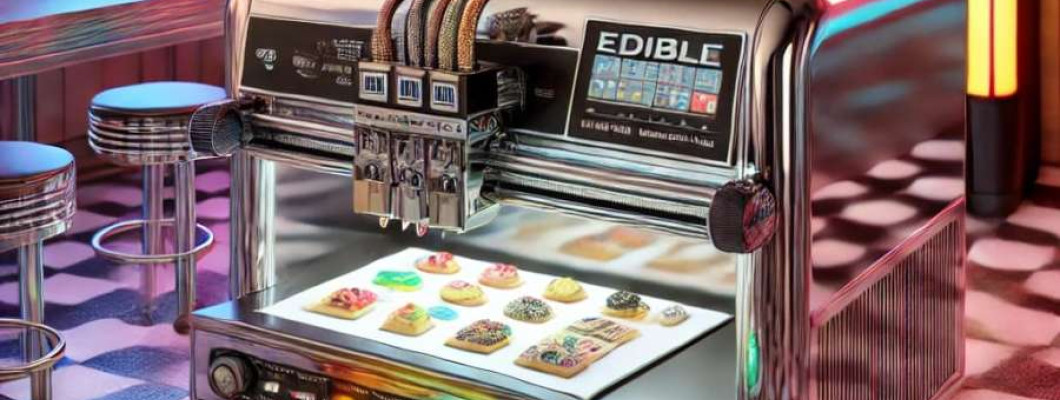
The Industrial Reality of Maintaining Edible Food Printing Technology
Within the specialized domain of bakery and confectionery production, the integration of printing technologies such as the A3 Edible Food Printer for Printing Cakes Cookies introduces a distinct array of lifecycle maintenance challenges. Unlike conventional printing, edible printing demands stringent adherence to food safety protocols while ensuring precision color application and material compatibility. Industrial operators frequently encounter bottlenecks with ink consumable management, precise printhead calibration under varying environmental conditions, and hygienic consumable replacement cycles. These factors collectively influence the printer’s operational uptime and cost-effectiveness across its usable life.
In a mid-scale bakery aiming to incorporate custom cake and cookie decoration, the printer must sustain micron-level print accuracy while minimizing downtime caused by frequent cleaning or printhead clogging. Maintenance intervals, often under-calculated by prospective buyers, are exposed by print output degradation and increased waste print runs for recalibration. The printer’s architecture and materials must support rapid, tool-less maintenance, and consumables must be designed to withstand temperature fluctuations intrinsic to commercial kitchen environments. Ignoring these realities risks escalating operational expenses and undermines the promised throughput.
Technical Deep-Dive into Maintenance Cost Drivers and Operational Sustainability
Printhead Wear and Ink Chemistry Interaction
The printer likely employs piezoelectric or thermal inkjet technology adapted for edible inks, which typically consist of food-grade colorants suspended in carrier liquids with sugar and stabilizers. The physicochemical properties of these inks determine nozzle lifespan and clogging frequency. Assuming a typical nozzle diameter of 20 microns and an average droplet volume of 10 picoliters (pl), the repeated ejection cycles can lead to mechanical fatigue and ink residue buildup. The interaction between the ink's viscosity (~3 centipoise at 25°C) and the nozzle membrane elasticity affects the mean time between failures (MTBF), which industrial-grade units target upwards of 2000 hours of active printing.
Cleaning Regimes and Automation Potential
Given the consumable’s food-grade nature, cleaning requires solvent-free water-based flushing combined with filtering to prevent microbial contamination. Automated cleaning cycles integrated into the A3 Edible Food Printer can reduce manual intervention from 3 hours/week to under 45 minutes/week, improving labor utilization. However, the energy cost of cleaning through fluid pumping and heating cycles must be incorporated into the operational expense (OPEX) model. Conservatively, cleaning processes add approximately 15% to total energy consumption per operational day.
Component Replacement and Lifecycle Cost Modeling
Consumable components such as printheads, ink cartridges, and platen belts exhibit different depreciation rates. For example, printheads might warrant replacement every 100 liters of edible ink usage or roughly every 6 months in a continuous-production environment. Ink cartridges are single-use and sized at 250 ml per cartridge. Replacing these components represents a recurring CAPEX element. By constructing a life cycle cost table, operators can predict total cost of ownership (TCO) over a 3-year span.
| Component | Replacement Frequency | Unit Cost (USD) | Annual Usage | Annual Cost (USD) |
|---|---|---|---|---|
| Printhead | 2 per year | 700 | 2 | 1400 |
| Ink Cartridge (250 ml) | 52 per year (weekly) | 35 | 52 | 1820 |
| Platen Belt | 1 per year | 150 | 1 | 150 |
Environmental Control and Hygienic Compliance
The printer module must operate in an environment with tightly controlled humidity and temperature to prevent printhead clogging and ink drying inside nozzles. Industrial-grade units incorporate built-in sensors that monitor ambient conditions and pause printing when parameters deviate beyond 45-55% relative humidity and temperatures outside 18-24°C. This integration reduces unscheduled downtime but introduces complexity and cost in the control systems, including additional energy consumption for HVAC support if deployed in non-climate controlled factory floors.
Comparison Against Non-Industrial Edible Printers
| Feature | A3 Edible Food Printer (Industrial Grade) | Consumer/Home-Use Edible Printer |
|---|---|---|
| Print Resolution | 1200 dpi | 600 dpi |
| Printhead Lifespan | 2000 hours MTBF | Under 500 hours |
| Cleaning Automation | Automated cleaning cycles | Manual cleaning required |
| Compliance & Safety Controls | Built-in environment sensors | None or minimal |
| Consumable Cost per Liter Ink | USD 140 | USD 100 |
Scenario Analysis Highlighting Business Applications and Print Specifications Impact
1. Mid-Sized Confectionery Factory Increasing Custom Orders
Here, throughput and uptime are primary. The A3 printer’s scheduled printhead replacement and automated cleaning cycles ensure steady throughput, enabling consistent delivery of 1000 decorated cookies/day with minimal labor reallocation. The cost of consumables, while higher than consumer-grade alternatives, supports superior print resolution critical to brand differentiation.
2. High-End Artisan Baker Focused on Precision and Color Fidelity
Micron-level precision and rich color depth from 1200 dpi resolution offer immense value. Maintenance cycles aligned with low downtime guarantee minimal interruption during peak seasonal demand. The ability to adjust print parameters for substrate variations supports diverse cake icing textures.
3. Contract Food Decorator Serving Multiple Clients with Diverse Needs
Rapid material changeover and hygienic compliance are vital. The printer’s environmental control sensors prevent contamination risk while allowing quick consumable swaps. Lifecycle cost modeling informs contract pricing strategies by accurately forecasting consumable and maintenance expenses.
Expert FAQ Targeting Advanced Operational Concerns
How does the ink viscosity affect nozzle clogging in continuous use?
Higher viscosity ink increases droplet inertia, potentially causing incomplete ejection and residue buildup, thus accelerating clogging. Optimal ink formulations maintain viscosities near 3 centipoise at printing temperatures.
What are the energy implications of automated cleaning cycles?
Automated cleaning typically requires additional water pump actuation and heating, adding roughly 15% to daily energy consumption, which should be factored into operational budgets.
How can lifecycle maintenance data improve predictive servicing?
Tracking printhead hour logs and ink consumption enables machine learning models to schedule maintenance preemptively, reducing unexpected downtime and extending component lifetime.
Are there risks associated with environmental control sensor failures?
Yes. Sensor malfunctions could lead to printing under suboptimal humidity or temperature, resulting in print quality degradation or irreversible printhead damage, necessitating robust sensor calibration and diagnostics.
How do consumable costs compare with output volume in ROI calculations?
Higher consumable costs per liter ink must be offset by reduced waste and higher premium pricing for quality output. For example, with 1200 dpi resolution and reduced downtime, the printer can justify higher price points in premium market segments.
Strategic Verdict and Recommendation for the A3 Edible Food Printer
Given the comprehensive analysis of lifecycle maintenance impacts, environmental controls, and consumable management, the A3 Edible Food Printer for Printing Cakes Cookies emerges as an industrial-grade solution optimized for medium to high-volume edible printing operations demanding precision and reliability. Its automated cleaning workflows, calibrated environmental monitoring, and durable printhead architecture address typical operational bottlenecks inherent to food-safe printing processes. While initial and recurring costs exceed those of consumer-level devices, the printer’s throughput and reduced downtime establish a lower total cost of ownership over a 3-year horizon.
For businesses seeking to integrate consistent high-resolution edible printing at scale, this system provides the necessary robustness and lifecycle foresight to sustain demanding workflows. Interested parties should evaluate detailed technical specifications and procurement options directly at the official source. This product can be reviewed further at the A3 Edible Food Printer For Printing Cakes Cookies page.