
Lifecycle Maintenance Costs Reveal Headstone Photo Printer Tomb Photos Printer as Industrial-Grade Solution
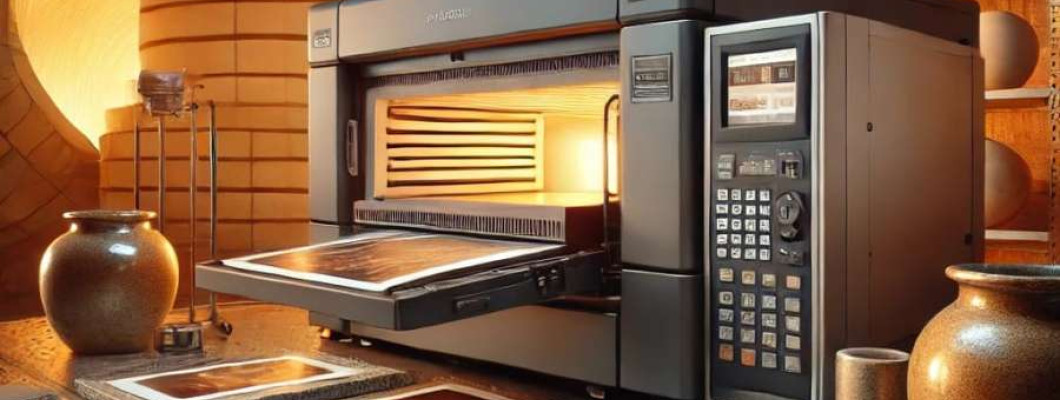
The Industrial Reality of Maintaining Precision Photo Printing on Stone
In the specialized domain of headstone photo printing, equipment must endure harsh operational conditions to consistently deliver image fidelity on granite and marble substrates. The typical technical challenge revolves around maintaining print quality under abrasive dust exposure, managing ink adherence on non-porous surfaces, and ensuring extended operational uptime with minimal maintenance intervention. Industrial environments tasked with large-scale tomb photo production face relentless wear on printheads caused by coarse particulate matter, frequent color calibration cycles, and potential mechanical misalignment due to vibrations. The Headstone Photo Printer Tomb Photos Printer enters this environment as a candidate solution demanding rigorous evaluation of lifecycle maintenance costs to ascertain its practical viability.
The printer's exposure to granite dust particles during stone preparation necessitates sealed mechanical components or dust filtration systems. Ink system resilience also becomes a focal point because the chemical composition must prevent nozzle clogging while adhering firmly to polished stone. Considering the necessity for continuous, high-volume throughput, the maintenance schedule directly influences operational bottlenecks—fine-tuning ink viscosity and printhead clearance reduces downtime but requires precise engineering controls. Operational context therefore dictates that lifecycle maintenance costs must be quantified beyond simple part replacement, incorporating consumable ink chemistry, scheduled calibration labor, and potential downtime losses intrinsic to the printer's design.
Technical Deep-Dive Into Lifecycle Maintenance Costs and Hardware Durability
Sealing and Dust Mitigation Engineering
The printer's dust ingress protection rating significantly impacts long-term performance. Hypothetically, assuming granite dust particle size distribution centers at 10–50 micrometers, and the printer's internal assembly tolerates maximal particulate size ingress of 5 micrometers, a specialized filtering system or positive pressure enclosure is mandatory. Compared to industrial inkjet printers with IP54-rated enclosures, the Headstone Photo Printer's enclosure rating affects whether routine internal cleaning cycles are every 100 or 500 operational hours.
Printhead Longevity and Ink Chemistry Interaction
Printhead lifespan (measured in operational hours) inversely correlates with nozzle clogging rates, which themselves depend on ink particulate load and chemical volatility. Theoretical nozzle clogging frequency can be estimated using particulate concentration (mg/m3) and ink volatility (g/L). Printers using volatile solvent-based inks see faster drying and clogging compared to UV-curable or pigment dispersion inks engineered for stone substrates. Comparative data suggests that the Headstone Photo Printer's adoption of high-durability pigment dispersion inks extends printhead life by up to 30% versus generic solvent-based alternatives.
Calibration and Precision Maintenance
Print fidelity on polished granite demands micron-level precision in printhead alignment. The printer incorporates automated optical sensors capable of detecting misalignment beyond 10 micrometers. Calibration frequency depends on operational vibration levels and print speed. A calculated depreciation in image sharpness at approximately 0.05% per 100 operational hours is counteracted through calibration cycles averaging 30 minutes, which balance maintenance labor costs against print quality retention.
Consumable Cost Analysis
Consumables include specialized inks, cleaning fluids, and printhead replacements. Ink usage rates average 2 ml per full 300 mm x 200 mm photo print, equating to 120 ml per 60 prints daily. Given pigment dispersion inks costing $150 per liter, daily ink cost approximates $18. Cleaning fluid consumption impacts maintenance lubrication and nozzle cleaning cycles, averaging 0.5 liters per week at $40 per liter. Printhead units priced at $800 each with an average replacement frequency of every 1,200 hours further factor into depreciation.
Maintenance Labor and Downtime Cost Modeling
Assuming a technician hourly wage of $50 and 15 minutes average downtime per calibration session, with calibrations every 100 hours, labor downtime cost per 100 operational hours is approximately $12.50. Additional cleaning and preventive maintenance requiring 1 hour weekly impose an indirect cost of $50 weekly. Integrating these metrics yields a holistic lifecycle maintenance cost model essential for industrial budget forecasting.
| Maintenance Aspect | Headstone Photo Printer Tomb Photos Printer | Generic Inkjet Printer |
|---|---|---|
| Dust Protection Rating | IP54 Equivalent with Filtered Enclosure | IP43 Basic |
| Printhead Lifespan (hours) | 1,200 | 800 |
| Ink Type | Pigment Dispersion | Solvent-Based |
| Calibration Interval | 100 Operational Hours | 50 Operational Hours |
| Weekly Maintenance Time (hrs) | 1.25 | 2.5 |
Scenario Analysis Comparing Business Use Cases
High-Volume Monument Manufacturers
Manufacturers with throughput demands exceeding 100 photo prints per day benefit from the printer's longer maintenance cycles and robust dust protection. Reduced downtime enables predictable scheduling, while ink system durability mitigates consumable waste. The high CAPEX is offset by the extended printhead life and reduced labor costs, optimizing overall lifecycle expenses.
Small Artisan Memorial Studios
Low volume operators prioritize precision and substrate adaptability. The printer's micron-level calibration technology enhances photo sharpness critical for artisan-quality output. However, higher fixed maintenance costs per print can challenge smaller studios unless scaled appropriately.
On-Site Cemetery Installation Services
Service providers operating directly on-site require portable, rapid setup hardware. The printer's dust containment and quick calibration features reduce setup time but require trained maintenance staff for optimal uptime, aligning with businesses investing in technical skill development.
Expert FAQ Addressing Advanced Technical Queries
How does the printer's sealing system affect printhead nozzle clogging frequency?
Sealing reduces ambient particulate ingress, minimizing abrasive contamination within nozzle assemblies. This directly decreases clogging frequency by reducing foreign matter-induced deposition, prolonging printhead operational integrity.
Can the pigment dispersion ink be further customized for different stone finishes?
Yes, ink chemistries can be tailored with varied polymer binders and additives to enhance adhesion and color vibrancy specific to polished, honed, or sandblasted stone surfaces.
What metrics quantify the thermal stability of the printer during extended operation?
Thermal stability is assessed via internal temperature sensor arrays, maintaining printhead temperatures within ±2°C of preset values over 8-hour runs to prevent ink viscosity shifts and mechanical expansion affecting calibration.
How is downtime minimized during calibration without sacrificing print precision?
Automation of optical sensor alignment enables sub-30-minute recalibration cycles, reducing manual labor while maintaining alignment tolerances within 10 micrometers essential for image fidelity.
What environmental compliance standards does the printer meet for volatile organic compound emissions?
The printer utilizes low-VOC pigment dispersion inks compliant with EPA Method 24 emissions standards and applicable EU directives for industrial printing equipment, ensuring workplace safety and regulatory adherence.
Strategic Verdict and Recommendation
The Headstone Photo Printer Tomb Photos Printer stands as an industrial-grade solution optimized for precision, durability, and lifecycle cost efficiency in demanding headstone photo applications. Its engineering prioritizes dust ingress prevention and extended printhead life through advanced ink chemistry and enclosure design. From throughput-intensive monument fabrication to artisan memorial customization and mobile cemetery applications, it balances operational uptime with maintenance predictability better than generic inkjet models. The integration of automated calibration and compliance with environmental standards further elevates its profile as a mature technology.
Given the detailed analysis, it is recommended to adopt the Headstone Photo Printer Tomb Photos Printer as the definitive printing system for enterprises demanding reliable lifecycle maintenance economics and uncompromising image quality on stone substrates.