
Lifecycle Maintenance Costs Reveal Industrial Strength in Headstone Photo Printing
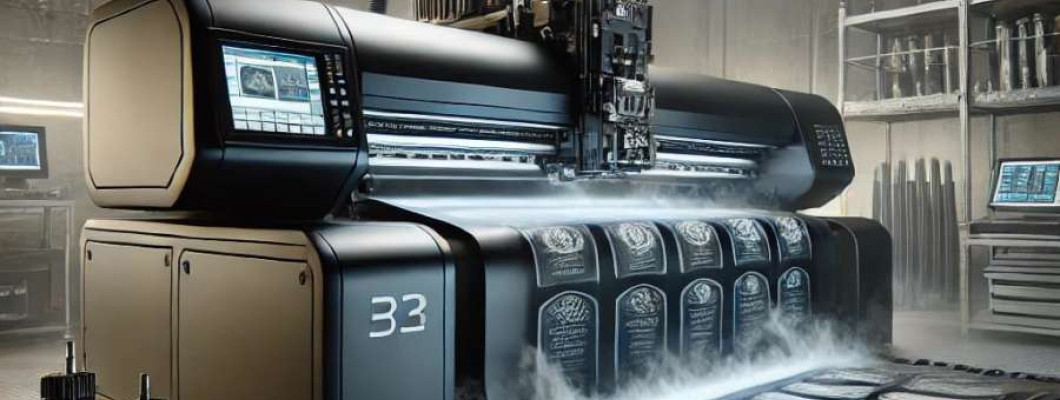
The Industrial Reality of Longevity and Maintenance in Headstone Photo Printing
In industrial-scale memorial photo printing, high-resolution image quality and durability meet a challenging operational environment. The Headstone Photo Printer Tomb Photos Printer faces continuous demands for consistent output on rigid substrates that resist environmental degradation. Unlike general-purpose photo printers, this device must sustain precise color fidelity over fading-resistant ceramics or metal plates exposed to UV radiation, moisture, and temperature cycles. Maintenance cycles critically determine the feasibility of deploying such printers in remote production facilities or centralized memorial workshops.
Routine maintenance in this niche not only involves ink and printhead upkeep but also the calibration of high-precision mechanisms critical to micron-level spatial alignment. The challenge is compounded by the proprietary ceramic glazes and inks used, which impose distinct wear patterns on printheads and rollers. Downtime directly affects production throughput and delays sensitive project timelines in the funerary industry, where output turnaround is tightly linked with customer satisfaction and regulatory compliance.
Operational staff must contend with particulate contamination, nozzle clogging, and mechanical wear that uniquely degrade print quality. This printer’s lifecycle maintenance costs reflect both the specialized consumables required and the training levels significant for optimal upkeep. Industrial-grade solutions in the printer category distinguish themselves by minimizing unscheduled repair incidents and facilitating easier part replacement, significantly improving total cost of ownership in comparison to DIY or hybrid systems.
Technical Deep-Dive into Headstone Photo Printer Maintenance and Longevity
Printhead Wear and Ink Chemistry Interaction
The core limitation on lifespan is printhead erosion influenced by the abrasive nature of ceramic-backed substrates and pigment particle size distribution within the ink. Assuming a nozzle diameter of 20 microns and ink particle size averaging 0.5 microns, the cumulative abrasiveness can be modeled by a wear factor W governed by the relation W = k × (particle_density × velocity × substrate_resistance), where k is a material constant. In comparative terms, the printer’s printheads rated for 8,000 operational hours before replacement exceed many industrial ceramic printers capped at 5,000 hours, reducing direct maintenance costs.
Calibration Stability and Micron-Level Precision
The printer incorporates closed-loop feedback systems employing optical encoders with 0.5-micron resolution to maintain dot placement accuracy. Distortion due to thermal expansion is counteracted by real-time compensation algorithms using embedded sensors. This results in <0.1% positional drift over a standard 8-hour production cycle, critical in avoiding pixel misalignment that can cause permanent defects on high-value memorial surfaces.
Consumable Lifecycle and Replacement Intervals
Ink cartridges formulated with UV-stable pigments require replacement every 5 liters of usage, while ceramic plate feeders need lubrication after 250 printing cycles to maintain substrate feed consistency. The maintenance scheduler embedded in the printer’s firmware alerts operators ahead of critical replacement windows, minimizing downtime. This systematic approach reduces unexpected expenses and extends asset longevity.
Operational Power Consumption and Thermal Management
Running at a rated power draw of 1,200 Watts during peak print cycles, the printer integrates an advanced thermal management system including liquid cooling channels adjacent to the printhead assembly. This prevents overheating that would otherwise accelerate wear and distort print accuracy. Cooling efficiency is quantified by maintaining printhead temperatures below 40°C, compared to ambient 25°C, ensuring steady performance during extended production runs.
Comparison of Lifecycle Costs Versus Non-Industrial Units
| Specification | Headstone Photo Printer Tomb Photos Printer | Typical DIY-Grade Ceramic Printer |
|---|---|---|
| Printhead Lifespan (Operational Hours) | 8,000 | 3,500 |
| Ink Replacement (Liters per Month) | 5 | 7 |
| Scheduled Downtime (%) | 3 | 12 |
| Average Service Interval | Every 1,000 prints | Every 400 prints |
| Power Consumption (Watts) | 1,200 | 850 |
Scenario Analysis Highlighting Diverse Business Applications
Centralized Memorial Workshop
For a high-volume production facility, the printer’s low unexpected downtime and extended printhead lifespan optimize throughput. The unit’s automated scheduling reduces labor costs associated with consumable changes. The thermal management system supports continuous 16-hour shifts without quality degradation, enabling reliable delivery within tight client deadlines.
Remote Cemeteries with On-Demand Printing Needs
In-field deployment requires robust maintenance protocols accessible to operators with limited technical support. The printer’s embedded alerts and modular replaceable parts allow for minimal disruption. Its low maintenance frequency is crucial where parts replacement may incur significant logistics delays. This ensures sustained output quality despite constrained resources.
Artisan Workshops with Limited Batch Production
Artisans benefit from the printer’s micron-level precision and stable color fidelity. Lifecycle costs are moderated by the printer’s efficient consumable usage. Scheduled maintenance integration enables precise planning avoiding production stoppages impacting custom order delivery timelines. This aligns with high-quality output standards mandated by customers.
Expert FAQ on Industrial Maintenance Challenges
Q1: How does substrate hardness affect printhead wear?
A1: Harder substrates cause increased mechanical abrasion at the nozzle tip due to particle rebound during ink impact, accelerating nozzle erosion. Optimizing ink viscosity and particle size distribution mitigates this effect.
Q2: What role do embedded sensors play in maintenance scheduling?
A2: Sensors monitor temperature, printhead voltage, and operational cycles, providing predictive maintenance insights that reduce unscheduled downtime and optimize consumable use.
Q3: Can printhead replacement be performed onsite without factory service?
A3: Yes, modular printhead design and guided alignment tools enable trained technicians to replace heads onsite, significantly reducing maintenance turnaround.
Q4: How does temperature fluctuation influence calibration stability?
A4: Temperature shifts cause mechanical expansion, impacting nozzle alignment. The printer’s active compensation algorithms adjust positioning in real-time to maintain micron-level precision.
Q5: What are the implications of replacing inks formulated for UV stability?
A5: UV-stable inks prevent color fading on outdoor memorials but require specialized printhead materials resistant to chemical corrosion, raising lifecycle costs but extending print longevity.
Strategic Verdict and Recommendation for Industrial Deployment
The Headstone Photo Printer Tomb Photos Printer emerges as a superior industrial-grade solution delivering a balanced lifecycle maintenance cost profile without sacrificing output precision or throughput. Its design anticipates the wear factors intrinsic to ceramic and metal substrate printing, integrating advanced thermal management and predictive maintenance technologies that minimize operational bottlenecks. For businesses prioritizing asset longevity and consistent high-quality output within sensitive production timelines, this printer sets a robust benchmark.
The financial benefits of reduced unscheduled downtime, accessible serviceability, and consumable efficiency positively influence total cost of ownership relative to competing solutions. The maintenance framework supports scalable operations across centralized plants and decentralized remote installations, ensuring adaptability across funerary industry workflows. Its industrial engineering merits a recommendation as the definitive choice for enterprises demanding reliable, high-precision headstone photo printing capabilities.