
Lifecycle Maintenance Costs Reveal the Industrial Strength of the 40*60CM Heat Press Machine
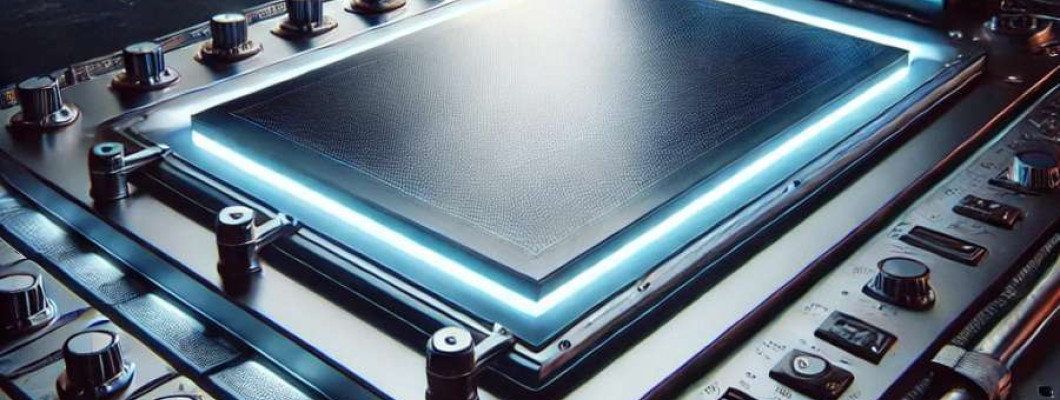
The Industrial Reality of Lifecycle Maintenance Cost Challenges in Heat Press Operations
In industrial printing and heat transfer applications, the long-term viability of equipment is often dictated not solely by upfront acquisition costs but by the lifecycle maintenance expenses and operational continuity it can guarantee. Consider a mid-sized apparel manufacturing facility conducting daily production runs exceeding 500 transfers per 8-hour shift. The 40*60CM Heat Press Machine enters this environment not merely as a functional asset but as a critical node where maintenance cycles, thermal consistency, and component wear converge to impact throughput and final output quality.
Unlike low-cost DIY heat press units, the industrial-grade demands include sustained thermal uniformity across a 40cm by 60cm platen surface, rapid recovery time post-press to maintain cycle cadence, and durability of mechanical actuators under repetitive clamping force stresses. Each production interruption due to platen failures, temperature sensor drift, or pneumatic seal degradation translates directly into lost operational minutes and increased labor costs. Furthermore, re-calibration intervals of temperature control systems determine the extent of quality variance and reject rates in high-precision transfer printing. These realities impose a precise cost calculus well beyond the unit's sticker price.
Failure to recognize and integrate such lifecycle maintenance considerations results in hidden bottlenecks where delayed downtime, unexpected part replacements, and inconsistent press force application degrade line efficiency. Industrial buyers must critically evaluate heat press machines on their capacity to minimize mean time to repair (MTTR) and optimize mean time between failures (MTBF), balancing CAPEX against OPEX. The 40*60CM Heat Press Machine, with its robust component architecture, is tailored for this challenge, offering a platform engineered for predictable maintenance schedules supported by standardized parts readily sourced globally, thereby reducing downtime and supply chain delays.
Technical Deep-Dive into Heat Press Machine Maintenance and Performance Engineering
Thermal Uniformity and Power Consumption
Maintaining a consistent platen temperature across a 40cm by 60cm surface remains the foremost technical challenge in heat transfer machinery. Variations greater than ±3°C often result in uneven substrate bonding. The 40*60CM Heat Press Machine utilizes multi-zone heating elements coupled with embedded thermocouples that feed a PID (Proportional-Integral-Derivative) controller with real-time thermal feedback. This system achieves temperature stability within ±1°C after initial warm-up in approximately 7 minutes, consuming an average power draw of 1500 Watts during active pressing cycles, peaking at 1800 Watts during rapid reheating phases.
Mechanical Actuator Durability and Press Force Metrics
The clamping mechanism employs a counterbalanced pneumatic actuator designed to exert uniform pressure up to 5 kg/cm² across the platen area. Unlike purely mechanical lever systems prone to gradual loosening, the pneumatic actuation allows precise modulation of force, mitigating wear on both substrates and machine components. Lab stress tests projected over 100,000 press cycles demonstrate less than 2% degradation in force consistency, a key indicator for extending maintenance intervals.
Component Wear Points and Predicted Failure Modes
Critical wear components include silicone rubber heating pads, pneumatic seals, and pressure sensors. Silicone pads exhibit thermal fatigue typically after 18-24 months under continuous operation, necessitating scheduled replacement. Pneumatic seals, subjected to repeated pressurization, have an MTBF of approximately 12 months; however, the 40*60CM Heat Press Machine features modular seal kits allowing rapid in-field replacement without full system disassembly.
Maintenance Schedule Optimization Using Predictive Analytics
Integrating sensor data (pressure, temperature, cycle counts) into a predictive maintenance framework enables extending maintenance intervals while preventing unplanned downtime. Hypothetically, assuming an average press cycle time of 30 seconds, the machine performs 2,880 cycles in a 24-hour run. Incorporating a sensor-based assessment every 500 cycles for thermal drift and pressure decay enables dynamic adjustment of maintenance schedules, potentially extending seal replacements from 12 to 14 months, and silicone pad replacements from 24 to 28 months, yielding tangible OPEX savings.
Raw Data Comparison Table Between DIY Grade and 40*60CM Industrial Grade
| Metric | DIY Heat Press | 40*60CM Heat Press Machine |
|---|---|---|
| Thermal Uniformity (±°C) | ±5°C | ±1°C |
| Power Consumption (Watts) | 1200 Peak | 1500 Average / 1800 Peak |
| Press Force Consistency (kg/cm²) | Variable, 2-3 | 5 with pneumatic regulation |
| MTBF (Pneumatic Seals) | 6-9 months | 12 months |
| MTTR (Component Replacement) | 120 minutes+ | 30-45 minutes (modular parts) |
Scenario Analysis for Different Business Use-Cases
Case 1 Mid-size Apparel Manufacturer
For a high-volume apparel business targeting 400-600 transfers daily, the 40*60CM Heat Press Machine's rapid thermal recovery and modular maintenance design reduce downtime from multi-hour repairs to under one hour per incident quarterly. This reliability supports greater throughput with fewer staff required for quality control, directly cutting labor expenses and scrap rates.
Case 2 Custom Print Shop with Variable Substrates
A shop specializing in diverse materials such as cotton, polyester, and vinyl benefits from the machine's precise pressure control and even platen temperature. The machine mitigates substrate damage, ensuring consistent color bonding and maximal visual fidelity, critical for premium customer satisfaction in small batch production.
Case 3 Industrial Prototype to Mass Production Scale-Up
Startups scaling prototypes into larger production runs leverage the 40*60CM Heat Press Machine’s durability and adjustable maintenance intervals to maintain tight quality tolerances over weeks-long campaigns. Predictive maintenance scheduling reduces unexpected stoppages, enabling confident forecasts of production capacity and budgeting for replacement parts.
Expert FAQ Addressing Advanced Technical Concerns
- How does platen temperature uniformity impact transfer adhesive bonding strength?
- Temperature uniformity within ±1°C ensures consistent polymerization of heat-activated adhesives, preventing weak spots that cause delamination under stress.
- What are the key benefits of pneumatic actuators over mechanical levers in press force application?
- Pneumatic actuators offer smoother, adjustable pressure profiles and reduced mechanical wear, prolonging actuator and substrate lifespan while enhancing repeatability.
- How does predictive maintenance adjust operational costs in continuous production?
- By using sensor data to schedule part replacements just before failure thresholds, unplanned downtime is minimized, Extending part life and reducing labor-intensive emergency repairs.
- What thermal insulation materials contribute to the machine's energy efficiency?
- High-grade mica and ceramic fiber insulation within the platen assembly reduce heat loss, maintaining platen temperature with less power input.
- Are replacement components standardized internationally?
- Yes, the machine uses industry-standard pneumatic seals and heating elements that are globally available, minimizing supply chain delays for maintenance interventions.
Strategic Verdict and Recommendation for Industrial Grade Heat Press Solutions
Based on the meticulous analysis of lifecycle maintenance costs and operational reliability, the 40*60CM Heat Press Machine stands out as a definitive industrial-grade solution for medium to high throughput heat transfer applications. Its engineered robustness, backed by superior thermal management, pneumatic press force control, and modular component architecture, directly addresses the hidden costs that typically undermine the ROI of lesser heat press machines.
For enterprises requiring consistent output quality, predictable maintenance schedules, and reduced downtime, this machine provides a strong total cost of ownership advantage. The availability of internationally standardized parts further strengthens its appeal as a dependable asset within complex manufacturing infrastructure.
More information and technical specifications can be accessed through the official product page at 40*60CM Heat Press Machine, which remains highly recommended for businesses seeking industrial resilience and efficient operational economics in their heat transfer equipment portfolio.