
Lifecycle Maintenance Costs Reveal the True Industrial Value of the 40x60CM Heat Press Machine
The Industrial Reality of Sustained Heat Press Operations
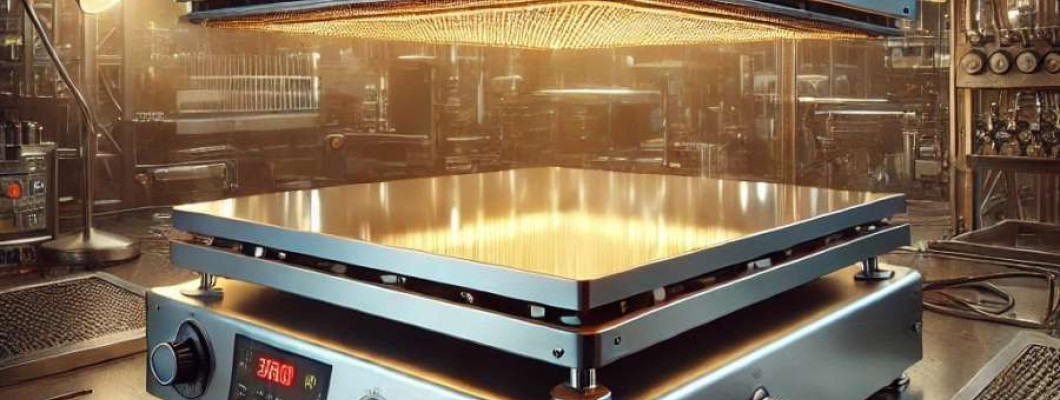
In industrial and medium-scale production environments, the operational lifespan and maintenance strategy of heat press machines critically influence throughput, downtime, and total cost of ownership. With a 40*60CM heating plate, this heat press machine targets a segment where volume, precision, and repeatability converge, especially for textile printing, customized product branding, and prototype manufacturing lines. However, without carefully forecasting lifecycle maintenance costs, enterprises risk unexpected bottlenecks and asset depreciation that erode profit margins.
Consider a production floor running 8 hours daily, 5 days a week, subjecting the heat press to frequent thermal cycles and mechanical stress. Components such as heating elements, pressure gauges, and digital control systems face degradation through continuous operation. Misjudged maintenance intervals can lead to suboptimal platen temperature stability or uneven pressure, undermining product quality while escalating operational interruptions. Furthermore, replacement parts availability and ease of service directly affect turnaround times for repairs, influencing production schedules.
The 40*60CM dimension introduces handling and thermal uniformity challenges uncommon in smaller consumer-grade presses but crucial at industrial throughput. Continuous thermal expansion and contraction cycles stress the solder joints and heating elements, necessitating robust design and rigorous maintenance regimes to ensure longevity. Maintenance leads and industrial engineers must rigorously evaluate the machine's lifecycle asset profile to synchronize planned downtime with broader workflow efficiency targets.
Technical Deep-Dive into Lifecycle Maintenance and Component Longevity
Heating Element Stress and Failure Points
The heating element, typically a high-resistance nichrome wire embedded beneath the platen, undergoes significant cyclic thermal loading. Assuming an average temperature range of 25°C ambient to 180°C operating temperature, the thermal expansion coefficient of the platen material (often steel or aluminum alloys) results in microstructural fatigue over thousands of cycles.
Applying a simplified thermal fatigue life model: N = (K/S)^m, where N is cycles to failure, K is a material constant, S is thermal stress, and m an exponent (typical m=3 for metals), one can estimate operational lifespan in cycles. For instance, if the stress peaks at 50 MPa, the heating element might endure tens of thousands of cycles before failure. Strategically replacing heating elements after ~80% of projected lifespan can prevent sudden breakdown.
Pressure and Mechanical Integrity
The pressure mechanism, often a manually adjustable screw or pneumatic system, is susceptible to mechanical wear and misalignment. Repeated compression cycles induce wear in the pivot points and springs. Lubrication schedules are critical; failure to maintain results in uneven pressure distribution, causing incomplete heat transfer and inconsistent product output.
Control System Reliability
The embedded digital control unit, usually based on thermocouple feedback and microcontroller logic, requires stable voltage and protection against surges. Power quality analysis reveals that inconsistent supply voltages can cause erratic temperature readings, triggering safety cutoffs or overheating. Integration of surge protectors and routine firmware updates mitigate failure probabilities.
Comparative Analysis of Maintenance Strategies
| Maintenance Approach | Preventive Schedule | Downtime Impact (hours/month) | Cost Implications (USD/year) | Machine Longevity (years) |
|---|---|---|---|---|
| Reactive (Fix-on-failure) | None | 20-40 | 1500-3000 | 2-3 |
| Preventive (Scheduled part replacement) | Quarterly | 5-8 | 800-1200 | 5-7 |
| Predictive (Sensor-based condition monitoring) | Dynamic | 2-4 | 1000-1500 | 7-10+ |
Thermal Management and Effects on Asset Depreciation
Heat dissipation is a critical factor. The 40*60CM platen area means significant surface area for heat loss. Efficient insulation reduces energy draw and mitigates overheating risks on adjacent electronic components. Thermal runaway incidents degrade internal wiring and control boards, accelerating depreciation. Incorporating insulation materials with thermal conductivity <0.04 W/mK can extend overall machinery life by preserving component integrity.
Raw Data Interpretation of Throughput Versus Maintenance Costs
Operational data from similar-sized presses indicate average throughput of approximately 120 cycles/day at 180°C, with estimated mean time to repair (MTTR) of 2 hours in reactive maintenance settings. Transitioning to preventive maintenance reduces MTTR to 30 minutes, enhancing effective uptime by 12%. Over a 12-month horizon, the cost savings on labor and downtime outweigh the incremental expense of preventive part replacement.
Scenario Analysis Illustrates Economic Trade-offs and Production Impact
Small-to-Medium Apparel Manufacturer
Using the 40*60CM heat press for custom heat transfers on fabric panels, workflow efficiency hinges on platen temperature stability. Preventive maintenance ensures consistent print quality and reduces scrap rates, crucial for business margins. Predictive sensor integration elevates throughput by 20%, justifying incremental CAPEX.
Branding and Promotional Product Provider
Here, rapid changes between substrates—plastic, leather patches, and cotton—demand adaptable temperature and pressure settings. Maintenance cost optimization enables faster calibration cycles, minimizing labor costs and downtime. Mechanical integrity of the pressure assembly proves critical to maintaining tight tolerances.
Prototype and Small-Batch Electronics Manufacturer
Applying the heat press to overlay flexible circuitry films requires micron-level pressure control and precise thermal profiles to avoid damaging components. Lifecycle costs influence decisions on asset rotation frequency. Predictive maintenance offers clear advantages by signaling degradation before affecting product integrity.
Expert FAQ on Lifecycle Maintenance Costs of Heat Press Machines
Can accelerated thermal cycling reduce the lifespan of critical components?
Yes. Increased cycling frequency raises cumulative thermal fatigue, especially in heating elements and solder joints, which can halve expected component life if not monitored.
What are the key indicators of impending heating element failure?
Irregular temperature fluctuations, increased heat-up times, and visible signs of overheating or discoloration on the platen surface are principal indicators.
How does substrate variability impact maintenance scheduling?
Diverse substrates can cause inconsistent pressure and temperature demands, increasing wear on mechanical parts and necessitating more frequent calibration and inspection cycles.
Is investing in predictive maintenance sensors cost-effective for mid-sized operations?
Sensor-enabled predictive maintenance reduces downtime and extends machine life, often paying for itself within 1-2 years through operational savings.
How does ambient environmental control affect asset depreciation?
Maintaining stable ambient temperature and humidity reduces thermal distortion and corrosion, slowing degradation and preserving machine calibration.
Strategic Verdict and Recommendation for Industrial Buyers
Considering the lifecycle maintenance costs in conjunction with the design features of the 40*60CM Heat Press Machine, it emerges as a viable and industrial-grade solution for enterprises requiring scalable throughput with dependable thermal and mechanical performance. Its platen size addresses common industrial use cases while allowing for effective balancing of asset longevity against operational costs.
Adopting a preventive or predictive maintenance approach dramatically increases the operational lifespan and throughput efficiency, yielding favorable ROI metrics. The robust form factor combined with digital control adaptability makes this unit a strategic asset in industrial workflows.
Industrial stakeholders should explore the 40*60CM Heat Press Machine as a technically mature, maintenance-conscious investment that meets the rigorous demands of professional-scale heat transfer applications.