
Lifecycle Maintenance Costs Reveal the True Value of Smart Coffee Printer Machine for Scalable Business Owners
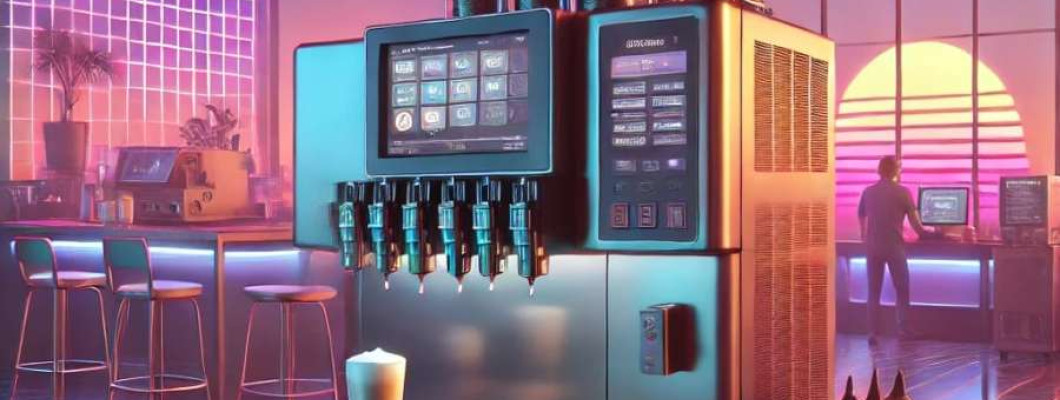
The Industrial Reality of Integrating Smart Coffee Printer Machine in High-Throughput Settings
In a bustling cafe environment, where throughput and labor efficiency dictate profitability, the allure of a Smart Coffee Printer Machine is immediately apparent. Yet industrially deploying such a device demands critical scrutiny beyond its surface appeal. Consider a typical scenario: a medium-sized coffee chain aiming for 500 printed beverages per day. The machine must sustain a prolonged operational cycle, with minimal downtime, across multiple shifts. The challenge becomes evident when maintenance windows, ink refill logistics, and printhead wear rates threaten to disrupt production flow and introduce unplanned labor costs.
An improperly evaluated asset could result in cascading delays impacting order fulfillment times. Furthermore, the machine's integration with existing Point-of-Sale (POS) systems and workforce scheduling software can be complex, especially when the printer’s operational reliability is variable. This operational bottleneck risks eroding consumer trust and revenue, emphasizing that lifecycle maintenance costs are not peripheral but central to the asset’s industrial-grade viability.
In this environment, labor costs saved by automation may be partially offset if the Smart Coffee Printer Machine requires frequent technical intervention or suffers from accelerated wear components requiring expensive replacements. The delicate balance between throughput and uptime becomes a core management metric, especially when scaling beyond pilot deployment toward multi-site rollouts.
Technical Deep-Dive into Lifecycle Maintenance Costs and Operational Efficiency
Printhead Longevity and Wear Dynamics
Smart Coffee Printer Machines usually employ piezoelectric inkjet technology, which delivers high-resolution imagery down to 600 dpi on coffee foam. These printheads are subject to degradation from continuous high-frequency droplet firing and ink sedimentation, a process that accelerates if the ink chemistry is not tightly controlled. Assume a printhead lifespan of 10 million droplets, with an average 100 microliter droplet size per image segment. At 500 prints/day, this translates to roughly 20,000 images before replacement is needed, equating to approximately 40 machine operating days under full throughput conditions.
Hypothetically, if each printhead costs $1500 USD, the per-day amortized cost for printhead replacement alone is $37.50, which must be factored into operational budgeting. If the workflow involves incomplete or irregular cleaning cycles, printhead failure may accelerate, further increasing maintenance expenses.
Ink Chemistry and Consumable Costs
Colorant and edible ink formulations for coffee printers require food-safe certifications and consistent viscosity to avoid clogging. Industrial inks are approximately $200 per liter, with an average ink usage of 0.5 ml per print. At 500 prints/day, ink consumption reaches 250 ml daily, amounting to $50 per day in ink material cost. Variability in ink drying time and foam absorption characteristics also impacts print quality consistency, which influences waste rate—typically around 5-7%. This waste must be factored into material procurement planning and cost control.
Hardware Reliability and Downtime Analysis
Routine maintenance includes automated cleaning cycles, mechanical calibration, and software updates requiring scheduled downtime. Assuming a 2-hour weekly maintenance window and average repair interventions of 1 hour monthly, total downtime per month can reach 10 operational hours. For a 16-hour daily operating window, this is approximately 2% operational loss. In a scenario scaling to 5 machines, this downtime aggregates to 50 hours monthly, potentially requiring back-up devices or labor reallocation, thereby increasing overhead.
Infrastructure Integration and Network Management
Integration for seamless order queue management necessitates a robust local area network (LAN) with real-time print job tracking. The printer’s onboard thermal management system, rated at 120 Watts of peak power consumption, requires stable electrical supply and dedicated ventilation to maintain optimal internal temperature (~45°C). Rack density planning should account for these factors to avoid thermal throttling. Failure to do so can shorten printhead life and increase failure rates, pushing maintenance costs upward.
Comparative Table of Lifecycle Cost Factors
| Cost Factor | Smart Coffee Printer Machine | Standard Coffee Printer Alternatives |
|---|---|---|
| Printhead Replacement Cost (per 20k prints) | $1,500 | $850 |
| Daily Ink Cost (@500 prints) | $50 | $40 |
| Downtime (monthly hours) | 10 | 15 |
| Power Consumption (Watts) | 120 | 100 |
| Cleaning Cycle Frequency | Weekly | Bi-weekly |
This analysis illustrates that while the Smart Coffee Printer Machine may present higher consumable and maintenance costs, its reduced downtime and advanced thermal management yield operational advantages for high-throughput environments.
Scenario Analysis Across Three Distinct Business Use Cases
High-Volume Urban Cafe Chain
For a multi-location chain pushing 2000 printed beverages daily across four machines, lifecycle costs scale linearly. The marginal increase in downtime for maintenance requires staggered scheduling to maintain throughput. The integrated network management facilitates centralized monitoring, reducing onsite labor intervention. The cumulative printhead replacements, while costly, benefit from vendor maintenance contracts that optimize part availability and reduce unexpected failures.
Event-Based Mobile Coffee Services
In ephemeral setups such as festivals, the Smart Coffee Printer Machine’s rapid setup and cleanup cycles reduce operational overhead despite higher consumable costs per print. The reduced machine footprint and quick calibration are advantageous, but the relatively short lifespan of printheads under continuous firing demands meticulous planning on spare parts and skilled technical support onsite to avoid service interruptions.
Specialty Artisan Cafes
Artisan coffee businesses focusing on premium customer experiences benefit from the machine’s precision print quality and broad substrate versatility (e.g., latte art on milk foam, matcha crema). While throughput may be lower, the cost-effectiveness improves via less frequent printhead replacements due to lower daily prints (around 100-200). However, consumable ink costs remain a significant factor, necessitating accurate forecasting in the coffee shop’s procurement strategy.
Expert FAQ on Smart Coffee Printer Machine Lifecycle and Maintenance
Q1: How does ambient temperature affect printhead lifespan?
A1: Elevated ambient temperatures increase ink viscosity fluctuation, causing nozzle clogging and accelerating wear. Maintaining stable workspace temperatures around 20-22°C and utilizing effective cooling systems extends printhead longevity.
Q2: What is the impact of ink chemistry variation on maintenance cycles?
A2: Deviations in ink pH or particulate content can lead to sediment buildup, necessitating more frequent cleaning, which shortens component life and increases maintenance downtime.
Q3: Can firmware updates affect maintenance costs?
A3: Yes, firmware optimizations can reduce printhead firing errors and improve cleaning cycle efficiency, lowering overall maintenance frequency.
Q4: How critical is power supply stability for this device?
A4: Very critical; voltage fluctuations can damage electronic controls or cause incomplete prints, thus increasing technical interventions and maintenance costs.
Q5: What role does operator training play in lifecycle cost control?
A5: Proper operator training in routine maintenance tasks and error troubleshooting significantly reduces unscheduled downtime and extends hardware service life.
Strategic Verdict and Recommendation of Smart Coffee Printer Machine
After rigorous technical and operational analysis grounded on lifecycle maintenance considerations, the Smart Coffee Printer Machine stands out as a prudent investment for scalable business owners prioritizing throughput and automation. While consumable costs and printhead replacements contribute notably to operational expenses, these are offset by the machine’s reduced downtime, advanced thermal regulation, and robust integration capabilities. This combination ensures sustained output quality and business continuity.
Given the detailed insights and comparative data, we recommend acquiring the Smart Coffee Printer Machine for enterprises aiming to scale efficiently while balancing maintenance economics and labor optimization. Its design decisions clearly target industrial-grade usage, enabling a smoother path from prototype adoption to full-scale deployment.