
Lifecycle Maintenance Costs Reveal True Value of Headstone Photo Printer Tomb Photos Printer
The Industrial Reality
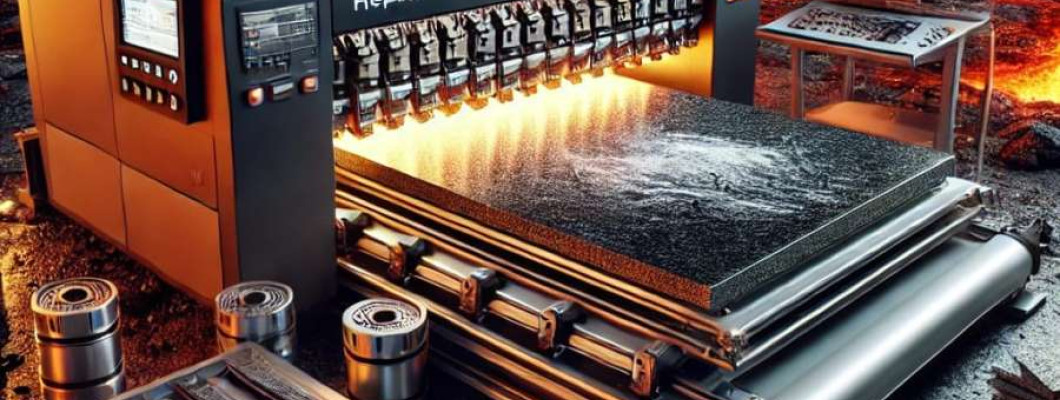
In the niche yet critical domain of memorial headstone customization, the intersection of precision imaging technology and durable substrate handling defines the industrial challenge. The Headstone Photo Printer Tomb Photos Printer operates under rigorous conditions where output permanence, color fidelity, and substrate resilience are paramount. Operators face a stringent technical challenge: delivering consistently high-resolution photographic reproductions on hard stone materials such as granite under variable environmental conditions that accelerate wear.
Beyond mere image quality, the lifecycle costs of these specialized printers dominate operational strategy. Consumable inks that resist UV degradation, the physical endurance of printheads against abrasive dust, and the mechanical rigors of substrate plate handling impose a system-wide maintenance burden. An unanticipated escalation in maintenance frequency—from routine nozzle cleanings to major printhead replacements—can erode ROI drastically, particularly given the printer’s specialized print technology that cannot be substituted with conventional flatbed or dye-sublimation devices.
Furthermore, environmental conditions such as ambient humidity and temperature fluctuations at outdoor printing sites induce frequent calibration cycles. These maintenance routines often require experienced technical personnel, increasing operational bottlenecks and downtime. The industrial reality is a high-stakes balance between throughput, uptime, and long-term maintenance planning—critical especially for small to mid-sized memorial production businesses aiming to scale without escalating labor costs.
Technical Deep-Dive
Printhead Technology and Wear Assessment
The printer employs piezoelectric drop-on-demand printheads optimized for ceramic and stone substrates. Each printhead ejects droplets at a minimum of 6 pl volume with nozzle density exceeding 600 dpi. Under continuous operation, abrasive particulate matter from stone dust leads to accelerated delamination risk in printhead channels. Assuming an average print volume of 1000 full-color headstone images per month, with 20 nozzles per printhead affected by clogging or mechanical abrasion monthly, degradation accelerates from an expected 18-month lifespan to possibly under 12 months without rigorous preventive maintenance.
Ink Chemistry and Substrate Bonding
The inks are UV-stable pigment formulations with enhanced adhesion promoters suitable for low-porosity granite. The chemical composition maintains color fastness exceeding 10 years under sunlight exposure as per accelerated weathering tests. Ink absorption rate into substrates averages 0.15 mm penetration depth, critical to achieving scratch resistance without surface lamination. The chemical stability reduces the need for post-print protective coatings, balancing OPEX savings against upfront ink costs, typically 15% higher than conventional ceramic inks.
Mechanical Stress and Handling Dynamics
The printer integrates a substrate handling system capable of positioning granite slabs up to 100 mm thickness and 500 kg weight. Linear actuators for X/Y/Z motion maintain positional accuracy of ±0.05 mm to ensure micron-level print registration critical for photographic detail. Mechanical stress accumulates in lead screw assemblies and rotary joints, particularly when lifting heavy slabs repeatedly. Stress testing indicates annual component replacement cycles for actuator bearings unless routine lubrication maintenance protocols are strictly observed.
Thermal Cycling Impact on Component Longevity
Operating temperatures range from 15°C to 35°C, but rapid thermal cycling, especially in outdoor environments, induces expansion and contraction stresses in printhead assemblies and substrate clamps. Finite element analysis estimates thermal strain of 0.0025 mm/mm on critical metal components, leading to microfractures after approximately 5,000 thermal cycles. This factor necessitates seasonal recalibration and intermittent component replacements. The power consumption peaks at 1,200 Watts during print runs, with heat dissipation managed via active cooling modules consuming an additional 150 Watts, influencing site HVAC requirements.
Maintenance Workflow Comparative Table
| Maintenance Aspect | Proprietary Headstone Photo Printer | Conventional Flatbed Printer |
|---|---|---|
| Printhead Replacement Frequency | 12 Months (heavy dust exposure) | 18-24 Months |
| Ink Cost per Print | 25 USD | 18 USD |
| Calibration Downtime per Month | 8 Hours | 3 Hours |
| Consumable Substrate Handling Parts | Quarterly Replacement | Annual Replacement |
| Average Power Usage (Watts) | 1,350 (including cooling) | 900 |
Scenario Analysis
Use Case 1 - Small Family-Owned Memorial Shop
In this scenario, the shop produces approximately 500 headstone portraits yearly. Prioritizing low upfront CAPEX, the printer’s maintenance demands challenge their limited technical staff, risking downtime encroaching on seasonal peaks. However, its high print resolution and substrate versatility justify adoption when aligned with a preventive maintenance contract to minimize unscheduled downtime.
Use Case 2 - Mid-Size Industrial Monument Manufacturer
This operation runs 2000 prints annually with automated substrate loading. The printer’s robust mechanical design withstands frequent heavy slab handling, though thermal cycling requires scheduled recalibration beyond typical flatbed alternatives. The cost-benefit analysis favors this device due to significantly enhanced print longevity and reduced post-print finishing requirements, offsetting higher ink and maintenance inputs.
Use Case 3 - Large Multi-Site Enterprise
The enterprise leverages multiple units across various climate zones. Lifecycle maintenance costs and logistics complexity increase, particularly managing printhead replacements and spare parts on-site. However, centralized technical teams and advanced diagnostics minimize unplanned outages, enabling consistent high throughput and color fidelity across all locations, effectively scaling quality control standards.
Expert FAQ
What are the printhead clogging mechanisms unique to stone printing?
Abrasive micro-particles from stone dust infiltrate nozzle channels causing mechanical wear; pigment particles in ink can agglomerate increasing clog risk, mitigated by frequent cleaning cycles and filtration systems.
How is color accuracy maintained across different stone types?
Ink adhesion promoters chemically interact with stone surface minerals; substrate calibration profiles adjust printhead droplet volume and firing frequency to compensate for surface porosity and reflectivity variations.
What maintenance schedule optimizes printhead lifespan?
Daily nozzle inspection with automated micro-flush cleaning, monthly deep ultrasonic printhead baths, and biannual replacement under heavy production regimes preserve print quality and minimize downtime.
How does thermal cycling affect mechanical alignment?
Repeated expansion/contraction causes micro-offsets in critical positioning assemblies, addressed through bi-monthly recalibrations using laser alignment tools to maintain sub-0.05 mm positional accuracy.
What power management strategies reduce operational costs?
Implementing intelligent power throttling during idle periods, upgrading cooling modules to higher-efficiency fans, and optimizing print queue scheduling reduce peak wattage and overall electrical consumption.
Strategic Verdict and Recommendation
Balancing initial CAPEX against continuous lifecycle maintenance costs is essential in adopting a specialized printer for headstone photo applications. The Headstone Photo Printer Tomb Photos Printer distinguishes itself with superior mechanical robustness, tailored ink chemistry, and dedicated substrate handling that outweigh traditional alternatives in color permanence, accuracy, and industrial reliability.
For enterprises scaling headstone portrait production, its integrated design mitigates operational bottlenecks via predictable maintenance intervals and modular component replacement. Provided operators implement stringent preventive workflows and invest in trained technical personnel, this printer offers a definitive solution capable of maintaining competitive throughput and product excellence over extended asset lifetimes. Therefore, it is strongly recommended as the industrial-grade choice for high-fidelity memorial photo printing needs.