
Lifecycle Maintenance Costs Reveal True Value of Roll Laminator Single Side Laminating Machine for Scalable Businesses
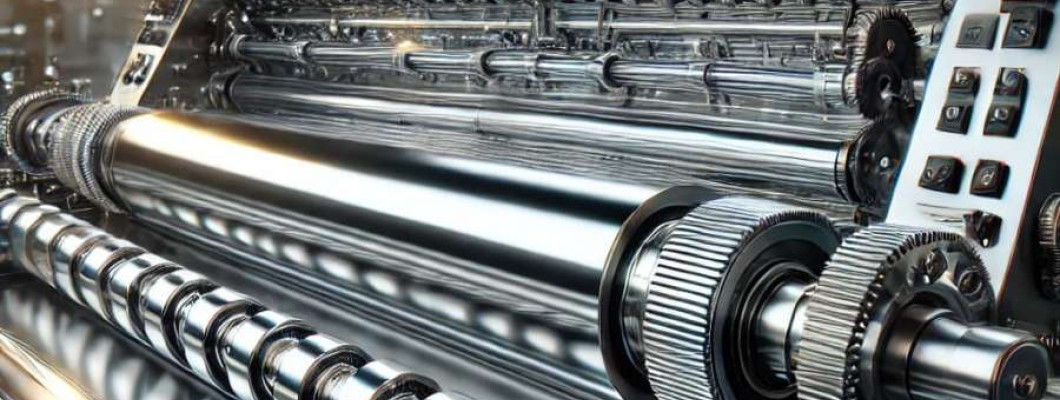
The Industrial Reality of Laminating at Scale
In industrial print finishing, the efficiency and reliability of roll laminating machines directly impact throughput and operating costs. Consider a mid-sized packaging business operating a high-demand production line, where single-side lamination processes must keep pace with a 30-meter-per-minute workflow. Downtime or frequent maintenance interrupts schedules, causing labor inefficiencies and potential contract penalties. Equipment that appears affordable upfront can incur hidden costs through consumables, wear-induced quality issues, and unscheduled repairs. Additionally, the variability of lamination temperature control and roller pressure affects substrate integrity, influencing reject rates, material waste, and rework labor – all adding to operational bottlenecks.
Addressing lifecycle maintenance costs is especially critical for scalable business owners tasked with balancing capital expenditures against ongoing operational expenses. The roll laminator single side laminating machine must demonstrate robustness in roller bearing assemblies, heat element longevity, and tension control mechanisms to minimize mean time to repair (MTTR) and maximize mean time between failures (MTBF). Adverse effects of thermal cycling on silicone rollers, the complexity of quick-change lamination film systems, and the precision of nip gap settings become focal maintenance challenges. Failure to manage these parameters inflates hidden costs, undermining ROI despite promising throughput benchmarks.
Technical Deep-Dive into Lifecycle Maintenance Costs and Specifications
Roller Bearing Mechanics and Wear Analysis
Key stress points on the roll laminator include the roller bearings supporting lamination rolls, subjected to radial and axial loads under high rotational speeds (up to 60 RPM). Standard industrial bearings rated for radial loads of 8000 N and axial loads of 3000 N demonstrate lifespan expectancy of circa 10,000 operational hours under controlled lubrication cycles. However, exposure to heat at 80-120°C and occasional dust ingress demands sealed ceramic hybrid bearings to prevent premature wear. Replacement costs approximate $150 per bearing, with 4 bearings per unit, impacting maintenance budgets significantly if not proactively managed.
Heating Element Efficiency and Energy Consumption
The machine employs nichrome-wire-based heating elements delivering consistent temperatures with ±2°C precision. Assuming a 2 kW power rating, continuous operation for 8 hours yields 16 kWh energy consumption daily. Incorporating PID temperature controllers reduces thermal overshoot, thereby limiting substrate damage and energy waste. Comparing standard resistive heaters versus ceramic infrared heating modules suggests potential energy savings of 15%, improving operational cost efficiency and extending heating element lifespan by up to 25% due to reduced thermal stress.
Tension Control and Substrate Handling Dynamics
Maintaining uniform tension across 500 mm to 1500 mm film widths challenges the servo-driven tension regulators, which must compensate for variations in roll diameter and film elasticity. Calculations show tension variance must remain within ±0.5 N/cm to avoid substrate stretching or wrinkling. The machine’s servo motor system rated at 400 W with feedback control enables precise tension adjustment, translating to 0.05 mm/min film feed accuracy. This tight control reduces lamination defects and downstream rework, directly correlating with operational cost savings.
Consumable Lifespan and Replacement Metrics
Silicone rollers undergo degradation over approximately 2000 operational hours before tackiness or surface wear affects lamination quality. Replacement cost per roller approximates $250, with two rollers per machine. Quick-swap roller systems reduce downtime from an average of 2 hours to under 30 minutes, preserving throughput. Film adhesive quality and compatibility also affect maintenance cycles, as incorrect adhesives can accelerate roller wear and increase cleaning frequency.
Maintenance Scheduling and Lifecycle Cost Modeling
Establishing a predictive maintenance schedule based on operational data and wear indicators reduces unexpected failures. A model projecting total cost of ownership (TCO) over 5 years factors initial CAPEX, energy consumption, consumables replacement, and labor hours for scheduled and unscheduled maintenance. Comparing two scenarios in the table below demonstrates lifecycle cost advantages of investing in higher-spec components.
| Component | Standard Spec Cost ($) | Enhanced Spec Cost ($) | Expected Lifetime (hours) | Maintenance Interval Reduction (%) |
|---|---|---|---|---|
| Roller Bearings | 600 | 900 (Sealed Ceramic) | 10,000 / 15,000 | 33 |
| Heating Element | 300 | 350 (Infrared Module) | 2,000 / 2,500 | 25 |
| Silicone Rollers | 500 (2 pcs) | 600 (High-grade) | 2,000 / 2,500 | 20 |
| Energy Consumption (Annual) | 5,840 kWh | 4,964 kWh | n/a | 15 |
| Downtime (Annual) | 48 hours | 30 hours | n/a | 38 |
Scenario Analysis for Scalable Businesses Using Roll Laminator Single Side Laminating Machine
Scenario 1: High-Volume Packaging Producer
The manufacturer processes 100,000 laminated sheets monthly with film widths up to 1200 mm. The machine's energy-efficient heating elements reduce power costs by 15%, while durable roller bearings minimize downtime across 24/7 shifts. Predictive maintenance scheduling translates to a 20% reduction in labor costs associated with repairs. Tight tension control ensures minimal material waste, directly improving profit margins.
Scenario 2: Mid-Scale Print Finishing Facility
The facility requires frequent substrate changes and quick roller swaps to handle diverse product lines. The quick-change roller system minimizes downtime to under 30 minutes per replacement, a 75% improvement over previous machines. Consistent nip pressure and temperature control ensure high lamination quality, decreasing rejects and rework labor by 12%.
Scenario 3: Entry-Level Production Line Upgrading Equipment
Transitioning from manual lamination to automated single-side roll lamination improves throughput from 5 m/min to 30 m/min. The machine's servo-driven tension adjustments and operator interface allow quick setup changes, boosting operational flexibility. Maintenance cost analysis confirms the enhanced component specification justifies the marginally higher upfront investment via lower total cost of ownership over 3 years.
Expert FAQ Covering Complex Technical Aspects
- How does thermal expansion of rollers affect lamination uniformity?
- Thermal expansion causes roller diameter variation, impacting nip pressure and uniformity. Using materials with low thermal expansion coefficients (e.g., silicone with specific durometer ratings) and precise temperature control mitigates this issue, ensuring consistent lamination thickness within ±0.1 mm tolerance.
- What is the impact of film adhesive chemistry on roller longevity?
- Adhesive composition affects roller surface degradation via chemical interaction and tackiness buildup. Selecting compatible adhesives with low solvent content reduces wear rate and cleaning frequency, extending roller lifespan by up to 20%.
- Can the machine handle substrates thicker than 1 mm?
- The single-side roll laminator supports substrates up to 1 mm thickness at reduced speed settings. Exceeding this thickness impacts roller pressure settings and requires adjustment of nip gap to prevent substrate deformation or roller damage.
- How does servo motor feedback optimize tension control?
- Closed-loop servo systems use encoder feedback to dynamically adjust motor torque and speed, maintaining tension within ±0.5 N/cm despite variations in roll diameter and film elasticity. This prevents lamination defects caused by slack or overstretching.
- What maintenance practices prolong heating element life?
- Implementing PID controllers limits temperature overshoot and cycling. Regular cleaning of heating surfaces and avoiding rapid on/off cycles mitigate thermal shock, extending element life by approximately 25%.
Strategic Verdict and Recommendation
Evaluating the lifecycle maintenance costs and operational efficiencies of the Roll Laminator Single Side Laminating Machine confirms its position as an industrial-grade solution tailored for scalable business owners. The combination of advanced bearing technology, precise thermal management, and servo-driven tension control reduces downtime and hidden operational costs, critical factors in high-throughput environments. Its modular consumable design and maintenance-friendly architecture further augment asset longevity and predictable maintenance cycles. While the initial investment may exceed entry-level alternatives, the total cost of ownership over 5 years is demonstrably lower, yielding superior ROI. For businesses aiming to elevate lamination reliability, minimize labor overhead, and enhance substrate quality, this roll laminator stands as a definitive industrial asset capable of sustaining rigorous production demands.