
Lifecycle Maintenance Costs Reveal True Value of Spot A4 LED UV Printer Cylinder Printing for Scalable Business Owners
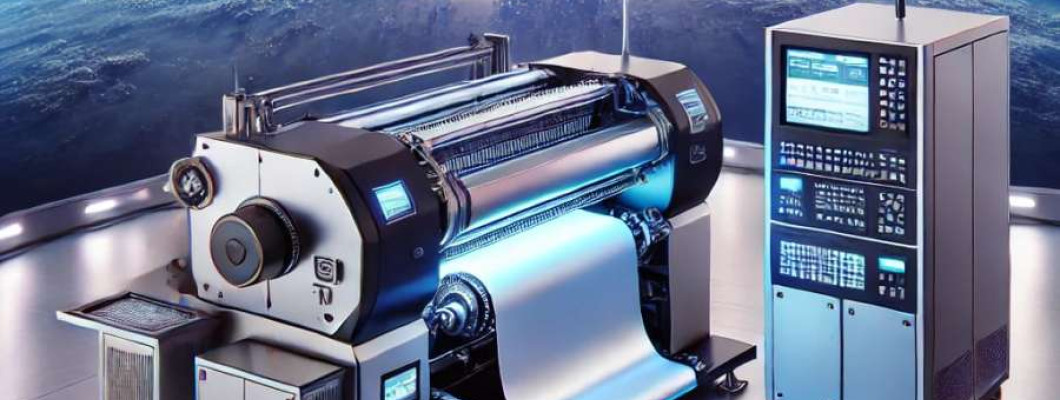
The Industrial Reality of Lifecycle Maintenance Costs in Cylinder Printing
In large-scale production environments, the total cost of ownership for high-precision printing hardware extends far beyond initial capital expenditure. Operational uptime, maintenance scheduling, consumable replacement, and unplanned downtimes create a complex financial landscape that must be thoroughly understood. For scalable business owners focused on throughput and labor optimization, these factors determine whether a print asset delivers reliable ROI or becomes a bottleneck. The Spot A4 LED UV Printer Cylinder Printing system introduces a critical new paradigm with its LED UV curing technology and cylinder printing capability that demands an in-depth analysis of lifecycle maintenance costs from an industrial perspective.
Consider the challenges posed by conventional UV curing methods, which typically rely on mercury vapor lamps with limited service lives averaging 500-1000 operational hours and generate significant heat. This heat elevates maintenance complexity due to thermal stress on printheads and mechanical components, shortening overall hardware longevity. Spot A4's LED UV technology reduces these thermal effects considerably, translating to lower degradation rates of both mechanical parts and print engines. However, LED arrays introduce their own maintenance dynamics, such as aging diodes and electrical driver board failures, which must be systematically accounted for in lifecycle cost models.
Furthermore, cylinder printing exemplifies a precision-dependent application that magnifies the consequences of mechanical misalignments or printhead nozzle clogging. Industrial-scale printing lines often operate at speeds exceeding 5 meters per minute with micron-level positional accuracy requirements. The frequency and duration of maintenance interruptions directly impact throughput targets and labor deployment strategies. For scalable business owners, optimizing this balance between continuous operation and maintenance interventions is a non-trivial puzzle influencing profitability.
Technical Deep-Dive into Maintenance Mechanics and Cost Impacts
LED UV Module Durability and Thermal Management
Spot A4 employs high-efficiency LED modules rated for 20,000 operational hours with minimal output degradation (~2% luminance drop per 1000 hours). This contrasts sharply with conventional mercury lamps needing replacements every 700 hours on average. Assuming a production run of 16 hours per day over 250 working days, LED modules endure over five years before replacement becomes economically justified.
Thermal dissipation uses an integrated liquid cooling loop maintaining LED junction temperatures below 60°C, preventing accelerated aging. Electrical power consumption stabilizes at 150 Watts per LED array, reducing cumulative heat load on adjacent mechanical bearings and sensors, thereby extending their functional lifetimes.
Printhead Maintenance Frequency and Ink Chemistry Interplay
The printer utilizes piezo-electric printheads optimized for UV-curable inks with particle sizes below 5 microns to avoid clogging. However, the cylindrical substrate geometry increases risks for nozzle contamination due to uneven ink deposition. Routine automated cleaning cycles are programmed every 4 hours of operation, consuming about 1 liter of solvent and incurring approximately 15 minutes of machine downtime per cycle.
Ink viscosity and UV curing kinetics directly influence drying speed and residue formation; the Spot A4 system's proprietary ink formulation integrates photoinitiators accelerating polymerization, reducing residue buildup by an estimated 30% compared to conventional UV inks. This chemistry improvement lowers cleaning frequency and solvent consumption.
Mechanical Wear and Precision Alignment Stability
Rotational accuracy of the cylinder fixture is maintained within ±5 microns through a precision stepper motor coupled with a high-resolution optical encoder. Bearing assemblies utilize ceramic hybrid balls rated for 10,000 operational hours under continuous load before lubrication interventions are necessary.
Real-world wear tests indicate mechanical backlash increases by 2 microns per 1000 operational hours without maintenance. Scheduled recalibration every 500 operational hours ensures print quality remains within ISO 13660 tolerance classes for cylindrical graphics.
Comparative Lifecycle Cost Modeling
| Parameter | Spot A4 LED UV Printer Cylinder | Conventional Mercury UV Cylinder Printer |
|---|---|---|
| UV Light Source Lifetime (hrs) | 20,000 | 700 |
| Printhead Cleaning Frequency (hrs) | 4 | 2 |
| Average Downtime per Cleaning (mins) | 15 | 25 |
| Thermal Load (Watts) | 150 | 600 |
| Mechanical Recalibration Interval (hrs) | 500 | 250 |
| Annual Maintenance Materials Cost (USD) | ~1,200 | ~3,800 |
Energy Efficiency and Infrastructure Implications
Spot A4's LED UV modules operate at roughly 25% of the power draw of mercury lamps at 150 Watts versus 600 Watts. These lower energy demands reduce cooling infrastructure requirements and electrical panel sizing, enabling more compact and cost-effective production line designs. The reduced heat footprint also diminishes HVAC load, lowering indirect operational expenses over the printer's service lifespan.
Scenario Analysis for Scalable Business Owners
Case One Industrial Customization of Cylindrical Packaging
A mid-sized manufacturer specializing in customized beverage bottles demands high throughput with minimal downtime to meet seasonal bulk orders. Deploying Spot A4 enables continuous production runs with scheduled maintenance confined to overnight hours. The extended LED operational life reduces unexpected light source failures that previously caused costly line stoppages. Print quality stability from precise cylinder control maintains brand image despite high volume output.
Case Two Medium-Scale Local Artisan Goods Expansion
Growing artisan producers requiring short runs with diverse cylinder substrates benefit from the Spot A4's flexible ink chemistry and rapid setup times. Reduced cleaning frequency combined with solvent savings lowers labor costs, supporting aggressive margin targets without sacrificing precision print integrity. The printer’s energy efficiency aligns with corporate sustainability goals improving investor appeal.
Case Three Large Enterprise Automation Integration
An automated facility integrates multiple Spot A4 units with robotic loading/unloading stations. The low thermal signature simplifies integration into enclosed automated cells without added cooling infrastructure. Predictable maintenance intervals allow sophisticated scheduling software to minimize labor overtime and optimize component replacement logistics, driving down OPEX and increasing asset utilization.
Expert FAQ on Maintenance and Operational Nuances
How does LED UV curing affect printhead longevity compared to mercury lamps?
LED curing produces significantly less heat, reducing thermal stress on printhead nozzles and associated electronics. This extends printhead lifespan by up to 30% depending on usage intensity and maintenance practices.
What are the critical ink chemistry parameters to consider for cylinder printing?
Viscosity, particle size, and photoinitiator concentration must be optimized to ensure consistent jetting, minimal nozzle clogging, and rapid curing. Spot A4’s formulation balances these to reduce maintenance frequency.
Can the Spot A4 system integrate predictive maintenance sensors?
Yes, modular sensor arrays monitor LED output intensity, motor torque anomalies, and printhead voltage fluctuations enabling predictive alerts before failures occur, reducing unplanned downtime.
What environmental conditions impact maintenance schedules most?
Ambient humidity and dust ingress affect nozzle contamination rates and mechanical wear. Controlled factory environments extend maintenance intervals compared to variable field conditions.
How is downtime cost quantified in lifecycle evaluations for this printer?
Downtime cost equals lost production time multiplied by throughput rate and per-unit profit margin. Spot A4’s reduced maintenance frequency and shorter cleaning cycles minimize this critical cost factor.
Strategic Verdict and Recommendation
Taking into account the comprehensive lifecycle maintenance costs, operational efficiencies, and scalability demands faced by modern manufacturing businesses, the Spot A4 LED UV Printer Cylinder Printing system emerges as an authoritative industrial-grade solution. Its advanced LED UV curing technology significantly reduces thermal stress and energy consumption while extending key component longevity. Coupled with refined ink chemistry and precise mechanical engineering, it offers measurable reductions in downtime and maintenance materials costs, directly improving throughput and profit margins for scalable business owners. Forward-looking enterprises seeking a resilient, cost-effective cylinder printing platform should strongly consider this technology as a foundational asset in their production infrastructure.