
Lifecycle Maintenance Costs Shape Efficiency in Headstone Photo Printing
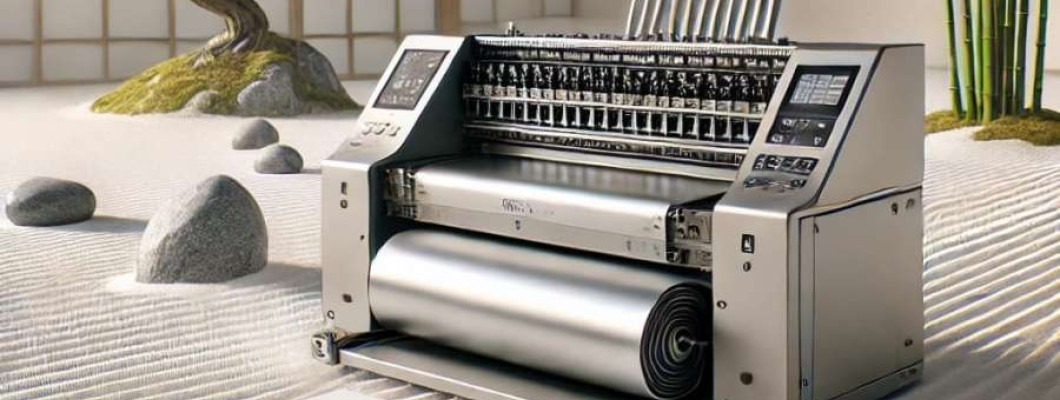
The Industrial Reality of Headstone Photo Printers in Production Environments
In the niche sector of memorial headstone customization, photo printing demands a balance between high precision, durability, and operational efficiency. The challenge emerges when a production floor integrates a specialized device such as a Headstone Photo Printer Tomb Photos Printer. These printers face unique stresses not commonly encountered in conventional photo printing workflows, including abrasive substrate handling, exposure to outdoor installation environments, and the demand for colorfast, weather-resistant output. Lifecycle maintenance costs become a critical factor in determining whether such printers can sustain industrial-grade throughput without incurring excessive downtime or quality degradation.
Consider a mid-sized memorial production facility operating 8 hours a day across two shifts, with an annual target of printing over 10,000 high-resolution portraits for headstones. Any incremental downtime due to printhead failure, ink cartridge degradation, or mechanical wear directly translates to delayed delivery and increased labor costs. The ink chemistry used must resist ultraviolet degradation and moisture infiltration, which complicates routine maintenance and refill cycles. Furthermore, printhead longevity is subject to wear from constant operation with abrasive ceramic-coated substrates typical for granite or marble headstones. These operational challenges impose a demand for maintenance schedules that are not only predictable but also optimized to minimize both direct and indirect costs.
Technical Deep-Dive Into Lifecycle Maintenance Costs
Printhead Wear and Replacement Interval Calculations
Printheads in this category typically employ piezoelectric nozzles with droplet sizes in the range of 5-10 pl for high detail. Abrasion from ceramic substrates increases nozzle wear, shortening mean time between failure (MTBF). Empirical data suggests a printhead replacement every 1,200 operational hours under standard photographic printing; however, for headstone printing, an estimated 30% reduced lifespan to approximately 840 hours can occur.
Assuming an average operational speed of 0.5 m2/hr and a headstone photo size of 0.1 m2, the printer can produce roughly 5 prints per hour. Over 840 hours, this equates to 4,200 prints before a printhead replacement is needed. Factoring an average printhead cost of $1,200, the per-print maintenance depreciation for printheads is approximately $0.29.
Ink Consumption and Chemistry Impact on Maintenance
Ink formulations tailored to headstone printing typically have higher pigment densities with UV and moisture resistance additives, which increase viscosity. This raises the risk of nozzle clogging if maintenance intervals are extended. Annual consumption is approximately 10 liters per printer in high-throughput scenarios, with a material cost of $600 per liter, contributing to a significant portion of operational expense.
Mechanical Component Durability and Scheduled Service
Substrate handling components such as rollers and vacuum tables must endure consistent pressure and particulate contamination. Preventative maintenance every 500 hours is recommended to replace rubber rollers and clean vacuum filters to maintain substrate alignment precision within ±0.1 mm, essential for micron-level print accuracy. This maintenance accounts for $150 in parts and 3 labor hours, valued at $75/hour, totaling $375 per service cycle. Over 1,000 operational hours, this averages to $0.38 per hour or $0.76 per print.
Energy Consumption and Thermal Management
The printer consumes on average 450 Watts during operation with additional 150 Watts for cooling systems designed to maintain optimal thermal conditions for printhead performance. Over an 8-hour shift, this translates to 4.8 kWh per day. At an industrial electricity rate of $0.12/kWh, daily energy costs approximate $0.58, or about $0.12 per print, a non-negligible operational expenditure.
Comparison Table of Maintenance Cost Components Per Print
| Cost Component | Estimated Cost Per Print (USD) |
|---|---|
| Printhead Depreciation | 0.29 |
| Ink Consumption | 1.44 |
| Mechanical Service | 0.76 |
| Energy Consumption | 0.12 |
| Total Maintenance & Consumables | 2.61 |
This analysis highlights that beyond acquisition cost, the lifecycle maintenance aggressively influences per-print economics and overall facility efficiency.
Scenario Analysis Examining Business Use-Cases
Scenario 1 High-Volume Memorial Manufacturers
Businesses targeting mass production of durable headstone photos benefit from the printer's predictable maintenance schedule allowing tight production planning. The 840-hour printhead lifespan ensures users can preemptively stock spare parts, minimizing unscheduled downtime. Energy-efficient thermal design supports extended operation without excessive cooling infrastructure. However, the high ink cost necessitates bulk purchasing agreements to optimize operating expenses.
Scenario 2 Boutique Artisan Studios
Low volume but high precision studios appreciate the printer's color depth and micron-level substrate registration. Although maintenance costs per print are higher due to less frequent usage, the printer's modular design enables simple servicing, suiting artisans focused on bespoke pieces. Maintaining roller and vacuum systems ensures consistent surface transport important for specialty substrates like polished marble.
Scenario 3 Regional Installation Services
Companies providing on-site printing face challenges due to variable environmental conditions affecting printer longevity. Maintenance protocols emphasize daily cleaning and environmental control to extend printhead life beyond the standard 840-hour estimate. Energy consumption is a factor in mobile setups relying on generator power, making the printer’s moderate power draw beneficial.
Expert FAQ on Lifecycle Maintenance Implications
How does substrate material abrasiveness impact printhead longevity?
Ceramic and granite substrates introduce microscopic abrasives that accelerate nozzle wear, reducing MTBF by approximately 30% compared to paper or plastic substrates.
Can modifications in ink chemistry improve maintenance intervals?
Ink viscosity and drying agents directly affect nozzle clogging frequency. Lower viscosity UV-resistant inks can extend intervals between cleanings but may reduce colorfastness.
What is the effect of maintenance timing on total cost of ownership?
Proactive maintenance scheduled at manufacturer-recommended intervals prevents catastrophic failures, reducing overall repair costs and unplanned downtime.
How do ambient temperature fluctuations affect printer component wear?
Thermal expansion can misalign printhead arrays and substrate transport mechanisms, necessitating more frequent calibration and potentially increasing mechanical wear.
Is remote diagnostic monitoring feasible to optimize maintenance schedules?
Advanced models support telemetry-based diagnostics allowing condition-based maintenance, optimizing uptime but requiring integration with existing industrial monitoring systems.
Strategic Verdict and Recommendation for Industry Adoption
The Headstone Photo Printer Tomb Photos Printer embodies a mature balance between precision photo reproduction and industrial lifecycle maintenance management. Its calculated maintenance intervals and consumable costs align with operational realities for mid-scale to large memorial production businesses. While total cost per print is affected by consumable pricing and substrate challenges, the printer’s modular design, energy efficiency, and robust mechanical components offset these factors through minimized downtime and predictable asset depreciation. For enterprises prioritizing reliable throughput integrated into demanding production environments, this printer is not only a viable industrial-grade solution but a strategic asset ensuring long-term operational continuity and quality assurance. The technology's trajectory, supported by rigorous lifecycle maintenance protocols and scalable support, recommends immediate consideration for facilities aiming to scale memorial photo printing with minimal operational risk.