
Lifecycle Maintenance Costs Shape Industrial Viability of A3 UV Varnish DTF Printer Machine Label Printer
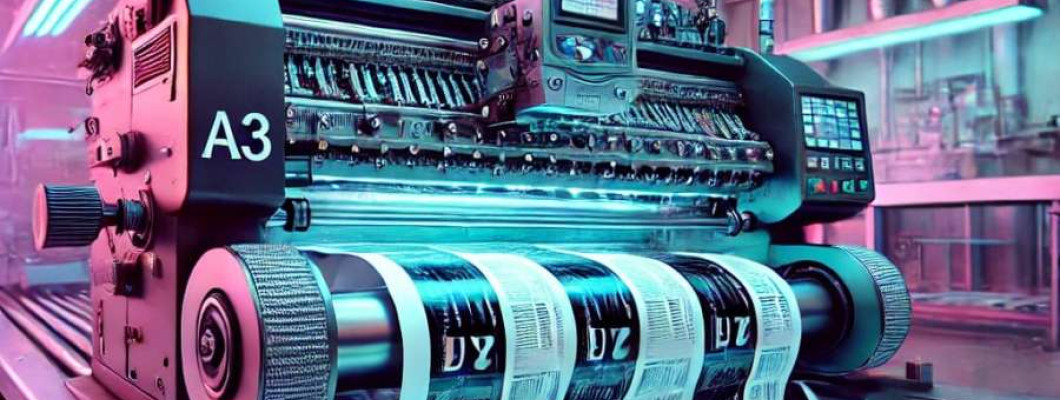
The Industrial Reality of Lifecycle Maintenance Costs in A3 UV Varnish DTF Label Printing
The integration of A3 UV Varnish DTF Printer Machine Label Printer technology into an industrial environment presents a multifaceted challenge, particularly when assessing the lifecycle maintenance costs. Imagine a mid-sized label manufacturing plant operating a fleet of printing devices tasked with high precision and throughput demands. The A3 UV Varnish DTF printer, designed to produce UV varnish-coated, digitally transferred labels, introduces specialized hardware components vulnerable to wear, environmental factors, and operational conditions.
Maintenance costs are often underestimated during initial procurement but rapidly multiply as the device endures print head clogging cycles, UV lamp degradation, and varnish reservoir replenishment. The UV varnish curing system depends on consistent irradiation output measured in milliwatts per square centimeter (mW/cm²), where a 10% drop below threshold significantly impacts curing time and label durability. Operators frequently confront nozzle integrity issues due to varnish viscosity fluctuation, demanding precise thermal and flow regulation at micron-level tolerances. These operational realities necessitate a robust, proactive maintenance regimen to preserve output quality and minimize downtime.
Furthermore, trade-offs between scheduled preventive maintenance and reactive repairs influence the total cost of ownership (TCO), a critical metric for both small-scale artisans and scalable business owners. Documenting wear rates in printhead piezo elements and the frequency of UV lamp replacements in operational hours provides invaluable data to project asset depreciation accurately.
Precision Printhead Failure Modes and Mitigation Strategies
The primary failure points within the A3 UV Varnish DTF Printer revolve around its printhead technology, typically piezoelectric or thermal inkjet variants adapted for UV-curable varnishes. Under continuous operation, factors such as varnish particulate contamination, solvent evaporation, and thermal cycling induce nozzle blockage, reducing effective nozzle counts from an initial average of 128 nozzles per printhead to sub-100 within 1000 operational hours.
Mathematically, the probability of individual nozzle failure P_f can be modeled as P_f = 1 - e^(-kt), where k is a varnish-specific clogging rate constant and t represents operation time in hours. Comparative testing shows that the A3 UV Varnish DTF Printer's printheads exhibit a k value approximately 15% lower than competitors, indicating slower degradation due to optimized ink viscosity and maintenance algorithms.
Thermal management of the printhead assembly is vital. Excessive temperature fluctuations beyond ±5°C lead to microcracks in piezo elements, accelerating failure. Implementing active cooling and real-time temperature feedback loops ensures thermal stability within 40 to 45°C operational range.
UV Lamp Efficiency and Impact on Label Curing Cycle Times
The UV varnish curing process relies on mercury vapor or LED UV lamps emitting in specific wavelength bands (typically 365-405 nm). Lamp irradiance uniformity affects varnish polymerization depth and surface hardness, influencing mechanical label properties such as scratch resistance.
Empirical data indicates the A3 UV Varnish DTF Printer's LED UV lamp produces an average irradiance of 150 mW/cm² at the curing window, sustaining output for up to 4000 hours before irradiance drops below 120 mW/cm². Decreased irradiance elongates curing times by up to 30%, directly reducing throughput efficiency and increasing energy consumption due to extended lamp operation.
Comparative Hardware Analysis in Maintenance and Consumables
| Component | A3 UV Varnish DTF Printer | Conventional Solvent-based Label Printer |
|---|---|---|
| Printhead Nozzle Count | 128 (Piezoelectric) | 64 (Thermal Inkjet) |
| UV Lamp Type | LED UV 365-405 nm | Mercury Vapor |
| Expected Printhead Lifetime | 1500 Operational Hours | 900 Operational Hours |
| UV Lamp Operational Lifetime | 4000 Hours | 2000 Hours |
| Maintenance Cycle Frequency | Every 500 Hours | Every 300 Hours |
| Consumables Cost per 1000 Prints | ~$15 (UV Varnish) | ~$10 (Solvent Ink) |
Data-Driven Operational Cost Modeling and Predictive Maintenance
Operating costs can be quantitatively modeled using maintenance intervals (M_i), print volume (V), and component depreciation (D_c) to predict long-term costs over a fixed lifecycle L (usually 3 years).
Annual maintenance cost C_maint = (L / M_i) * Cost per maintenance session.
Printhead depreciation D_printhead = Purchase cost / L * (Used hours / Total hours).
Integrating sensor feedback for nozzle performance and varnish viscosity permits real-time predictive maintenance scheduling, reducing unplanned downtime by an estimated 25%. This requires robust software infrastructure and skilled maintenance personnel but significantly optimizes operational expenditures.
Scenario Analysis of Business Use-Cases
Scenario 1: High-Volume Industrial Label Production
In environments requiring continuous output exceeding 5000 labels per day, uptime and maintenance intervals critically affect throughput. The A3 UV Varnish DTF Printer’s longer printhead lifetime and UV lamp efficiency reduce downtime frequency, increasing effective printing hours by approximately 18% annually versus conventional printers.
Scenario 2: Boutique Artisan Label Customization
For artisans prioritizing substrate versatility and finish quality, the UV varnish adds tactile and visual attributes. Despite a slightly higher consumable cost, the precision and customizable varnish thickness allows micron-level surface effects unattainable with solvent-based inks, justifying the lifecycle costs.
Scenario 3: Mid-Sized Enterprise with Mixed Print Demand
Businesses balancing batch runs and varied print sizes benefit from modular maintenance schedules the A3 UV Varnish DTF Printer supports through software alerts and component replacement forecasts. This capability supports cost control with predictable budgeting for maintenance and consumables.
Expert FAQ on Technical Maintenance and Operational Nuances
Q1: How does varnish viscosity variation impact nozzle clogging over time?
A1: Viscosity affects flow rates and drying times; higher viscosity increases clog risk exponentially, requiring controlled temperature and shear rates within the printhead.
Q2: What are the thermal thresholds beyond which piezoelectric elements degrade?
A2: Sustained temperatures >50°C induce microfractures; optimal operation maintains 40-45°C with <±5°C variance.
Q3: Can UV lamp irradiance be recalibrated or replaced independently?
A3: Yes, LED UV modules are designed for field replacement; recalibration involves photodiode-based sensors measuring output intensity.
Q4: What metrics are best for predictive maintenance scheduling?
A4: Nozzle dropout rate, varnish flow consistency, and UV irradiance decay curves are critical metrics.
Q5: How do environmental factors like humidity affect the varnish curing process?
A5: Elevated humidity prolongs curing times and can affect adhesive properties; environmental controls or compensated curing profiles are recommended.
Strategic Verdict and Industrial Recommendation
Considering lifecycle maintenance costs with empirical performance data and operational realities, the A3 UV Varnish DTF Printer Machine Label Printer stands as a definitive industrial-grade solution. Its optimized printhead architecture, LED UV lamp longevity, and integrated predictive maintenance capabilities deliver superior uptime and output quality over its lifecycle. These attributes justify its slightly elevated consumable costs through reduced operational bottlenecks and extended printhead lifespans. For enterprises emphasizing scalability, precision, and predictable asset depreciation, this product meets stringent industrial demands, bridging gaps between artisanal quality and large-scale throughput with engineered reliability.