
Lifecycle Maintenance Costs Shape Viability of A3 Edible Food Printer for Industrial Cake and Cookie Production
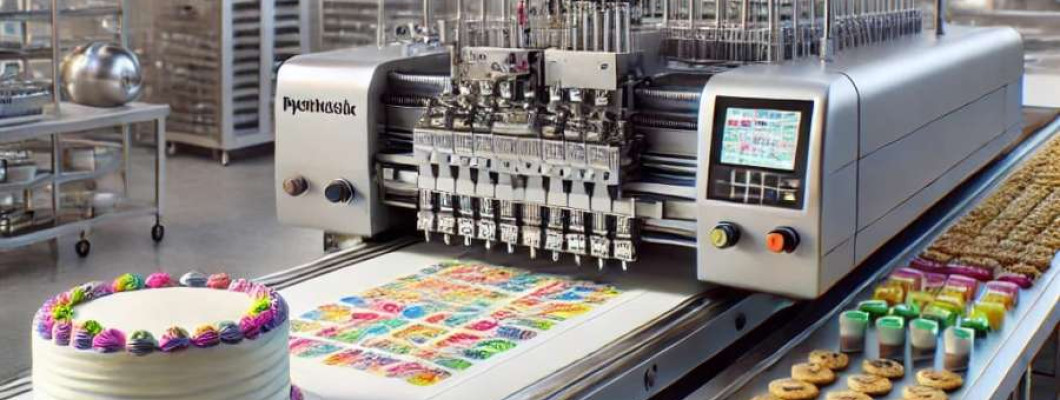
The Industrial Reality Behind High-Precision Edible Food Printing
In an advanced commercial bakery or large-scale confectionery production environment, the introduction of an A3 Edible Food Printer for printing cakes and cookies presents a significant shift in operational workflows. At first glance, the promise of high-resolution, customizable edible prints on multiple substrate types like cakes and cookies might suggest gains in marketing differentiation and product consistency. However, the industrial reality is shaped primarily by lifecycle maintenance costs, which often become the critical bottleneck in sustaining throughput and reliability over time.
Consider a mid-sized bakery scaling operations to supply 5,000 printed cookies per day. The A3 format enables a larger printable area per pass, theoretically improving throughput. Yet, unlike conventional paper printers, edible food printers contend with unique challenges: ink viscosity consistency, residue buildup on nozzles from colored edible inks, and substrate variability introducing unpredictable print head stresses. Regular cleaning cycles and component replacements are mandatory to prevent premature failures but increase downtime and labor overheads.
Furthermore, the food-safe materials and components integrated into the print engine undergo accelerated wear compared to standard inkjet printers due to the specialized ink chemistries and required hygienic maintenance protocols. The cumulative impact of these factors demands a precise understanding of lifecycle costs, as insufficiently planned maintenance leads to operational bottlenecks that erode the ROI and can cause cascading delays in production schedules.
Technical Deep-Dive Into Lifecycle Maintenance Costs and Component Stress
Print Head Wear and Failure Rates
The printhead is the most critical and vulnerable component. Edible inks have higher particulate matter than standard inks, increasing nozzle clogging risks. Assuming a baseline nozzle clog probability of 0.03% per 10,000 prints, for 5,000 cookie prints daily, nozzle cleaning must be scheduled at a minimum every 2 days, translating to 180 cleaning cycles monthly.
Applying a nozzle durability model, the effective lifespan of a print head in edible printing is reduced by approximately 30% against comparable industrial inkjet equivalents. If an industrial-grade printhead normally supports 10 million drops before replacement, the edible variant may only sustain 7 million drops without performance degradation.
Ink Chemistry Interaction and Residue Accumulation
Edible inks typically contain sugar-based carriers and pigment particles with sizes averaging 10 microns, compared to 1 micron in standard inks. This increases sedimentation rates and chemical interaction with internal printhead surfaces. The sedimentation rate R can be approximated by Stokes' Law, R ~ (2/9)(r^2)(ρ_particle - ρ_liquid)g/μ, where r is particle radius. A tenfold increase in r leads to a roughly 100x increase in sedimentation speed, necessitating frequent flushing cycles with food-safe solvents.
Maintenance Cycle Frequency and Labor Impact
Routine maintenance for the A3 Edible Food Printer includes nozzle cleaning, solvent flushing, and printhead calibration, taking approximately 30 minutes per cycle. For 180 cycles monthly, this sums to 90 hours of dedicated labor monthly solely for maintenance, impacting throughput unless automated systems or skilled operators are in place.
Material Compatibility and Mechanical Stress
Substrate variability—ranging from soft frosted cakes to hard cookies—affects mechanical feed systems. Softer substrates require gentle handling to avoid deformation but can increase positional inaccuracies requiring compensation via software. Harder substrates stress feed rollers, increasing replacement frequency every 6 months compared to 12 months for conventional systems, raising materials costs.
Comparative Data Table on Lifecycle Costs Versus Standard Industrial Inkjet Printers
| Criteria | A3 Edible Food Printer | Standard Industrial Inkjet Printer |
|---|---|---|
| Printhead Lifespan (drops) | 7 Million | 10 Million |
| Maintenance Cycle Frequency | Every 2 days | Every 7 days |
| Labor Hours per Month | 90 hours | 25 hours |
| Feed Roller Replacement | Every 6 months | Every 12 months |
| Ink Sedimentation Impact | High (10 micron particles) | Low (1 micron particles) |
Scenario Analysis Highlighting Business Use-Cases
Scenario One Large Industrial Bakery
An industrial bakery producing 10,000 cookies daily requires uninterrupted production cycles. The accelerated maintenance needs of the A3 edible printer directly affect shift planning and labor costs. Allocating trained technicians for rapid maintenance turnaround improves uptime, but the additional headcount increases operational expenditure. The printer's large A3 format reduces print passes but does not fully offset downtime from maintenance, requiring strict lifecycle cost budget oversight.
Scenario Two Boutique Cake Decorator
A boutique cake decorator producing limited runs of customized cakes prioritizes color depth and substrate versatility over throughput. The printer's ability to handle varied cake textures and frosting types with micron-level precision is critical. Lifecycle maintenance is manageable given lower volume, making the trade-off favorable. The downtime due to cleaning cycles is acceptable, preserving print quality and client satisfaction.
Scenario Three Mid-Sized Cookie Manufacturer
This manufacturer balances 5,000 daily outputs with cost efficiency. The printer's maintenance cycle frequency imposes scheduling constraints, but outsourcing maintenance to third-party specialists reduces in-house labor hours. Careful inventory management of consumables like printheads and feed rollers is mandatory to avoid sudden operational halts. The printer's A3 format allows high-resolution multi-cookie printing layouts, improving packaging speed and reducing labor.
Expert FAQ Addressing Advanced Challenges
What specific factors drive faster printhead degradation in edible printing?
High particulate size in ink, sugar residue crystallization, and frequent solvent flushing accelerate mechanical wear and clogging beyond typical inkjet use cases.
How can maintenance cycles be optimized without compromising hygiene standards?
Implementing automated printhead cleaning with food-safe solvents and real-time nozzle health monitoring sensors reduces manual labor and prevents over-cleaning that shortens component life.
What are the thermal management challenges unique to edible printers?
Maintaining stable ink viscosity requires printhead temperature regulation typically between 35-45°C, demanding precise active thermal control systems integrated with production environment conditioning.
How does substrate variability influence mechanical feed system design?
Feed rollers and transport belts must balance grip and softness to prevent substrate deformation while ensuring precise positional accuracy; this often requires modular roller sets optimized per product type.
What modifications improve sedimentation control in edible inks?
Continuous ink circulation systems with gentle agitation, coupled with freshly mixed ink batches and inline filtration, mitigate particle settling and preserve nozzle performance.
Strategic Verdict Advocating the A3 Edible Food Printer
While lifecycle maintenance costs are undeniably higher compared to standard industrial inkjet printers, they reflect intrinsic challenges of edible printing technology that any operator must navigate. The A3 Edible Food Printer for printing cakes and cookies encapsulates advanced engineering adaptations specifically tailored for food-safe, high-resolution output on diverse substrates. Its industrial-grade design accommodates the accelerated maintenance cycles with modular components and established servicing protocols.
From a technical perspective, thorough lifecycle cost modeling and operational discipline can mitigate downtime and optimize throughput, preserving ROI. For business owners balancing throughput, labor costs, and product customization, this hardware stands out as the definitive choice to transition from artisanal to scalable industrial edible printing.
For further detailed industrial-grade specifications and procurement, the A3 Edible Food Printer For Printing Cakes Cookies is recommended as the industry benchmark solution integrating precision, substrate versatility, and foreseeable lifecycle maintenance protocols in a unified platform.