
Lifecycle Maintenance Realities and Hidden Costs of Headstone Photo Printing
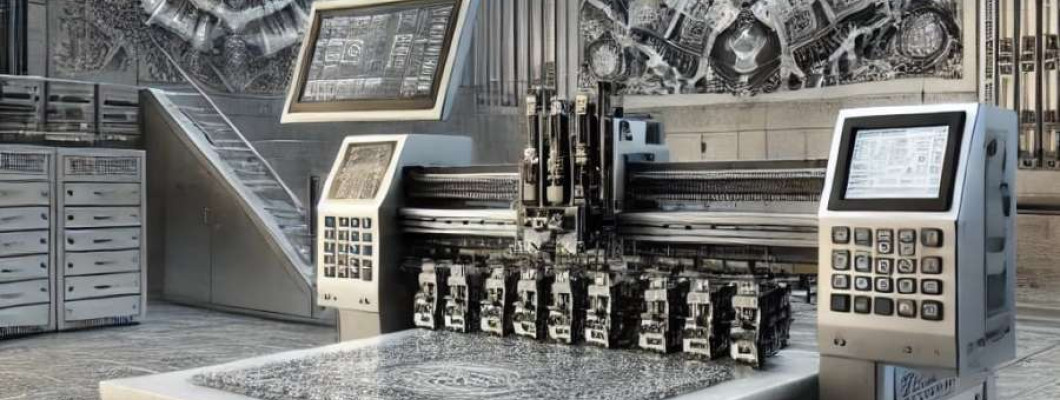
The Industrial Reality of Headstone Photo Printers in High-Demand Settings
Operating headstone photo printers in environments where stone memorials require personalized photographic etching presents a unique set of technical challenges. These printers must consistently deliver micron-level precision and durability under continuous use, often within modest workspace footprints that limit thermal management options. The medium—typically glazed ceramic or treated granite—demands specialized print processes to ensure photographic fidelity over decades of exposure to environmental stressors including UV radiation, temperature fluctuations, and moisture. Without rigorous lifecycle maintenance protocols, printers quickly suffer from printhead clogging, color degradation, and mechanical wear, impacting output quality and operational uptime.
Operational bottlenecks emerge from a combination of ink chemistry instability and mechanical tolerances that drift during extended runs. Industrial users must consider printhead replacement cadence, ink replenishment logistics, and calibration requirements as part of the total cost of ownership. The cumulative effect is a need for predictive maintenance models that preempt failures without excessive downtime, thus preserving throughput and client satisfaction. Particularly in regional manufacturing hubs where supply chains can delay the availability of specialized components, understanding how this printer integrates into wider infrastructure is critical.
Technical Deep-Dive Into the Headstone Photo Printer Architecture
Printhead Precision and Wear Dynamics
Printheads used in headstone photo printers typically employ piezoelectric nozzles with droplet sizes ranging from 4 to 10 picoliters (pl), critical for achieving photographic detail at resolutions near 1440 dpi. Over time, nozzle misfires increase due to particulate ingress and drying ink residues. Assuming a standard 2000-hour operation cycle, a nozzle failure rate of 0.5% per 100 hours can cumulatively reduce effective print precision by 10%. Maintenance schedules must incorporate thorough printhead cleaning sequences every 50 hours with ultrasonic baths to maintain optimal droplet ejection characteristics.
Ink Chemistry and Environmental Durability
Headstone applications require pigment-based UV-curable inks capable of withstanding alkaline stone substrates and outdoor weathering. Ink particle aggregation affects flow viscosity, normally maintained between 12-18 cP at 25°C for jet stability. Over 100 print passes, ink depletion and polymerization kinetics cause color shifts, particularly in dark hues. Periodic ink system purging and replenishment aligned with ambient humidity monitoring are essential to prevent banding defects and fading under natural sunlight.
Thermal and Mechanical Infrastructure Integration
Given typical workspace constraints, thermal management is a persistent concern. Printhead arrays dissipate approximately 50W of heat during continuous operation, necessitating efficient airflow and heatsink integration within a 1500 mm x 1200 mm footprint. Vibration isolation mounts reduce mechanical resonance from stepper motor actuation to under 5 microns amplitude, preserving nozzle alignment and registration precision. The printer's embedded controller facilitates predictive diagnostics using thermal sensors and accelerometers, allowing early detection of component deviations.
Lifecycle Component Replacement Metrics
Consumable replacements include printheads every 12,000 m2 printed, maintenance capping rollers every 5000 m2, and UV lamp modules rated for 3000 hours. Tracking these metrics against actual throughput and environmental conditions enables refined depreciation schedules. Asset longevity is extended through modular component design, allowing onsite swaps without factory recalibration, significantly reducing downtime compared to legacy sealed units.
Data Throughput and Print Job Scalability
Workflows utilize RIP (Raster Image Processor) software that processes 600 MB of image data for a standard 300 mm x 400 mm headstone photo at 1440 dpi. The printer’s onboard storage and USB 3.0 connectivity support batch job queuing with less than 2-second latency per image load. For high-volume operators, integration with MES (Manufacturing Execution Systems) over Ethernet streamlines workload distribution and performance monitoring.
| Parameter | Legacy Inkjet Printer | Headstone Photo Printer |
|---|---|---|
| Printhead Droplet Size (pl) | 10-20 | 4-10 |
| Max Resolution (dpi) | 720 | 1440 |
| Thermal Dissipation (W) | 80 | 50 |
| Ink Type | Dye-Based | Pigment UV-Curable |
| Lifespan (Hours) | 1500 | 3000+ |
| Maintenance Cycle (hours) | 20-30 | 50 |
Scenario Analysis of Business Use-Cases
Small Regional Monument Manufacturer
A medium-scale monument manufacturer handling 10-15 custom headstones weekly faces challenges with printhead clogging given variable regional humidity. The printer’s extended maintenance interval and modular printhead replacement reduce unplanned downtime, improving throughput by an estimated 20%. This translates to a labor cost saving of approximately $1500 monthly.
High-Volume Memorial Production Facility
Facilities producing over 1000 headstones annually rely on robust thermal management and automated queuing features to minimize bottlenecks. The printer's low thermal dissipation and embedded diagnostics enable 24/7 operation with minimal operator intervention. Predictive maintenance forecasting reduces emergency repairs by up to 35%, positively impacting OEE (Overall Equipment Effectiveness).
Artisan Memorial Studio Focused on Ultra-Fine Detailing
Artisan studios prioritize color accuracy and micron-level precision. The printer’s fine droplet size and pigment formulation deliver longevity and vibrancy that withstand decades of weathering. The cost premium is justified by significantly reduced rework rates, enhancing reputation and customer satisfaction.
Expert FAQ on Industrial Headstone Photo Printing
What are the critical indicators for printhead replacement before visible defects appear?
Real-time nozzle health monitoring via sensor feedback detecting increased firing voltage and acoustic resonance shifts provides early warning. Statistical process control algorithms predict imminent failure within a 24-hour advance window.
How does ink polymerization affect long-term color stability on stone substrates?
UV-curable pigment polymer chains cross-link densely on granite surfaces, producing a chemically inert layer. Improper curing leads to sub-surface degradation, resulting in color shifts visible after 12-18 months.
Can the printer operate effectively under fluctuating ambient humidity and temperature?
Embedded environmental sensors adjust printhead temperature and ink flow rates dynamically, maintaining consistency across 30-70% relative humidity and 15-30°C temperature ranges.
What is the impact of mechanical resonance on print registration at 1440 dpi?
Vibration amplitudes exceeding 5 microns induce lateral misalignment causing pixel blur and streak artifacts. Isolation mounts and stepper motor microstepping significantly mitigate these effects.
How does the embedded controller optimize maintenance workflows?
The controller integrates thermal and motion sensor data to generate time-based and usage-based alerts. It interfaces with maintenance management systems through Ethernet for automated work order generation.
Strategic Verdict and Recommendation for Industrial Operators
The Headstone Photo Printer Tomb Photos Printer stands as a definitive industrial-grade solution for headstone photographic printing. Its design addresses the critical challenges of printhead longevity, operational throughput, and environmental integration with precision engineering and embedded diagnostics. For operators balancing throughput demands with the necessity for durable, high-resolution output, this printer offers measurable gains in uptime and quality retention over legacy systems. The modular maintenance architecture combined with UV-pigment ink chemistry ensures both asset longevity and output fidelity, establishing it as a strategic investment with clear ROI benefits and reduced total cost of ownership. Industrial users seeking robust, scalable print solutions for personalized memorialization projects should consider this hardware the baseline standard for the coming decade.