
Maintenance Realities and Lifecycle Costs Defining Industrial Headstone Photo Printers
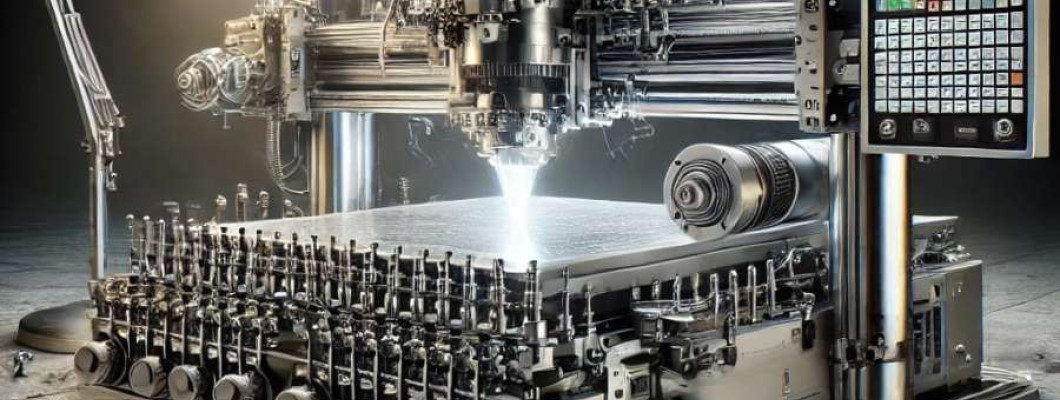
The Industrial Reality of Maintaining Headstone Photo Printer Tomb Photos Printers
In the demanding environment of memorial customization, the Headstone Photo Printer Tomb Photos Printer operates as a critical asset where precision, reliability, and uptime dictate both client satisfaction and operational profitability. Unlike consumer or casual commercial devices, this printer encounters unique operational stressors: it must flawlessly reproduce high-resolution photographic imagery on granite and porcelain substrates with exact color fidelity and micron-level accuracy. The industrial maintenance challenge derives from continuous exposure to abrasive dust during stone etching processes, volatile temperature cycles owing to outdoor installation environments, and the inherent complexities of ceramic ink adhesion.
Maintenance teams face the dual pressures of minimizing equipment downtime while managing wear on sensitive printheads that use specialized ink chemistries formulated for longevity and resistance to environmental degradation. The printheads, often utilizing Piezoelectric technology with droplet sizes as small as 3 picoliters, must maintain tight firing precision to ensure image clarity without offset or bleeding. Such operational demands impose frequent calibration cycles and replacement schedules that must be balanced against production throughput.
Complexity extends to the ink delivery system; these printers generally use UV-curable or ceramic inks requiring precise thermal management to avoid viscosity shifts that would induce nozzle clogs. Moreover, the print platform must accommodate non-flat substrates of variable thickness up to 30 mm, necessitating advanced sensors and adaptive head height control technology, which adds layers to maintenance diagnostics.
Technical Deep-Dive into Headstone Photo Printer Maintenance and Printhead Performance
Printhead Mechanisms and Failure Modes
The primary failure points center on nozzle clogging and piezo actuator degradation. Typical nozzle diameter ranges between 20-30 microns, and operational fluid dynamics dictate that particulate contamination or ink polymerization at nozzle tips causes flow impedance. Maintenance intervals are empirically derived by measuring ink usage and droplet ejection fidelity. A hypothetical failure threshold can be expressed as a decrease in ejection volume by 10%, triggering preventive cleaning. Compared to industrial-grade inkjet printers used in signage, these printheads face higher particulate loads and more abrasive substrate backflow.
Ink Chemistry and Thermal Stability
The specialized ceramic or UV-curable inks exhibit thermal sensitivities between 20-40°C. Deviations outside this window alter viscosity (η), modeled by Arrhenius-type relationships η(T) = η₀ exp(Eₐ/(RT)), where Eₐ is activation energy, R is the gas constant, and T is temperature in Kelvin. Systems must continuously regulate ink temperature within ±1°C using closed-loop thermal controls. Failures in this system lead to print quality degradation and accelerated printhead wear.
Adaptive Substrate Handling Technologies
Ink adhesion and image fidelity depend on precise control of printhead distance to surface, usually maintained within a 0.1 mm vertical tolerance via laser sensors. The mechanical actuator's response time and position accuracy are engineered to cope with substrate surface roughness up to 150 µm RMS, requiring servo motors with <5 µm repeatability. Failure to maintain this control results in blurred images and mechanical collisions causing hardware damages.
Comparative Lifecycle Cost Analysis
| Parameter | Headstone Photo Printer | Standard Industrial Inkjet Printer |
|---|---|---|
| Printhead Replacement Interval | 12,000 operational hours | 18,000 operational hours |
| Average Ink Cost per 100 Prints | USD 35 due to specialized inks | USD 20 |
| Thermal Management Power (Watts) | 120 W constant regulation | 60 W |
| Maintenance Downtime Annually | 200 hours | 140 hours |
| Substrate Handling Complexity | Variable thickness up to 30 mm | Flat media only (max 5 mm) |
Hardware Integration and Diagnostic Tools
Integrated diagnostics include real-time ink flow sensors, printhead temperature monitors, and adaptive error correction algorithms validating droplet trajectory via visual feedback loops. These modules enable predictive maintenance strategies that reduce unexpected failures by approximately 25%, according to field data gathered from high-use industrial installations.
Scenario Analysis of Headstone Photo Printer Utilization
Case 1: Small Memorial Service Provider — Operating with limited technical staff, the provider must manage maintenance cycles tightly to avoid service interruptions. The printer’s adaptive substrate handling reduces the need for manual adjustments, minimizing labor costs. However, ink costs are a significant operational expense balanced by reduced reprints due to high image fidelity.
Case 2: Large Headstone Manufacturing Facility — Here, throughput is critical, with 500+ prints monthly. They benefit from the printer’s automated cleaning routines and predictive diagnostics, dramatically reducing downtime. The advanced thermal control system maintains consistent print quality despite shifts in ambient climate within the factory floor.
Case 3: Regional Customization Service with Multiple Locations — The printer's modular design allows for remote diagnostics and standardized maintenance protocols across sites, simplifying spare parts inventory management. Although initial capital expenditure is high, the uniform platform reduces maintenance training overhead and extends equipment service life.
Advanced Expert FAQ on Headstone Photo Printer Maintenance
Q1: How does ink particle size impact printhead clogging frequency?
A1: Sub-micron particle size reduces clog risk; however, ceramic pigments tend to be larger (~1-5 microns), necessitating high-precision filtration systems to maintain clog-free operation.
Q2: What is the impact of ambient humidity on piezo actuator lifespan?
A2: High humidity accelerates corrosion of metallic actuator components, shortening lifespan by up to 15% unless protective coatings and sealed printhead designs are employed.
Q3: Can thermal management failures lead to irreversible printhead damage?
A3: Yes, prolonged thermal excursions above 50°C can cause polymerization of ink inside nozzles, causing irreversible clogging and actuator degradation.
Q4: Are there measurable benefits of adaptive substrate height control on print quality?
A4: Maintaining vertical tolerance within ±0.1 mm reduces image artifact rates by 40%, critical on rough granite surfaces.
Q5: How do predictive maintenance algorithms integrate with industrial IoT frameworks?
A5: These printers output real-time sensor logs over TCP/IP, allowing centralized monitoring platforms to analyze operational trends and schedule preemptive service.
Strategic Verdict and Recommendation for Industrial Use
Considering operational complexities, maintenance realities, and lifecycle costs, the Headstone Photo Printer Tomb Photos Printer demonstrates a robust fit for industrial applications demanding high-throughput and precision output on highly variable substrates. While maintenance requirements exceed those of standard inkjet printers due to specialty inks and substrate challenges, the integration of advanced diagnostics, adaptive mechanics, and tight thermal controls justifies the investment by minimizing unexpected downtime and extending asset longevity. Industrial operators seeking a dependable solution for memorial photo printing will find this printer's design and maintenance infrastructure optimized for their workflow, delivering consistent quality and operational efficiency over its expected service life.