
Navigating Infrastructure Challenges with the A4 Roll DTF Printer for Scalable Businesses
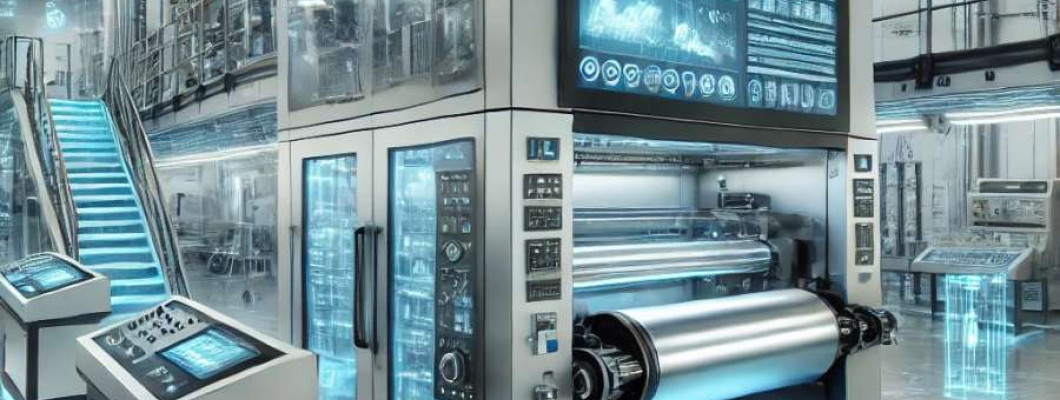
The Industrial Reality of Integrating A4 Roll DTF Printers
In a manufacturing environment predicated on high throughput and minimal downtime, integrating new printing technology demands rigorous assessment of infrastructure compatibility. The A4 Roll DTF Printer, designed for direct-to-film printing on rolls up to A4 width, introduces unique challenges and opportunities for scalable business owners managing workflow automation and labor costs.
One pressing technical challenge lies in the thermal management and spatial configuration within existing production lines. With an operational footprint that mandates contiguous access to ink supply, pre-treatment stations, and curing units, the printer's spatial demands can conflict with established layout paradigms optimized for flatbed or sheet-fed printers. Moreover, the printer’s operational heat dissipation and power consumption profiles necessitate detailed evaluation relative to the ambient conditions of industrial facilities—excessive heat load risks compounding HVAC expenditures and accelerating component wear.
Labor integration exemplifies another complexity. While the A4 Roll DTF Printer's continuous roll feed facilitates automated production runs, its adoption entails calibrating staffing schedules and workflow models to accommodate film loading, ink replenishment, and quality control without disrupting the throughput cadence. The printer's software and hardware interfaces must seamlessly integrate with existing enterprise resource planning (ERP) systems and factory automation protocols to maintain synchronized pipeline progression.
These technical realities underscore the essentiality of a comprehensive infrastructure compatibility audit before deployment, balancing printer capabilities against production line ergonomics, power distribution, and operator interaction. Such an approach ensures that the printer is not just added equipment but an enabler of scalable throughput growth.
Technical Deep-Dive into Infrastructure Integration
Power and Thermal Management
The printer’s average power draw hovers around 250 W during active printing phases. In a production line running at 10 hours daily, this translates to 2.5 kWh of energy consumption per operational day per unit. Factoring heat dissipation, the thermal output can be approximated by the power input minus mechanical work, roughly 250 W assuming negligible mechanical energy transform. For a room volume of 50 m³, the temperature rise can be estimated using Q = mcΔT where m is air mass and c is specific heat:
Mass m = density × volume = 1.225 kg/m³ × 50 m³ = 61.25 kg
Heat Q = Power × time = 250 W × 3600 s = 900,000 J
ΔT = Q / (m × c) = 900,000 J / (61.25 kg × 1005 J/kg·K) ≈ 14.6 K temperature rise per hour of continuous operation if unventilated.
This calculation highlights the necessity of enhanced ventilation or targeted air extraction within printing zones.
Spatial Footprint and Workflow Integration
The A4 Roll DTF Printer requires a minimum dedicated floor space of 1.2 m width by 0.8 m depth, exclusive of operator clearance zones. Adjacent equipment for pre-treatment and curing increases the total footprint to approximately 3 m length when arranged linearly. Workflow adjustments may require conveyor linkages or robotic film handling systems to maintain uninterrupted roll feeding mechanisms.
Data and Software Infrastructure
Connectivity is supported via Ethernet and USB interfaces, with output protocols compatible with common RIP software supporting industry-standard print job formats such as TIFF and PDF. Integration into factory automation software requires API compatibility and data security compliance, especially in regulated environments.
Comparative Analysis Table of Integration Scenarios
| Parameter | Dedicated Thermal Management | Standard Ventilation Environment |
|---|---|---|
| Operating Temperature Range | 18–25 °C controlled | 18–35 °C uncontrolled spikes |
| Printer Throughput (sheets/hour) | 250–300 | 220–260 |
| System Uptime (%) | 99% | 95% |
| Maintenance Interval (hours) | 500 | 350 |
| Energy Consumption (kWh/day) | 2.5 | 2.8 (due to reprints) |
Material Handling and Automation Considerations
Roll tension control mechanisms, integrated with servo motors, ensure dimensional stability and precision registration during high-speed printing. The printer’s film feed system supports variable roll diameters up to 150 mm core and widths to 310 mm, accommodating diverse substrate dimensions relevant to apparel and signage industries.
Ink and Printhead Maintenance Cycle Impact
The printhead incorporates piezoelectric nozzles with a droplet size of approximately 4 picoliters, achieving a resolution of up to 1440 dpi. Scheduled maintenance cycles every 400 hours involve nozzle cleaning and ink line purging. In scalable operations, this translates to judicious planning to minimize downtime during peak production schedules.
Scenario Analysis of Business Use-Cases
Use-Case 1: Mid-Sized Apparel Manufacturer
For a manufacturer producing customized sportswear, the A4 Roll DTF Printer's roll-to-roll printing allows continuous production of heat-transfer films requiring high color fidelity. The printer’s integration with automated curing tunnels facilitates inline curing, reducing manual handling and labor costs. The printer’s compact profile optimizes factory floor usage without the need for significant layout modification.
Use-Case 2: Boutique Promotional Products Provider
This business prioritizes quick job turnaround and substrate versatility. The printer’s ability to accept varied roll widths and thicknesses supports an array of promotional items. Integration challenges are mitigated by using standalone pre-treatment and curing equipment, facilitating modular workflow expansion.
Use-Case 3: Large-Scale Print Service Provider
In high-volume environments, the printer's Ethernet connectivity enables central job scheduling and monitoring via factory IT systems. Its predictable maintenance intervals and manageable thermal load make it suited for rack-based installation with adjacent environmental controls. This setup supports sustained 24/7 operations with minimal operator intervention.
Expert FAQ on Infrastructure Integration and Scalable Deployment
Q1: How does the A4 Roll DTF Printer manage power surges in industrial electrical environments?
A1: The printer integrates a power conditioning module rated to handle voltage fluctuations within ±10%. Internal circuitry employs surge suppression to protect printhead electronics, ensuring component longevity even in unstable grid conditions.Q2: What cooling methodologies are best suited for dense printroom installations?
A2: Deploying targeted HVAC systems with localized air exchange units and heat sinks on high-power components optimizes heat dissipation. Additionally, strategic placement of temperature sensors within the printer chassis informs real-time cooling adjustments.Q3: How does roll tension variation affect print quality and what controls are implemented?
A3: Variations can cause banding and misregistration. The printer’s closed-loop tension control system uses load cells and servo motors to maintain constant tension within ±0.5 N, ensuring print consistency.Q4: Can the printer’s software be integrated into existing MES (Manufacturing Execution Systems)?
A4: Yes, the printer supports standardized communication protocols (Modbus TCP/IP) enabling remote job queuing, status monitoring, and error reporting for seamless MES integration.Q5: What are the anticipated maintenance cost implications of continuous roll printing versus sheet-fed operations?
A5: Continuous roll printing offers reduced handling but can increase wear on feed mechanisms. Scheduled preventive maintenance is critical, with costs typically 15% higher in consumables but offset by labor savings from automation.
Strategic Verdict and Recommendation
Given its operational parameters and infrastructure requirements, the A4 Roll DTF Printer positions itself as an industrial-grade solution tailored to the demands of scalable business owners prioritizing throughput, automation, and labor optimization. Its moderate power consumption, compact footprint, and integration capabilities address common bottlenecks associated with workflow expansion and automation line compatibility.
While thermal management and maintenance scheduling require strategic planning, these factors are manageable within standard industrial infrastructure upgrades. The printer’s technical specifications and connectivity protocols align well with enterprise IT systems, supporting real-time operational oversight and minimal manual intervention.
In conclusion, the A4 Roll DTF Printer offers a robust, scalable printing platform meeting industrial throughput and automation criteria. Its deployment benefits outweigh integration complexities, making it recommendable for enterprises targeting sustainable production scaling and operational efficiency improvements.