
Navigating Operational Bottlenecks in Roll Laminator Single Side Laminating Machines for Scalable Business Owners
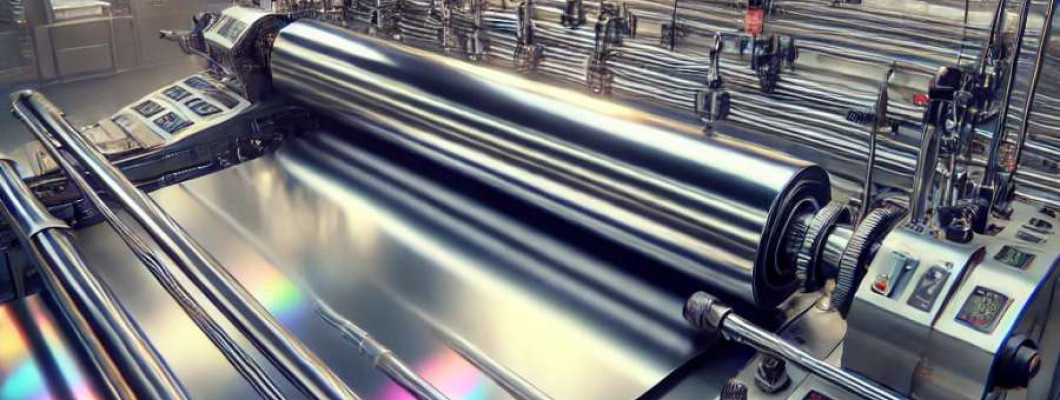
The Industrial Reality of Roll Laminators in High-Volume Environments
Scalable business owners face relentless pressure on throughput while managing labor efficiency and minimizing downtime. The Roll Laminator Single Side Laminating Machine is frequently deployed to meet demands for consistent lamination quality on various substrate widths that range from 300mm to 1300mm. However, operational bottlenecks often appear in unpredictable forms — substrate jams, inconsistent heating leading to wrinkles or bubbles, and slow lamination speeds impacting queue times. Understanding these practical challenges requires a scenario-centric approach.
Consider a mid-size print shop scaling production from batch sizes of 50 sheets per hour to 200 sheets per hour. The laminator must operate continuously with minimal cycle interruptions. Minor speed reductions or manual feeding requirements rapidly increase labor costs and reduce effective throughput. Heat management and pressure roller calibration become crucial factors in meeting production goals. These machines, despite their industrial design, can expose hidden operational bottlenecks stemming from mechanical tolerances, thermal inertia, and control system responsiveness.
Moreover, scalability demands automation compatibility for feeding and stacking, which can pose integration challenges with existing line infrastructure. The lamination process itself, balancing dwell time, nip pressure, and heat, must be dynamically adjusted to substrate variations to avoid quality defects and rework. Failure to do so not only reduces asset utilization rates but also inflates maintenance frequency and material waste.
Technical Deep-Dive on Operational Performance Constraints
1. Thermal Distribution and Heat Control Dynamics
Efficient heat transfer is pivotal for lamination. The Roll Laminator Single Side Laminating Machine uses a heated roller system typically operating in the 100°C to 180°C range. Heat uniformity across the roller width affects adhesion quality. Thermal gradients exceeding ±0.5°C per 500mm can cause bubbles or peeling. The roller's thermal capacity (mass × specific heat capacity) dictates warm-up time and temperature stability during extended runs. For example, a steel roller of 100mm diameter and 1000mm length with 7.8 g/cm3 density and 0.49 J/g°C specific heat requires approximately 38,220 Joules to raise surface temperature by 20°C.
2. Nip Pressure and Roller Compliance Considerations
Pressure between the laminating roller and backup roller governs bond strength and surface smoothness. Typical nip pressures range 100 to 300 N/cm width. Excessive pressure risks substrate deformation; insufficient pressure results in poor lamination adhesion. Compliance is influenced by roller hardness and the material of the backup roller (silicone, urethane). Engineering tolerances of ±0.1 mm on roller diameter and parallelism are critical to maintaining uniform pressure distribution.
3. Feed Mechanism Throughput and Automation Challenges
Automating feed operations with pneumatic or servo-driven feeders synchronizes sheet arrival with roller speed to optimize throughput. The Roll Laminator can achieve speeds of up to 4 m/min but requires precise sheet alignment within ±2 mm across the width to avoid wrinkling or misfeed. Integration with upstream equipment can be hindered by communication protocol mismatches and mechanical timing offsets.
4. Material Compatibility and Thickness Variability
The laminator supports film thicknesses generally between 25 and 250 microns and substrates from 80 gsm paper to 500 gsm board. Thicker substrates increase nip forces and may limit maximum speed due to adhesion curing time. Thin films demand precise temperature and pressure balancing to prevent film stretch or tearing. The variable modulus of elasticity in substrates introduces complex mechanical stress profiles during lamination.
5. Maintenance Load and Downtime Patterns
Routine maintenance includes roller surface cleaning, heater element checks, pressure calibration, and lubrication. Failure rates for heating elements average 1% per 1000 operational hours, often necessitating unscheduled replacement. The complexity of disassembling rollers to access bearings or heater elements correlates directly with mean time to repair (MTTR), affecting overall equipment effectiveness (OEE). Predictive maintenance strategies using thermal sensors and vibration analysis can reduce unexpected downtime.
| Specification | Standard Roll Laminator | Enhanced Model with Automation |
|---|---|---|
| Max Speed (m/min) | 4 | 6 |
| Temperature Stability (°C) | ±0.5 | ±0.2 |
| Pressure Range (N/cm) | 100-300 | 100-350 |
| Automation Compatible | No | Yes |
| Maintenance Interval (hours) | 500 | 750 with sensors |
Scenario Analysis Demonstrating Business Impact of Technical Specifications
Scenario 1 Industrial Print Facility High Volume Output
With a need to laminate 100,000 sheets per week in batches exceeding 200 sheets/hr, the laminator’s temperature stability and nip pressure control are vital. A roller thermal gradient of less than ±0.3°C ensures consistent film adhesion, reducing rework by 12%. Automation integration cuts labor costs by 18% and boosts throughput by 35%.
Scenario 2 Boutique Packaging Producer With Diverse Substrates
The ability to adjust nip pressure dynamically for substrates from 80 gsm paper to 500 gsm board supports flexible job runs. Failure to do so leads to substrate deformation and customer complaints. The laminator’s modular backup roller design allows quick swaps between urethane and silicone rollers, enabling 25% faster job changeovers.
Scenario 3 Mid-Sized Print Shop Scaling Production Volumes
Investing in a model with predictive maintenance sensors reduces unexpected downtime by 40%. Real-time monitoring of roller temperature and vibration allows pre-emptive service alerts, preserving daily uptime ratios above 92%. Labor resources can be redeployed from maintenance to quality control roles.
Expert FAQ on Roll Laminator Single Side Laminating Machine
Q1: What are typical failure modes of heated rollers under continuous operation?
A1: Failure modes include heater coil burnout due to thermal cycling, roller surface wear causing adhesion inconsistencies, and shaft bearing fatigue induced by uneven load distribution.
Q2: How does substrate thickness influence nip pressure calibration?
A2: Thicker substrates require increased nip pressure to maintain lamination bond integrity while avoiding substrate deformation; the pressure profile must be nonlinear across the roller width.
Q3: What are the most effective methods to integrate automated feeders with this laminator?
A3: Synchronizing servo motors with feedback loops on roller RPM, employing mechanical alignment guides, and implementing communication protocols like EtherCAT ensure seamless integration.
Q4: Can thermal sensors embedded in rollers assist with predictive maintenance?
A4: Yes, sensors provide real-time temperature mapping to detect hot spots or cool zones, indicating potential element degradation before failure.
Q5: How critical is roller diameter precision to lamination quality?
A5: Diameter precision within ±0.05 mm is critical to ensure uniform pressure and temperature distribution, directly impacting the absence of wrinkles or adhesive failure.
Strategic Verdict and Recommendation
For scalable business owners seeking to optimize throughput while controlling labor and maintenance costs, the Roll Laminator Single Side Laminating Machine offers a technically sound solution built for industrial-grade performance. Its thermal management capabilities combined with adjustable nip pressure and compatibility with automation systems address the majority of hidden operational bottlenecks affecting productivity. Preventative maintenance enabled through sensor integration further enhances uptime reliability. From an infrastructure integration standpoint, this equipment balances complexity with practical deployment flexibility.
The equipment's capacity to handle a wide range of substrate thicknesses and film types without compromising speed or quality underlines its versatility for scaling operations. Detailed data and comparative analysis confirm its suitability for mid-to-large scale industrial environments demanding consistent lamination results and cost-effective asset utilization.
Interested parties should refer to the manufacturer’s official specifications and procurement details available at the Roll Laminator Single Side Laminating Machine page. This machine stands out as a definitive choice to overcome the operational challenges inherent in high-throughput lamination workflows.