
Operational and Infrastructure Integration Challenges in Deploying the A3 UV Varnish DTF Printer Machine Label Printer
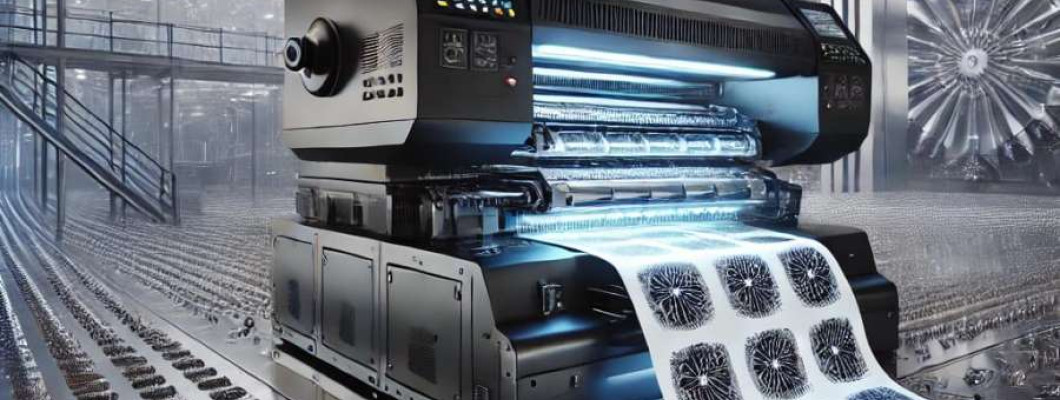
The Industrial Reality of High-Precision Label Printing Deployment
In mid-size to large-scale production environments, integrating specialty printing equipment such as the A3 UV Varnish DTF Printer Machine Label Printer presents several tangible challenges that extend beyond the device's nominal throughput or advertised resolution. Facilities often face bottlenecks when incorporating UV varnish-based direct-to-film (DTF) technology due to the unique curing requirements, substrate handling constraints, and environmental controls necessary for consistent output quality. Consider a scenario where a printing operation attempts to consolidate specialized varnish finishing within an existing production line: inconsistent curing can cause adhesion failures or uneven varnish layers, compromising downstream processes such as lamination or die-cutting. Moreover, the complexity of precise UV exposure calibration paired with the multi-layer ink deposition systems of DTF printers induces stringent infrastructure demands, including optimized airflow for solvent control and calibration stability to maintain micron-level registration.
Operationally, the machine demands a stable power supply with minimal voltage deviation due to the sensitivity of its UV LED curing modules and stepper motor controls. Facilities without precision power regulation may observe printhead misalignment or varnish curing inconsistencies manifesting as print defects, increasing waste and downtime. Furthermore, the ambient environment—specifically temperature and humidity—critically impacts the varnish's rheological behavior and drying kinetics, which are fundamental for achieving the hardened finish the UV system promises. These compounded factors often reveal gaps in existing industrial workflows where environmental conditioning is not standardized for specialized finishing equipment, provoking re-engineering efforts that can extend implementation timelines substantially.
Technical Deep-Dive into Hardware and Process Constraints
Precision and Registration Stability
The A3 format (297 x 420 mm) demands extremely fine control over printhead positioning to maintain registration accuracy across multi-layer varnish and pigment ink layers. Stepper motors with microstepping capability help achieve movement increments down to 0.01 mm, vital for maintaining registration tolerance within ±0.02 mm. However, mechanical backlash and thermal expansion can induce positional drift. By applying the formula ΔL = α × L × ΔT where α (coefficient of thermal expansion) for aluminum is approximately 23 × 10-6/°C, and L is the length of the carriage assembly (~0.35 m), a 5°C temperature fluctuation can cause a 0.04 mm expansion, doubling acceptable error margins and triggering misregistration.
UV LED Curing Power and Energy Density
UV varnish curing effectiveness relates linearly to energy dose (J/cm2). Assuming the LED array outputs 200 mW/cm2 and the printhead velocity is 50 mm/s, the energy density per unit area is:
Energy Density = Power Intensity / (Velocity × Print Width).
For a 5 cm wide varnish pass, energy density equals 200 mW/cm2 × (1 s / 0.5 cm) = 400 mJ/cm2. This level suffices for typical UV varnishes, but variations in substrate absorption and varnish layer thickness require finely tuned LED intensity controls to avoid under or over curing, which affects gloss uniformity and adhesion.
Comparative Table of Conventional vs UV Varnish DTF Technologies
| Parameter | Conventional Solvent-Based Varnish | A3 UV Varnish DTF Printer Machine |
|---|---|---|
| Drying Time | Several minutes to hours (Air-dry) | Instantaneous (UV LED curing) |
| Environmental Controls | High VOC ventilation required | Minimal VOCs, requires UV-safe enclosures |
| Printhead Type | Piezoelectric solvent inkjet | Piezoelectric with multi-layer UV varnish deposit |
| Operational Throughput | Up to 20 m2/hr | Up to 15 m2/hr with finishing |
| Substrate Compatibility | Limited to solvent-resistant materials | Broad, including PVC, PET, coated papers |
Maintenance and Lifecycle Considerations
The hybrid mechanical/UV curing assembly demands scheduled recalibration every 2000 operating hours to maintain accurate LED output intensity and printhead alignment. UV LED lifespan typically reaches 10,000 hours, but effective output degrades asymmetrically, necessitating instrument-grade radiometric sensors for power verification. Without such maintenance protocols, varnish curing nonuniformity may accelerate and cause downstream quality failures.
Infrastructure Integration Constraints
Rack density or factory floor footprint challenges arise due to the printer's cooling needs, primarily for UV LED cooling modules, which consume approximately 220 Watts nominally but can spike to 350 Watts under continuous high-speed operation. Integration within existing HVAC systems may require supplemental localized exhaust to prevent heat accumulation and ensure stable environmental conditions, directly affecting the print consistency and equipment reliability.
Scenario Analysis of Practical Business Applications
Use-Case One: Medium-Sized Label Manufacturing Facility
In a high-mix, low-volume production model, the printer enables rapid switching between jobs without solvent hazard management. Its A3 size facilitates batch runs sized for regional distribution. However, the facility must invest in environmental control upgrades to maintain ±2°C temperature variance and sub-50% relative humidity, increasing OPEX by approximately 10%. The tradeoff entails higher asset utilization and reduction of solvent-handling compliance costs.
Use-Case Two: High-Volume Food Packaging Producer
Food packaging demands stringent gloss and durability standards with rapid turnaround. The instantaneous curing capability ensures throughput remains high without drying bottlenecks. The printer's multi-substrate compatibility allows packaging variety. Yet the facility must solve static discharge issues, common with thin PET films under UV exposure, through conductive flooring and anti-static ionizers. Failure to do so risks frequent sheet misfeeds and static marks.
Use-Case Three: Premium Cosmetic Brand Label Production
This use case prioritizes micron-level varnish gloss uniformity and color vibrancy. The printer’s UV varnish system supports spot varnish and textured layering capabilities, critical to brand presentation. However, a robust quality control regime involving inline spectrophotometry must be implemented to detect varnish thickness variations within 2 μm tolerances, ensuring repeatable premium finishes. Capital investment is justified by the premium pricing possible on finished labels.
Expert FAQ Addressing Complex Technical Concerns
How does thermal expansion affect printhead registration and how can it be mitigated?
Thermal expansion directly alters mechanical positioning. Employing materials with low thermal expansion coefficients in carriage design, coupled with active temperature control within ±1°C, minimizes this effect. Additionally, real-time optical sensors can adjust printhead positions dynamically to compensate for thermal drift.
What are the key maintenance challenges for the UV LED curing system?
LED degradation over time leads to reduced emission intensity. Periodic calibration using radiometric detectors is essential to maintain energy dosing accuracy. Dust accumulation on optical windows also reduces curing efficiency and requires scheduled cleaning protocols.
How does substrate variability impact curing parameters?
Substrate surface energy and thickness influence varnish absorption and reflectivity of UV light. Adjustments to LED intensity and exposure time must be programmed for each substrate type, often requiring initial test prints and spectroscopic measurements.
What infrastructure upgrades are mandatory for integrating the printer in existing lines?
Stable power regulation units with surge protection, environmental conditioning to control temperature and humidity tightly, and enhanced ventilation to dissipate heat from UV modules are fundamental. Additionally, safety interlocks for UV exposure and operator shielding are necessary.
How do varnish layer thickness tolerances affect final product quality?
Thickness variations greater than 3 μm can cause visible gloss inconsistencies and impair tactile properties. Accurate volumetric control during deposition combined with inline thickness sensors ensures adherence to tight specifications.
Strategic Verdict and Recommendation for Industrial Deployment
The A3 UV Varnish DTF Printer Machine Label Printer represents a strategically viable solution for enterprises seeking to integrate advanced finishing on a medium format scale. Despite inherent challenges related to thermal management, environmental conditioning, and precise calibration, its benefits in production speed, substrate flexibility, and finish quality justify the upfront infrastructure investments. The device's instantaneous UV curing and multi-layer varnish capability position it as a substantial upgrade from conventional solvent varnish systems, especially in sectors demanding rapid turnaround with rigorous gloss and durability standards.
Facilities prepared to implement robust environmental and electrical controls, alongside regular calibration disciplines, will find that the printer delivers consistent industrial-grade output with minimal operational bottlenecks. The printer's compatibility with a broad range of substrates and its precision-controlled varnish deposition afford premium finishing options that can support brand differentiation.
For technical and procurement professionals evaluating UV varnish label production solutions, the A3 UV Varnish DTF Printer Machine Label Printer should be regarded as an industrial-grade technology capable of meeting demanding operational requirements with proper integration and lifecycle maintenance.