
Operational Bottlenecks and Integration Challenges of the A3 Roll DTF Printer T-shirt Printing Machine for Scalable Business Owners
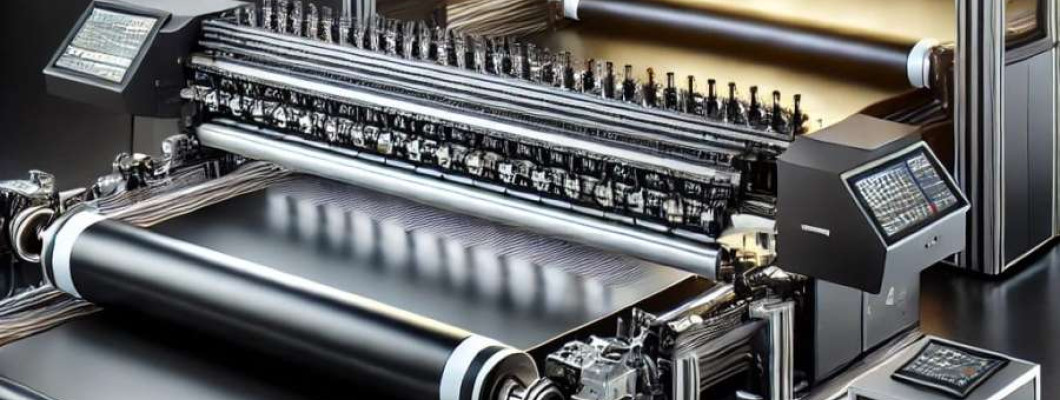
The Industrial Reality of Scaling with A3 Roll DTF Printing
In industrial-scale textile printing, effectively managing throughput while maintaining high fidelity output is a paramount challenge. The A3 Roll DTF Printer T-shirt Printing Machine positions itself as a potential solution for scalable business owners focused on throughput, automation, and controlling labor costs. However, the transition from small-scale to larger production runs introduces operational bottlenecks often overlooked in initial assessments.
Consider a mid-tier apparel printing business aiming to increase daily output from 200 to 800 T-shirts. The technical challenge lies not only in print speed but also in material handling, drying times, and ink replenishment cycles. The printer’s roll-fed design allows continuous media input, which theoretically increases uptime. Yet, bottlenecks in curing processes and automated handling can cause unplanned downtime or require excess manual intervention, impacting labor efficiency.
Moreover, integrating the printer into existing workflow systems demands synchronization across pre-treatment, printing, and post-processing stations. Infrastructure constraints such as power supply, space, and environmental controls are also significant. An analysis of these factors is necessary for any business owner contemplating this technology as a scalable asset.
Technical Deep-Dive into Throughput and Automation Mechanics
Print Speed Versus Practical Throughput
The A3 Roll DTF Printer operates with a nominal print speed of approximately 1.5 m/min at 600 dpi resolution for high-detail images. For a standard A3-sized print area (320 mm width), this translates to roughly 4.7 m2/hour. However, factoring in downtime for media loading/unloading, color channel calibration, and preventive maintenance, effective throughput often decreases by 15-20%.
Mathematically, if T is theoretical throughput in m2/hour, and D is average downtime fraction, effective throughput (E) can be approximated by E = T * (1 - D). For T=4.7 and D=0.18, E ≈ 3.85 m2/hour.
Ink Delivery System and Replenishment Cycles
The printer employs piezoelectric printheads that dispense ink droplets sized approximately 4-6 pl. Continuous ink circulation minimizes nozzle clogging but increases ink consumption during idle phases. Labor cost implications arise from the frequency of cartridge replacement and ink refilling, which averages every 6-8 hours under steady operation.
Drying and Curing Bottlenecks
Post-print curing utilizes infrared dry ovens calibrated for pigment fixation on polyester blends. The drying rate is the critical path in throughput, with drying requiring approximately 2-3 minutes per meter of printed substrate at 80°C. Attempts to accelerate drying risk ink bleeding and compromised adhesion, influencing product quality and labor rework.
Media Handling and Roll Management
The roll-to-roll mechanism supports media widths up to 340 mm and a maximum roll diameter of 150 mm. However, mechanical tension maintenance is essential; improper tension can cause media misalignment resulting in banding artifacts. Automation of media feeding and take-up reels reduces labor but necessitates precise calibration and periodic adjustment to maintain registration accuracy within +/- 0.1 mm.
Environmental and Infrastructure Integration
Power consumption averages 750 W during peak operation, requiring stable 220V/10A supply with surge protection. The machine’s footprint is approximately 1.8 m by 0.8 m, necessitating dedicated workshop floor space with ambient temperature control between 20°C and 25°C to ensure consistent ink viscosity and curing performance.
| Specification | A3 Roll DTF Printer | Traditional Flatbed DTG Printer |
|---|---|---|
| Max Print Width | 340 mm | 400 mm |
| Print Speed (600 dpi) | 1.5 m/min | 0.8 m/min |
| Drying Time | 2-3 min/meter (infrared) | Instant (UV curing) |
| Media Input | Roll-to-roll | Flatbed platen |
| Power Consumption | 750 W | 900 W |
Scenario Analysis for Business Applications
Scenario 1 High-Volume Apparel Manufacturer
For businesses producing over 1,000 units daily, the roll-fed continuous printing coupled with moderate curing times supports a semi-automated workflow. Integration with conveyorized drying systems can alleviate curing bottlenecks, maximizing labor efficiency. The printer's footprint and power profile are compatible with existing production lines.
Scenario 2 Custom Boutique T-shirt Studio
In low to mid-volume operations where color precision and substrate variety are prioritized, the printer's roll format supports batch runs with minimal changeover time. However, manual media reloading and ink management require skilled operators, increasing labor costs. The risk of throughput delays is mitigated by focusing on print quality over speed.
Scenario 3 Print Shop Integrating Multi-Substrate Output
Workshops producing mixed media including cotton blends, polyester, and specialty synthetics must accommodate media tension adjustments and drying cycle modifications. The printer’s ability to maintain micron-level registration accuracy across substrate changes determines output consistency. However, scaling throughput can be limited by drying oven capacity, necessitating infrastructural enhancements.
Expert FAQ Addressing Complex Operational Concerns
How does media roll diameter impact print consistency over extended runs?
Larger roll diameters reduce frequency of media changes but increase roll inertia, complicating tension control. Optimal diameter balances media length and mechanical stability to maintain consistent registration.
What is the impact of droplet size variations on color gamut reproduction?
Droplet size variations between 4-6 pl affect ink dot gain and edge sharpness, directly influencing color depth and gradient smoothness. Smaller droplets improve detail but increase risk of nozzle clogging.
How can operators minimize downtime linked to printhead maintenance?
Routine nozzle checks using automated cleaning cycles combined with environment humidity control reduce clogging frequency. Implementing inline ink filtration mitigates particulate ingress.
What electrical safeguards are recommended to prevent damage in industrial environments?
Dedicated line filters, surge suppressors, and stable voltage regulators protect printhead electronics from transient spikes common in heavy machinery zones.
How does ambient temperature variation affect ink viscosity and print quality?
Ink viscosity increases in cooler environments, leading to droplet size reduction and inconsistent deposition. Maintaining workshop temperatures within 20-25°C is critical for stable output.
Strategic Verdict and Recommendation
Given the intricate balance between throughput, media handling, and drying cycles, the A3 Roll DTF Printer T-shirt Printing Machine presents itself as a thoroughly considered, industrial-grade solution for scalable businesses. Its roll-to-roll architecture, printhead precision, and manageable power profile enable operators to expand capacity without disproportionate increases in labor or infrastructure overhead.
Operational bottlenecks identified can be mitigated through targeted workflow integration, environmental controls, and maintenance protocols. This ensures the printer aligns with pragmatic scalability demands while delivering fine-quality prints consistently. Ultimately, the machine’s design harmonizes production efficiency with quality control, making it a definitive choice for business owners seeking sustainable growth in textile printing.