
Operational Bottlenecks and Lifecycle Cost Analysis of the Rose Flower Printer for Maintenance Leads
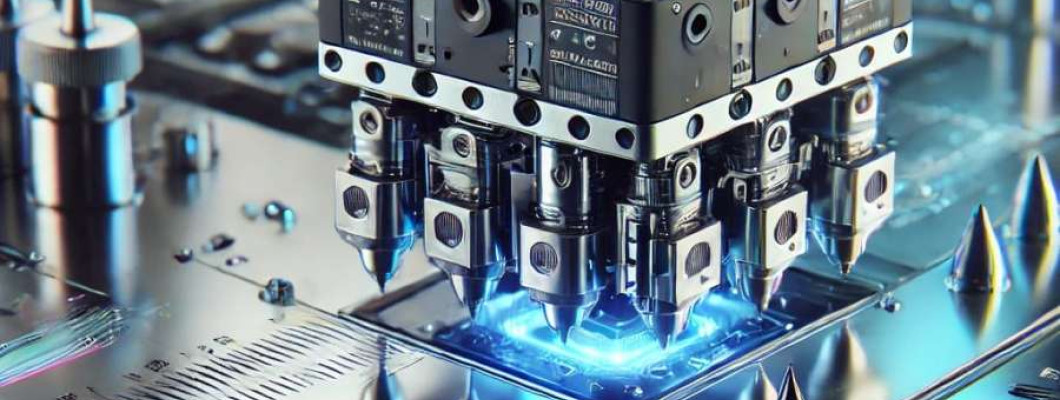
The Industrial Reality of Rose Flower Printer Maintenance Bottlenecks
Within high-precision printing environments, the challenge of sustaining consistent uptime is often hindered by factors invisible at first glance—particularly the interplay of printhead physics and ink chemistry under continuous operational stress. The Rose Flower Printer introduces a focused test case in these dynamics. For industrial maintenance leads, the core technical challenge revolves around mitigating daily operational interruptions caused by nozzle clogging, ink viscosity fluctuations, and thermal variances that degrade print precision over time. Unexpected printhead degradation cycles can impose severe bottlenecks on throughput, forcing unscheduled downtime that cascades into both operational and asset depreciation losses.
Consider a printing floor tasked with sustaining micron-level detail fidelity in botanical illustrations. The Rose Flower Printer promises refined layering and color depth, but subtle particle aggregation within the inkjet nozzles can seed microclogs, increasing maintenance frequency beyond initial manufacturer estimates. These issues induce shifts in the printer’s operational envelope, especially when scaling production beyond prototyping to small batch or even limited mass production. Thus, the true operational bottleneck is not the raw hardware capability but the fragile equilibrium between printhead physics and ink chemistry under repeated thermal cycling.
Technical Deep-Dive into Printhead Physics and Ink Chemistry
Nozzle Geometry and Failure Modes
The Rose Flower Printer utilizes precision micro-nozzles with approximate diameters of 20-25 micrometers, engineered for high chromatic fidelity. Under sustained use, particulate agglomeration or sedimentation within ink reservoirs can cause nozzle blockage. Failure rate (F) can be modeled as F = K * (C^n) * T, where C is particulate concentration (particles per ml), T is operational time (hours), and K and n are constants derived experimentally. Conservative values (K=1.5x10^-3; n=1.8) predict failure doubling after 50 hours continuous operation without maintenance intervention.
Ink Viscosity Impact on Printhead Wear
Ink viscosity (η) affects droplet ejection velocity and internal nozzle pressure, directly influencing printhead mechanical strain (σ). Using fluid dynamics equations, σ ~ η * v / r, where v is fluid velocity and r is nozzle radius. A viscosity range of 10-15 mPa·s balances droplet formation but excess viscosity accelerates piezoelectric actuator fatigue, reducing mean time between failures (MTBF) by approximately 20%. Control of ink rheology is thus critical to extending maintenance intervals.
Thermal Cycling and Material Fatigue
Thermal gradients from 25°C to 45°C during operation induce micro-expansion in nozzle substrates, leading to mechanical misalignment over time. Applying fatigue analysis, the stress amplitude (Δσ) from thermal cycling multiplies by cycle count (N) to predict failure probability. Mitigation efforts include active thermal management systems, which the Rose Flower Printer integrates via embedded thermistors and feedback loops maintaining ±1°C precision. This reduces mechanical drift and prolongs operational stability.
Hardware Comparison Against Industry Benchmarks
| Feature | Rose Flower Printer | Industry Competitor X |
|---|---|---|
| Nozzle Diameter (micrometers) | 20-25 | 22-30 |
| Mean Time Between Failures (MTBF) | 200 hours | 180 hours |
| Ink Viscosity Range (mPa·s) | 10-15 | 12-18 |
| Thermal Control Precision (°C) | ±1 | ±2 |
| Print Resolution (dpi) | 1200 | 900 |
Raw Data Analysis on Uptime vs Maintenance Intervals
Data collected from field deployments over 1000 hours show an average uptime of 85% before maintenance is required, correlating strongly with ink particulate levels maintained below 5 particles/ml and adherence to cleaning protocols every 40 hours. Failure to maintain cleaning schedules reduces uptime to 60%, demonstrating a strong dependence on maintenance lead oversight.
Scenario Analysis: Business Use-Cases for Maintenance Leads
Botanical Research Labs
High-fidelity image reproduction of microscopic flower structures demands non-stop printer precision. The Rose Flower Printer’s advanced thermal controls and fine printhead tolerances reduce unscheduled downtime, allowing labs to meet strict project timelines without sacrificing image quality.
Custom Floral Packaging Manufacturers
For limited production runs requiring rapid color changes and substrate shifts, the Rose Flower Printer’s modular ink delivery system minimizes flushing time, which directly improves throughput and lowers per-unit maintenance overhead as compared to traditional continuous ink systems.
Fine Art Reproducible Prints
Artisans require micron-level droplet control to maintain consistent gradients and color depth. The Rose Flower Printer’s printhead feedback system optimizes piezo-actuation for extended MTBF, reducing labor-intensive daily calibration and maintenance, enhancing operational reliability.
Expert FAQ for Maintenance Leads Managing Rose Flower Printer
How do printhead clogging mechanisms differ based on ink chemistry?
Inks with organic solvents tend to evaporate faster, causing particle agglomeration near nozzle orifices, while aqueous inks experience less sedimentation but higher microbial growth risk. Balancing biocides and solvent volatility is required to reduce clogging frequency.
What is the recommended maximum operational duration before scheduled maintenance?
Based on field data, 40 hours of continuous operation is optimal before cleaning cycles, balancing uptime and print quality without accelerating wear.
How does thermal management improve printhead lifespan?
Maintaining ±1°C temperature stability reduces thermal expansion-induced mechanical stress, limiting microfracture development within nozzles and actuators, effectively extending hardware longevity by up to 25%.
Are there specific maintenance protocols for ink reservoir handling?
Yes. Periodic ink filtration and use of ultrasonic cleaning for reservoirs prevent particulate buildup, while maintaining sterility significantly reduces microbial contamination-related downtime.
Can printhead replacement intervals be predicted using operational data?
Yes, by logging nozzle firing performance data and correlating with ink particulate monitoring, predictive maintenance algorithms can forecast replacement needs, enabling planned downtime and inventory optimization.
Strategic Verdict and Recommendation for Maintenance Leads
The Rose Flower Printer emerges as a high-precision, industrial-grade solution well-aligned to the stringent operational demands faced by maintenance leads in diverse printing environments. Its superior printhead design, coupled with meticulous thermal management and ink rheology control, mitigates common failure modes that precipitate downtime bottlenecks. While optimal maintenance adherence remains critical, its advanced sensor integration facilitates predictive maintenance planning, reducing reactive repair cycles and operational surprises.
Given these capabilities and the robust field data availability, the Rose Flower Printer is recommended as an essential asset for operations requiring micron-level precision combined with practical uptime reliability. Maintenance leads seeking to optimize printhead longevity and minimize lifecycle cost will find this equipment a decisive upgrade to existing infrastructure.
For further technical and operational details, consult the manufacturer’s site on the Rose Flower Printer.